
To achieve a crispy pizza crust at home, start by preheating your oven to the highest temperature (500-550°F) for at least 30-45 minutes, along with a pizza stone, steel, or inverted baking sheet to absorb heat. Use high-gluten flour and roll your dough thin for better crispiness. Position the oven rack in the lowest third and place your baking surface on it. Transferring the pizza quickly onto a hot surface guarantees even browning, and adjusting your technique can help perfect your crust—stay tuned for detailed tips.
Quick Guide
- Preheat oven to 500-550°F with a pizza stone, steel, or inverted baking sheet for optimal heat transfer.
- Use high-gluten flour and roll dough thin, around 1/4 inch, for a crispier crust.
- Position the oven rack in the lowest third and place the preheated surface directly on it.
- Ensure the baking surface is thoroughly hot before transferring the pizza for quick, even baking.
- Bake until the crust is golden and blistered, monitoring dough thinness and oven temperature for best results.
Why Home Pizza Crusts Often Remain Soft
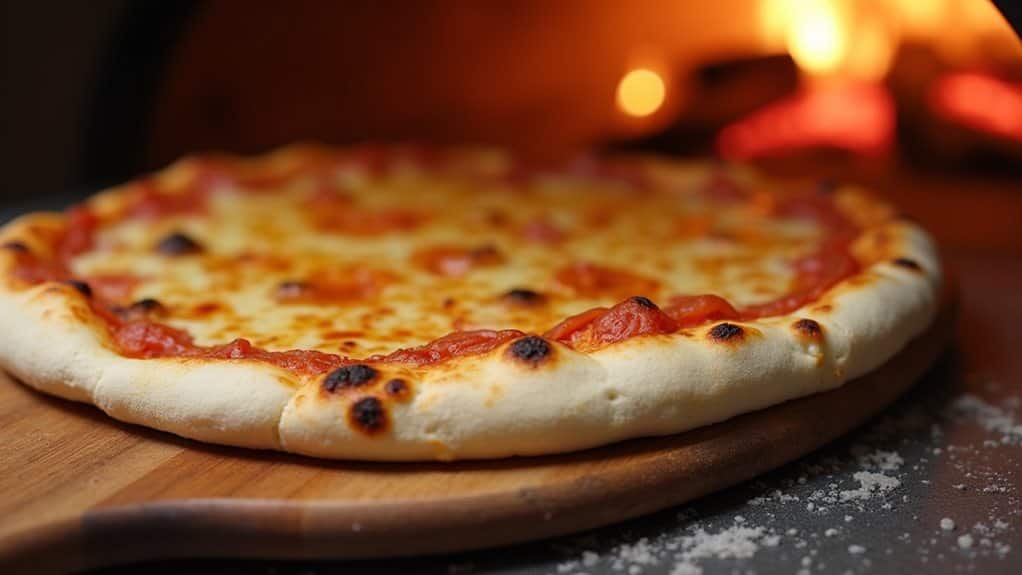
One common reason home pizza crusts stay soft is that your oven simply can’t reach the extremely high temperatures that professional pizzerias use, often exceeding 700°F.
Insufficient preheating of a pizza steel or stone prevents proper heat transfer, reducing moisture evaporation.
Without the right oven temperature, the crust won’t crisp up, resulting in a softer, less desirable texture.
When you cook toppings like eggplant, keeping the eggplant seeds with the flesh can help balance bitterness as everything bakes together.
How to Preheat Your Oven and Surface for Crispy Pizza
Preheating your oven and baking surface thoroughly is essential for achieving that crispy pizza crust you want.
Preheat the oven to its maximum temperature, typically 500-550°F, and run it for at least 30-45 minutes.
Place a pizza stone, steel, or inverted baking sheet in the oven to absorb heat, ensuring a hot surface that promotes crispiness.
For make-ahead dough and toppings, vacuum sealing can help keep ingredients fresh up to 5–7× longer.
Using Steel or Cast Iron to Achieve a Crunchy Crust
Using a steel or cast iron surface is one of the most effective ways to achieve a crispy, restaurant-quality pizza crust at home.
Preheat the steel or cast iron in the oven at 500°F or higher for at least 45 minutes.
This hot surface guarantees excellent heat transfer, promoting a crisp crust with even browning and charred spots for authentic flavor.
To keep your toppings and dough ready without cluttering your counter, set up ingredients in clear, BPA-free plastic bins so everything stays visible and easy to grab.
Preparing Dough for Maximum Crispiness
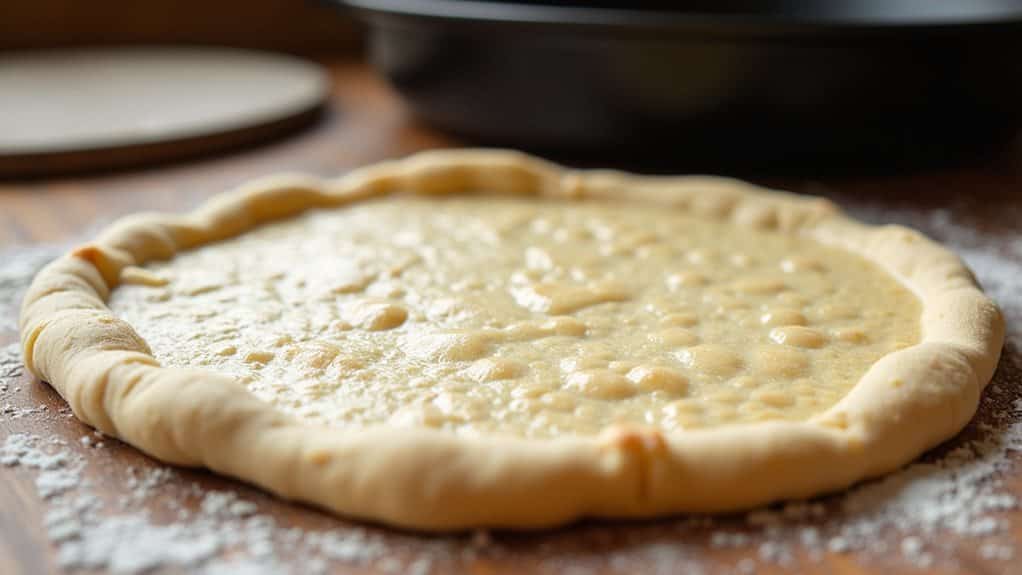
To achieve a crispy pizza crust, preparing your dough correctly is essential. Use high-gluten flour like bread or 00 flour to create a strong, elastic dough that crisps well.
Keep hydration around 45-50% for a drier crust.
Roll the thin crust dough about 1/4 inch, ferment for at least 6 hours, and handle gently to maximize crispiness. For extra browning and crunch when baking in a steel or pan, make sure it’s fully preheated and use the water-droplet test to confirm it’s at the right temperature.
Positioning Your Oven Rack for the Crispiest Results
Positioning your oven rack in the lowest third is key to getting a crispy crust, as it exposes the pizza to more direct heat.
Using a preheated pizza stone or steel on this rack helps achieve even browning and blistering.
Just be sure not to place the pizza too close to the top heating element, which can lead to uneven baking or a soggy crust.
If you’re also prepping for an Easter egg hunt, remember that cleaning vinegar has 6% acidity and can help create deeper egg dye colors.
Optimal Oven Rack Placement
Placing your oven rack in the right position is essential for achieving a crispy pizza crust.
For maximum crispiness, position the rack low to maximize bottom heat contact, especially when using a baking stone.
If you want even cooking, the middle position can balance heat distribution.
Experimenting with rack placement helps find the best balance for your oven.
Benefits of Bottom Rack
Using the bottom rack in your oven can considerably enhance the crispiness of your pizza crust. Placing it close to the oven floor or heat source improves heat transfer, ensuring a more evenly crisp crust.
Baking on this rack, especially on a preheated stone or steel, mimics professional ovens and helps achieve that perfect, golden crunch.
Avoiding Overcrowding
To get the crispiest crust, avoid overcrowding your oven by keeping the pizza on the lowest rack. This positions it closer to the heat source, improving heat transfer to the bottom crust.
Overcrowding reduces baking space and can block heat, resulting in soggy crusts.
Using the bottom rack with high temperature guarantees a crisp, evenly baked pizza.
Transferring Pizza Safely Onto a Hot Surface
Preheating your baking surface is essential for achieving a crispy crust, so make sure it’s thoroughly hot before transferring the pizza.
Use a pizza peel or the back of a baking sheet to slide the pizza onto the hot baking surface quickly.
Place parchment paper underneath for easy pizza transfer and to prevent sticking, working swiftly to keep the surface hot.
Troubleshooting Common Crispy Pizza Problems
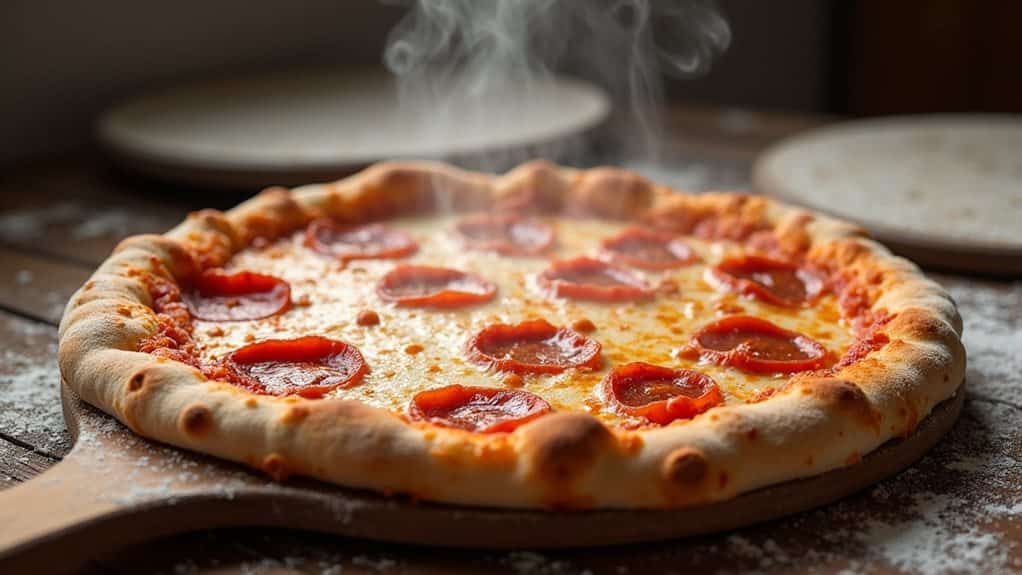
Many common problems with achieving a crispy pizza crust often stem from factors like dough consistency, oven temperature, and baking techniques.
To troubleshoot, preheat the sheet or baking surface for at least 30 minutes to achieve a crispy bottom crust.
Use a thin layer of dough at a time, and make sure oven heat is high, with pizza on top for best results.
Final Tips for Perfectly Crispy Home-Made Pizza
Achieving that perfect crispy crust often comes down to how quickly and evenly you bake your pizza. Use a preheated surface like a pizza stone or steel, and set your oven to a high temperature.
Roll your dough thin, transfer it quickly using parchment paper, and bake on the lowest rack. This method helps create a hot pizza with a crispy crust that bakes quickly.
Wrapping Up
Achieving a crispy pizza crust at home is achievable with the right techniques, from preheating your oven and surface to using the right cookware and positioning your rack properly. Preparing your dough for maximum crispiness and transferring the pizza carefully onto a hot surface are key steps. Troubleshoot common issues and apply final tips to refine your process. With patience and practice, you’ll consistently enjoy restaurant-quality, crunchy pizza right from your own kitchen.


