
Yes, you can freeze celery to extend its shelf life up to 18 months. To freeze celery effectively, wash and cut it into bite-sized pieces, then either blanch it for 2-3 minutes in boiling water or freeze it raw. Blanching helps preserve color, texture, and nutrients, though raw freezing works for shorter storage periods of 2-3 months. Store your frozen celery in airtight containers or freezer bags, removing as much air as possible to prevent freezer burn. While frozen celery's texture changes slightly, making it best suited for cooked dishes like soups and stews, it's a practical way to reduce waste and guarantee you'll always have this versatile vegetable on hand. The key to success lies in proper preparation and storage techniques.
Quick Guide
- Yes, celery can be frozen and preserved for up to 18 months when properly blanched and stored in airtight containers.
- Blanch celery in boiling water for 2-3 minutes before freezing to maintain color, texture, and nutrients.
- Cut celery into uniform pieces, pat dry, and flash-freeze on a baking sheet before transferring to freezer bags.
- Frozen celery works best in cooked dishes like soups and stews rather than raw applications.
- Store frozen celery at 0°F (-18°C) in airtight containers or vacuum-sealed bags to prevent freezer burn.
Why Consider Freezing Celery
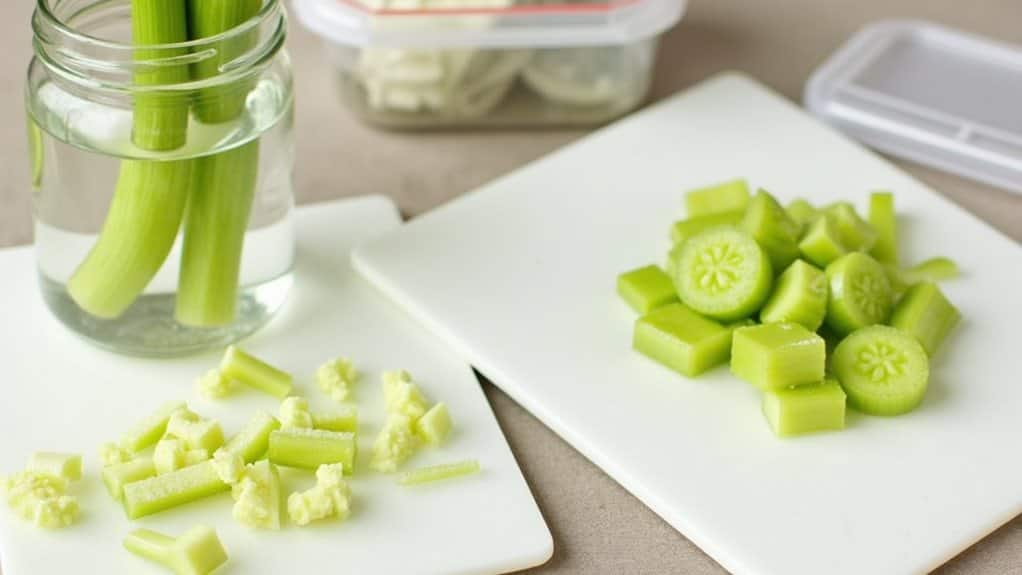
Anyone looking to extend the life of their celery should consider freezing it.
This preservation method can keep your celery fresh for up to 8 months when blanched properly, or 2-3 months without blanching. Proper refrigeration can significantly enhance the shelf life of many vegetables, including celery. You'll save money, reduce food waste, and have ready-to-use ingredients for soups, stews, and casseroles. When using frozen celery, it's best to add it directly from freezer to these dishes for optimal results.
Plus, it's a convenient way to maintain the vegetable's nutritional value while ensuring you always have celery on hand.
Understanding Celery Storage Options
Before you commit your celery to the freezer, it's important to understand the range of storage methods available, from keeping it fresh in the fridge to long-term preservation options.
While your refrigerator's crisper drawer works well for short-term storage when celery is properly wrapped in foil or damp paper towels, freezing offers a practical solution for preserving large quantities over extended periods. Proper storage practices are essential to maintain the quality of your celery, whether you choose to refrigerate or freeze it.
You'll find that each storage method, whether it's refrigeration, freezing, or dehydration, comes with its own set of benefits and best suits different cooking applications. Using a heavy-duty aluminum foil wrap keeps the celery crisp and fresh for several weeks when stored in the refrigerator.
Fresh Vs Frozen Benefits
When it comes to storing celery, both fresh and frozen options offer distinct advantages and tradeoffs that affect your cooking and meal planning.
Fresh celery maintains its crisp texture and strong flavor for about two weeks, making it ideal for raw snacks and salads.
However, if you're looking for long-term storage, frozen celery can last up to 18 months and works perfectly in cooked dishes. For optimal results and enhanced flavor retention, blanching before freezing is highly recommended.
Refrigerator Storage Basics
Proper storage techniques in your refrigerator can extend celery's life from a mere few days to several weeks.
For whole stalks, wrap them unwashed in aluminum foil and place them in your crisper drawer, where they'll last up to a month. These unwashed stalks with roots attached stay fresh longer when kept in foil.
If you're storing cut celery, keep the pieces in a sealed container filled with water, changing it every few days for up to two weeks of freshness.
Long-term Preservation Methods
While refrigeration works well for short-term storage, freezing offers a practical solution for preserving celery over several months.
You'll get the best results by blanching your celery in boiling water for 3 minutes, then immediately cooling it in ice water.
This method preserves quality for up to 18 months, compared to just 2 months for unblanched celery.
You can use frozen celery directly in cooked dishes like soups and stews, making it a versatile ingredient for your kitchen.
Preparing Celery For Freezing
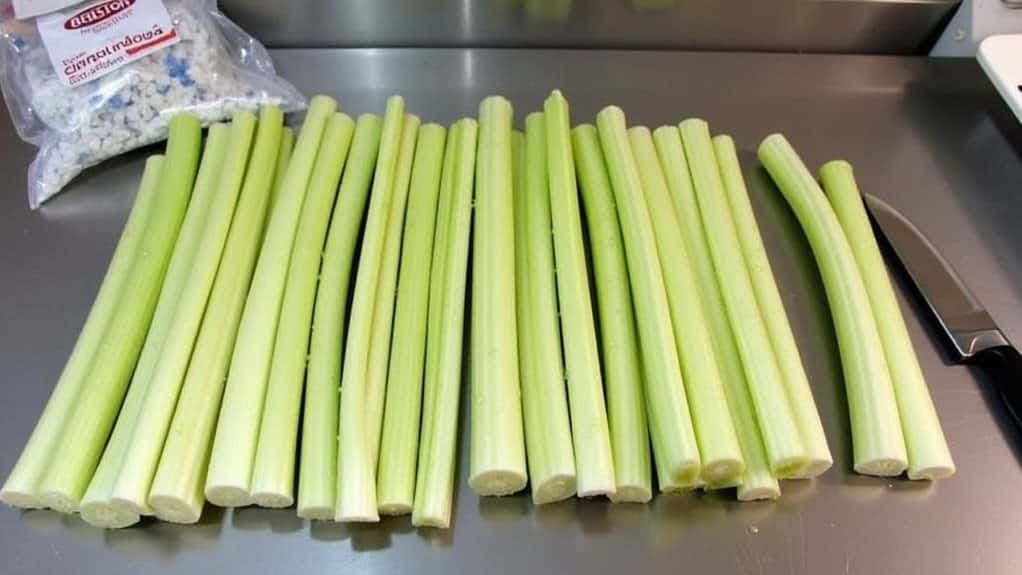
To prepare your celery for freezing, you'll need to thoroughly wash and trim the stalks, removing any leaves, strings, and the root end.
Cut the cleaned celery into uniform, bite-sized pieces that will be convenient for future use in recipes.
After cutting, make sure to pat the celery pieces dry with paper towels or a clean kitchen cloth, as excess moisture can lead to ice crystals and freezer burn. Additionally, ensure that any cut fruits, like celery, are refrigerated promptly to minimize the risk of bacterial growth before freezing.
Wash and Trim First
Before freezing celery, start with a thorough cleaning and trimming process. Rinse the stalks under cold running water to remove dirt and debris.
You'll need to trim off the root end and separate the stalks, removing any coarse strings and damaged parts.
Don't forget to detach the leaves, which you can use separately.
Cut Into Small Pieces
Once your celery stalks are clean and dry, cutting them into small, uniform pieces sets you up for successful freezing.
Cut the stalks into 1-inch lengths or ¼-inch slices, ensuring they're consistent in size.
You'll find these smaller pieces don't clump together when frozen, making them easier to separate and use later.
They're perfect for adding directly to soups, stews, and casseroles without thawing.
Dry Before Flash Freezing
Proper drying stands as one of the most essential steps in preparing celery for freezing.
After blanching and ice bath, drain your celery thoroughly and arrange it in a single layer on a parchment-lined baking sheet.
You'll want to blot the pieces with clean cloth or paper towels to remove excess moisture.
This vital step prevents the celery from clumping together when frozen and helps maintain quality.
The Blanching Process
Blanching stands as an essential step in freezing celery that helps preserve its quality and extend its freezer life.
To blanch celery, cut it into ¼- to ½-inch pieces and drop them into rapidly boiling water for 3 minutes.
Then, quickly transfer the pieces to an ice-water bath for another 3 minutes.
This process preserves color, texture, and nutrients while helping your celery last up to a year when frozen. Proper storage methods, such as using airtight containers, further enhance the preservation of frozen vegetables.
Best Freezing Methods
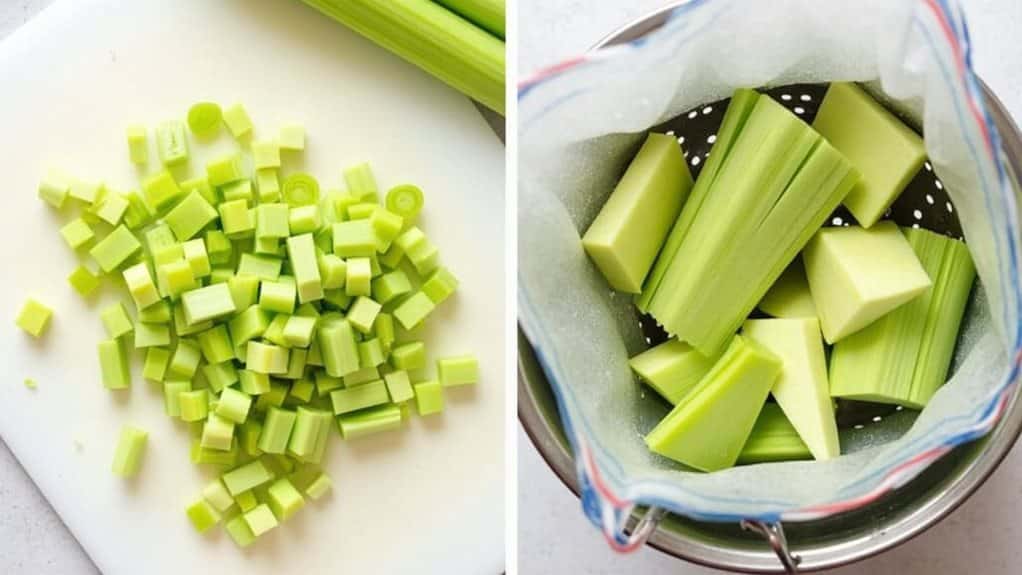
The successful freezing of celery relies on choosing the right preservation method for your needs.
You can freeze raw celery directly, though it'll lose some crispness, or use flash freezing to prevent clumping.
Either way, start by arranging cut pieces on a parchment-lined baking sheet, then freeze them for a few hours before transferring to airtight containers. Proper storage is crucial to maintain freshness and prevent spoilage.
Label everything with dates for easy tracking.
Storage Time and Temperature
Successfully storing frozen celery depends on maintaining the right temperature and tracking storage time limits.
You'll need to keep your freezer at 0°F (-18°C) or below for ideal preservation.
Blanched celery will last 12-18 months, while raw celery stays good for about 2 months.
If you're freezing celery juice, expect it to maintain quality for around 6 months.
Changes in Texture
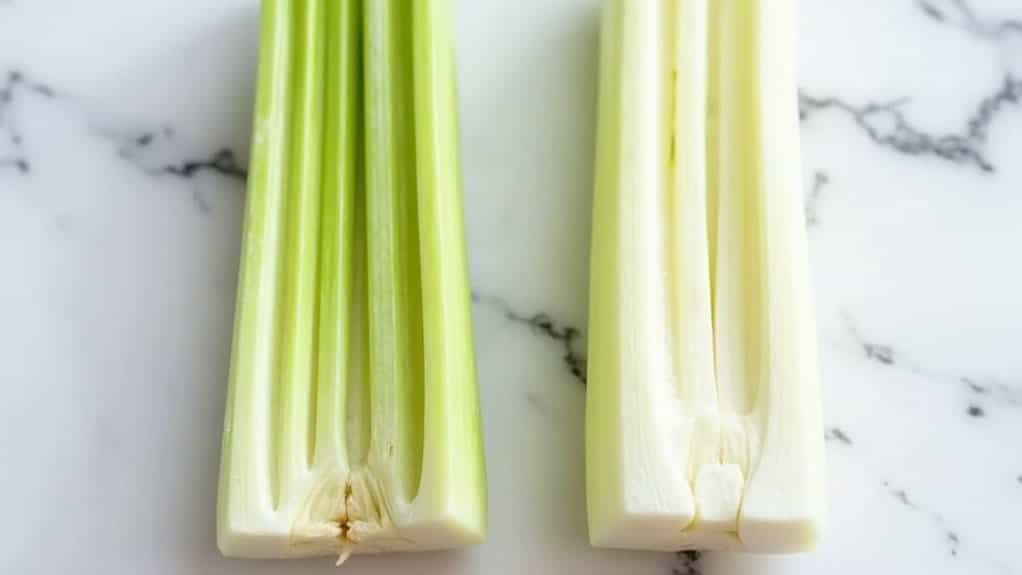
Freezing-induced changes greatly affect celery's signature crunch and firmness.
You'll notice that raw frozen celery becomes mushy and unappetizing when thawed, making it unsuitable for fresh snacks.
However, if you blanch your celery before freezing, you'll preserve the texture better.
While it won't be as crisp as fresh celery, blanched frozen celery maintains more structure and works well in cooked dishes.
Ideal Uses After Freezing
While frozen celery's texture changes make it less appealing for fresh eating, its versatility shines in numerous cooked applications.
You'll find it works perfectly in soups, stews, and casseroles where texture isn't essential. It's also great for smoothies and can go straight from freezer to blender.
For convenient meal prep, you'll appreciate having pre-cut celery ready to toss into your favorite recipes.
Quick Tips and Tricks
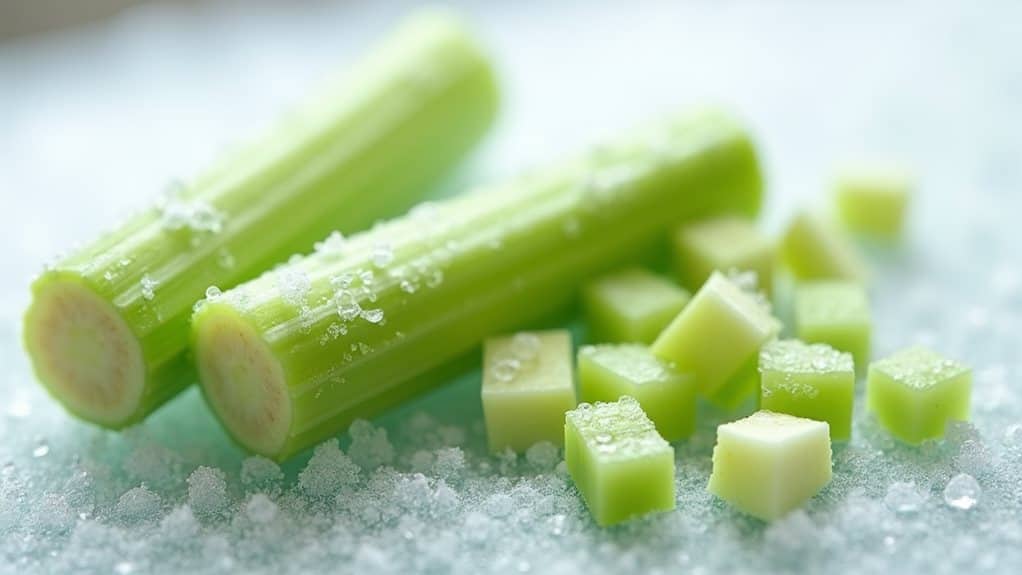
Smart preparation makes freezing celery a breeze when you follow a few key tips and tricks.
Always dry your celery thoroughly before freezing to prevent ice crystals, and cut pieces uniformly for even blanching.
You'll get the best results by flash-freezing pieces separately on a baking sheet before bagging them, and don't forget to squeeze out excess air when sealing your storage containers.
Wrapping Up
You've now got all the tools you need to freeze celery successfully. Whether you're preserving a garden surplus or taking advantage of a sale, proper freezing techniques will help you keep this versatile vegetable on hand for soups, stews, and casseroles. While frozen celery won't provide that fresh crunch in salads, it'll still add great flavor to your cooked dishes. Remember to blanch, package well, and use within 10-12 months for best results.

