
Yes, buttermilk can go bad over time, especially after the expiration date or if not stored properly. Unopened, it lasts about 1 to 2 weeks past its label if refrigerated, while opened buttermilk stays good for about one to two weeks. Signs of spoilage include mold, off-odor, texture changes, or discoloration. Freezing can extend its shelf life but may affect texture. If you’re curious about how to best store or identify spoiled buttermilk, you’re about to uncover more helpful tips.
Quick Guide
- Buttermilk can go bad within 1-2 weeks if unopened, and 7-14 days once opened, even when refrigerated properly.
- Signs of spoilage include mold, discoloration, unpleasant odors, and texture changes like slime or lumps.
- Freezing extends buttermilk’s shelf life to around 3 months but may affect texture and quality.
- Expired buttermilk may still be safe if no spoilage signs are present, but caution is advised.
- Discard buttermilk if it shows any signs of spoilage to prevent foodborne illness.
Does Buttermilk Go Bad? How Long Is It Good For?
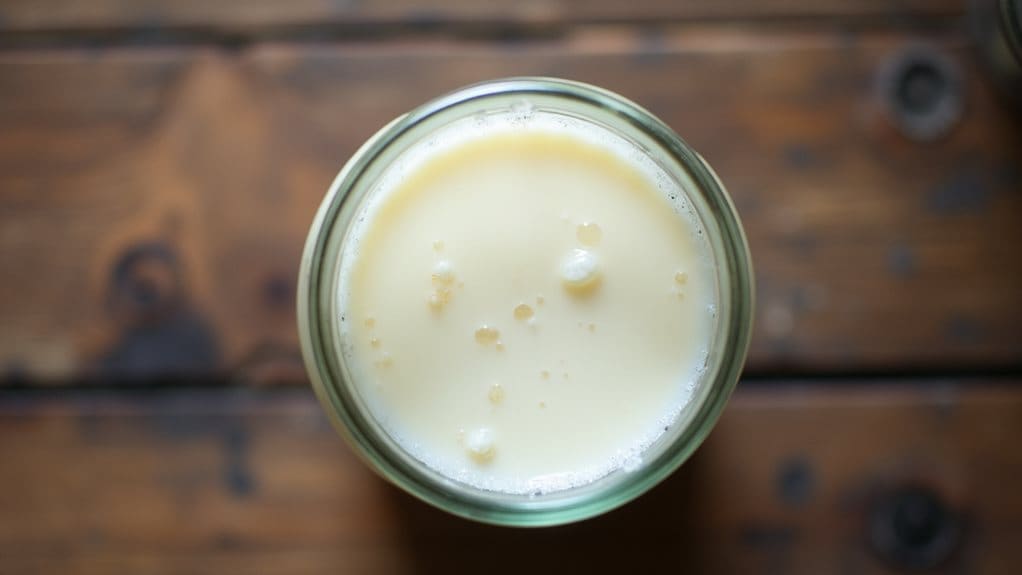
Does buttermilk go bad? Generally, unopened buttermilk stays good about 1 to 2 weeks past the printed date if refrigerated properly.
Once opened, it lasts around 7 to 14 days, with some experts saying up to 3 weeks if kept cold.
Freezing extends its shelf life to about 3 months, but quality may decline over time.
For longer-term freezer storage, using a vacuum sealer with double heat seal technology can help maintain vacuum integrity and reduce freezer burn.
How Can You Tell If Your Buttermilk Has Spoiled?
You can tell if your buttermilk has spoiled by checking for visible mold or discoloration, such as yellowing or fuzzy patches on the surface.
An unpleasant, sharp, or rancid smell is another strong indicator that it’s no longer safe to use.
Additionally, changes in texture, like lumps, thickening, or sliminess that don’t go away after shaking, also suggest spoilage.
If you notice a slimy texture along with an off smell, discard it immediately to avoid potential contamination.
Visual Mold and Discoloration
Visible mold and discoloration are the most straightforward signs that buttermilk has spoiled. Fuzzy patches, changing colors like yellow, gray, pink, or brown, and spots on the surface indicate contamination.
If you see active mold or abnormal color changes, discard the entire container immediately. Don’t scrape off mold, as contamination can extend beyond visible areas.
Unpleasant Odor Presence
A sudden change in the smell of buttermilk is a strong indicator that it may have spoiled.
If you notice a sharp, overpowering sourness or a foul, rancid, or rotten odor, discard it immediately.
Chemical, musty, or mold-like smells also signal spoilage.
Trust your nose—any unpleasant or off-putting scent means the buttermilk is no longer safe to consume.
Texture and Consistency Changes
Changes in the texture and consistency of buttermilk are key indicators of spoilage. Fresh buttermilk should pour smoothly and feel slightly thick, with small lumps sometimes normal.
If it becomes very thick, clumpy, slimy, or develops a grainy, rubbery feel, these signs suggest it’s gone bad.
Persistent separation or solid masses are also red flags indicating spoilage.
What Are the Best Ways to Store Buttermilk and Keep It Fresh?
To keep buttermilk fresh and safe to consume, proper storage practices are essential.
Store it in the main body of your fridge at 40°F (4°C) or below, in its original, tightly sealed container.
Keep it on an inner shelf away from the door, and reseal after each use.
Avoid leaving it at room temperature to prevent spoilage.
Remember that a best-by date is a peak-quality marker rather than a strict safety cutoff when the product is stored properly.
Can You Freeze Buttermilk? How Does Freezing Affect Its Quality?
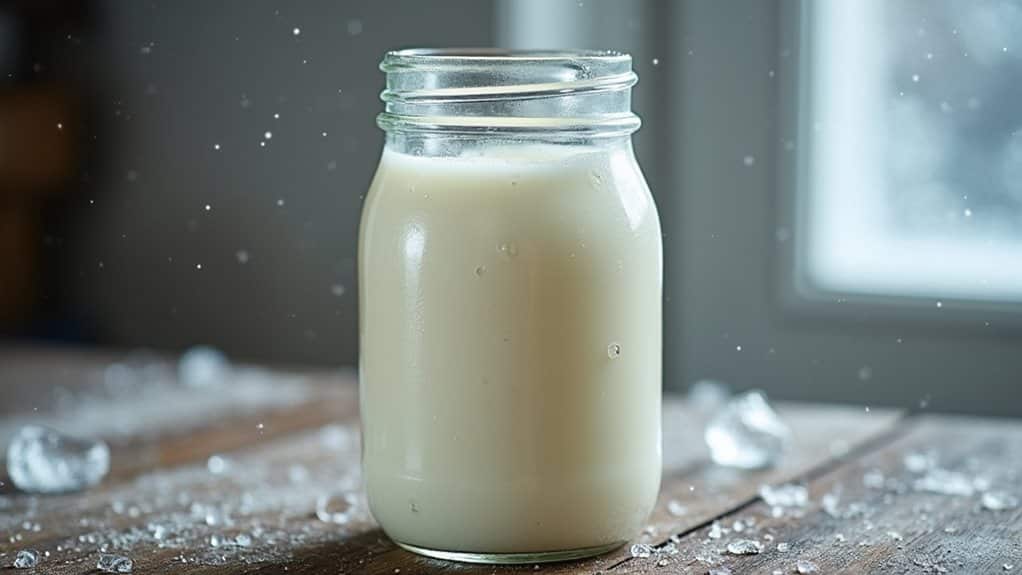
Freezing buttermilk is a practical way to extend its shelf life, but it can affect the product’s texture and quality.
When thawed, you might notice it becomes watery, grainy, or separates into solids and whey, which can impact how it looks and feels.
To slow quality loss, limit exposure to light, heat, and oxygen by keeping containers tightly sealed and stored consistently cold.
To get the best results, use airtight containers and try to consume it within about three months, especially if you plan to use it for baking rather than drinking straight.
Freezing Impact on Texture
While freezing buttermilk is safe and often recommended, it impacts its texture once thawed. You may notice graininess, separation, or a thinner, less creamy consistency.
Ice crystals disrupt the emulsion, causing the product to look chunkier or watery. Although the flavor remains, the texture changes, making it better suited for baking or cooked recipes rather than drinking or creamy applications.
Best Freezing Practices
Proper freezing techniques can help maintain the quality of buttermilk and make it easier to use later.
You should freeze it in small portions using ice cube trays or small containers, leaving space for expansion. Seal tightly, remove excess air, and label with the date.
Use within three months for the best flavor, stirring after thawing if separation occurs.
Is It Safe to Use Expired Buttermilk? Tips and Precautions
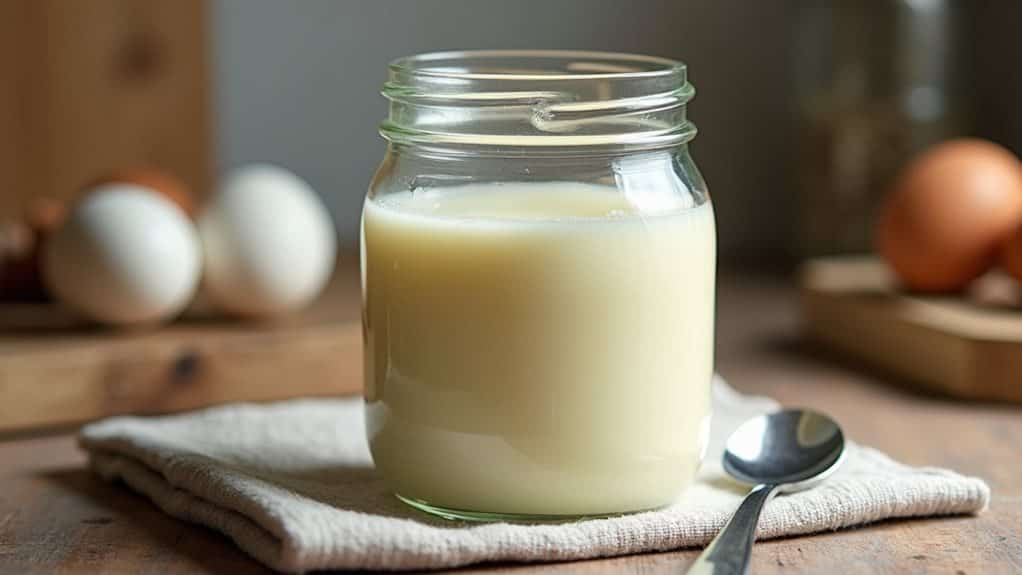
You can often use expired buttermilk safely, provided you check for signs of spoilage before adding it to recipes. Look for unusual odors, mold, discoloration, or a slimy texture. Like other perishable dairy products, keep it refrigerated and avoid leaving it out for more than two hours to reduce the risk of bacterial growth.
If it looks, smells, and feels normal, especially for baking, it’s probably fine. When in doubt, discard it to avoid potential foodborne illness, especially if spoilage signs appear.
How to Extend Buttermilk’s Shelf Life at Home
Extending the shelf life of buttermilk at home involves proper storage habits and careful handling.
Keep it at or below 40°F, store in the back of the refrigerator, and reseal the container tightly after each use.
Use clean utensils, avoid cross-contamination, and transfer leftovers to smaller containers.
Freeze if not used within two weeks for longer preservation.
Wrapping Up
In conclusion, buttermilk can spoil quickly, but proper storage extends its freshness. Always check for signs of spoilage, like sour smell or mold, before using it. You can freeze buttermilk to prolong its shelf life, but note that freezing may change its texture slightly. When in doubt, err on the side of caution and discard expired buttermilk. Following these tips helps guarantee your buttermilk stays safe and fresh for your recipes.


