
You can enjoy queso at room temperature for 2 to 4 hours before you should put it in the fridge. If you leave it out too long, it can go bad and change how it tastes and feels. If you're having a party, make sure you have a plan to keep your queso fresh. Whether you love queso or just like it sometimes, it's important to know how to store and handle it properly. By learning more about queso, you'll see why it's crucial to store and handle it right for a tasty and safe experience.
TLDR
- Soft cheeses like queso shouldn't sit out for more than 2 hours because they can spoil quickly.
- Semi-hard cheeses like queso can stay out for up to 4 hours before they need to go in the fridge to stay fresh.
- Queso fresco spoils fast because it's very moist, so it must be kept in the fridge to stop bacteria from growing.
- Leaving queso out for over 2 hours can make bacteria grow, especially between 40°F and 140°F, which can make you sick.
- Keep queso in the fridge to keep it fresh and tasty, and if it's opened, try to eat it within three days.
Types of Cheese and Their Shelf Life

When it comes to queso, knowing the difference between soft and hard cheeses is important for how long it can be left out safely. Soft cheeses, like queso, have a lot of moisture, so they can spoil quickly. Don't leave them out for more than 2 hours before putting them in the fridge. Hard cheeses can be left out for longer, up to 4 hours, before you need to worry about spoilage. The reason for this is that soft cheeses have more moisture, which bacteria like, while hard cheeses have less moisture, so bacteria have a harder time growing. Understanding these differences can help you enjoy your queso without any concerns about its quality and safety.
Hard Cheeses: Storage and Handling
You can keep hard cheeses like cheddar, Parmesan, and Swiss out at room temperature for up to 8 hours because they have less moisture, which means bacteria are less likely to grow. This makes them great for snacking or serving at parties without worrying about them going bad. To store hard cheeses, keep them in a cool, dark place to prevent them from drying out. Check them often for dryness, cracks, or mold, especially after they've been out for a while. Proper storage will help keep them tasty. Follow these tips to enjoy your hard cheeses while reducing the risk of spoilage.
Semi-Hard Cheeses: A Balance
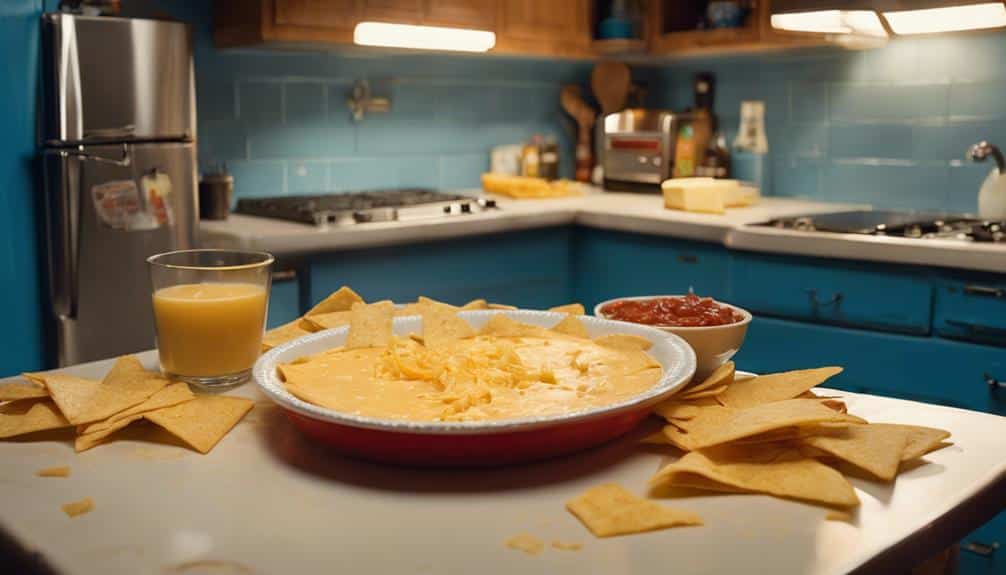
Semi-hard cheeses, like queso, are in the middle between hard and soft cheeses. They have a good balance of flavor and texture because they have a medium amount of moisture. Queso doesn't spoil as quickly as soft cheeses because it has less water. You can keep queso out at room temperature for up to 4 hours, but it's better to put it in the fridge after 2 hours to keep it fresh and safe. If you leave queso out too long, it might get greasy or lose its flavor. Store it right to keep your semi-hard cheese tasty and nice. Just remember, how you handle it makes a difference in how good your queso tastes.
Semi-Soft Cheeses: Handle With Care
When you're dealing with semi-soft cheeses like queso, it's crucial to store and handle them properly to keep them fresh and safe to eat. The temperature at which you store these cheeses plays a big role in how long they last, and if stored incorrectly, they can end up changing in texture and taste. Learning how to store semi-soft cheeses correctly will help you enjoy them at their best while reducing the chance of getting sick from them.
Storage Temperature Matters
It's crucial to keep queso in the fridge because it can spoil easily at room temperature. Queso is a perishable food that can go bad quickly if not stored properly. Bacteria can grow in queso due to its high moisture content, which can make you sick if you leave it out for more than 2 hours. To keep your queso fresh and safe to eat, always store it in the refrigerator at a temperature below 40°F (4°C). This way, you can be sure your queso stays tasty and safe.
Soft Cheese Shelf Life
When dealing with soft cheeses like queso, it's important to know they don't last long. Soft cheeses spoil faster than hard cheeses because they have more water in them. This makes them likely to go bad and grow harmful bacteria if left out too long. To keep queso safe to eat, always store it in the fridge. Don't leave it out at room temperature for more than 2 hours to avoid getting sick. Eat queso within a reasonable time to enjoy it without any risks. Handle soft cheeses carefully to savor their creamy taste while staying healthy.
Soft Cheeses: The Most Perishable

When handling soft cheeses like queso, remember they spoil easily. Watch out for the temperature danger zone where bacteria grow quickly, and be cautious of moisture that can make bacteria spread faster. Knowing these risks will help you store and serve queso safely.
Temperature Danger Zone
You probably know that soft cheeses like queso can spoil easily. They can go bad quickly, especially if they're left out at room temperature. Soft cheeses, like queso, can become unsafe to eat if they're kept between 40°F and 140°F. It's crucial to store them correctly. If you leave queso out for too long, bacteria can grow on it, making it unsafe to eat. To keep queso fresh and safe, make sure to put it in the fridge right after using it. Remember, soft cheeses can spoil fast, so storing them properly is essential for enjoying them safely.
Moisture Accumulation Risks
Soft cheeses like queso are easily spoiled because they have lots of moisture. When queso sits out at room temperature, it gets wetter, which can make it slimy, smelly, and bad to eat. Even if you don't see it right away, too much moisture can ruin queso fast. To keep it fresh, put queso in the fridge right after using it and don't leave it out for more than 2 hours. Since queso has a lot of moisture, be careful with how you store and handle it to avoid problems.
Bacterial Growth Patterns
Queso and other soft cheeses spoil quickly because they have lots of moisture, which bacteria love. When you leave queso out at room temperature, you're basically inviting bacteria to have a party in it. Soft cheeses with high moisture levels make bacteria grow fast, increasing the chance of it going bad. If queso sits out for over 2 hours, bacteria will multiply rapidly, making it risky to eat. To keep queso fresh and stop bacteria from ruining it, always store it in the fridge. This simple step will lower the risk of spoilage and keep your queso tasty and safe for longer.
How Long Can Queso Sit Out Safely
According to food safety rules, queso can sit out at room temperature for up to 2 hours without any worries. After 2 hours, bacteria can start to grow, so it's best to refrigerate it. Dairy Farmers and food makers follow these rules to make sure their products are safe to eat. Enjoy your queso within 2 hours, and then store it in the fridge. This way, you can enjoy your queso without getting sick. So, go ahead and dig in, just remember to chill it when you're done!
Signs of Spoilage in Cheese

If you're not sure if your cheese is bad, check for these signs: mold, a weird smell, or color changes. Soft cheeses like Brie might get slimy or smell like ammonia if they're spoiled. Hard cheeses can have cracks, dry patches, or mold if they're no good. If you see any of these signs, it's safer to throw out the cheese. Spoiled cheese can ruin the taste, quality, and texture of your queso. By knowing these signs, you can make sure your queso is always fresh and tasty.
Proper Storage for Freshness
To keep your queso fresh, store it in the fridge at a temperature below 40°F (4°C) in a sealed container. This helps prevent bacteria from growing and keeps your queso tasty for longer.
Cooler Temperatures Matter
To keep your queso fresh for longer, store it in the fridge. Cooler temperatures help maintain freshness by slowing down the aging process and preventing bacteria from spoiling your queso. Avoid leaving queso out at room temperature too long as it can change texture and flavor. Refrigeration is key to keeping your queso tasting great for a longer time, especially when not serving it immediately.
Air-Tight Containers Essential
To keep your queso fresh, store it in a container that seals tightly to keep air out. This will help it stay tasty and prevent it from going bad. Using airtight containers is crucial for keeping queso in good shape when you're not using it. It stops bacteria from growing, which can change how it tastes and feels. Putting queso in the fridge in a sealed container can make it last longer. Keeping it airtight will help it stay fresh for a while. This easy step can stop it from spoiling and make it last longer.
Queso Blanco: A Delicate Balance

Queso Blanco is best kept refrigerated after two hours to avoid bacteria and spoilage. Its high moisture content makes it more likely to go bad quickly compared to hard cheeses. If you plan to save some for later, store it in the fridge at 40°F (4°C) or lower. To prevent foodborne illness, handle and store Queso Blanco properly. Remember to refrigerate it promptly to enjoy it safely with your family and friends.
Queso Fresco: Handling Tips
When you handle queso fresco, remember it doesn't last long at room temperature. This soft cheese has lots of moisture, so it can spoil easily. To keep it fresh, wrap it well and put it in the fridge when you're not using it. This stops bacteria from growing and making it go bad. Follow these tips to enjoy your queso fresco for longer and to stay safe from getting sick.
Beyond Two Hours: The Risks

Leaving queso out at room temperature for more than two hours can be risky because bacteria can grow quickly, making you sick. This is especially true for queso made from fresh cheeses, which are more likely to attract bacteria. Even hard cheeses like Parmesan can become a breeding ground for bacteria if left out too long. If you plan to serve queso, remember to put it back in the fridge soon after to keep it safe to eat. It's better to be safe than sorry when it comes to food safety. Don't leave your queso out for too long, and you can lower the risk of getting sick.
Storing Queso for Optimal Freshness
To keep your queso fresh longer, store it in the fridge until you're ready to eat. Cheese can sit out for a bit, but leaving it out too long can make it spoil. Queso needs to be refrigerated unlike some other cheeses that can be left at room temperature. Once opened, put your queso in a sealed container and eat it within three days for the best taste. By following these tips, you'll make sure your queso stays tasty and safe to enjoy.
Conclusion
Now that you know about different cheese types and how to store them right, you can enjoy your queso at its tastiest. Remember, fresh queso is best. Keep it stored correctly, at the right temp, and eat it within a reasonable time. Just follow these easy tips to enjoy every bite of your queso worry-free.


