
If your sourdough starter isn’t rising, it’s usually due to environmental, ingredient, or feeding issues. Cold temperatures, drafts, or fluctuations disrupt yeast activity, while using unfiltered water or bleached flour can suppress microbial growth. Inconsistent feeding routines or old, unhealthy starters also weaken the rise. Ensuring a warm, steady environment, proper ingredients, and regular feeding can help. For more tips to enhance your starter’s activity, keep exploring these key factors.
Quick Guide
- Insufficient warmth or temperature fluctuations slow yeast activity and prevent proper rising.
- Poor water quality or unbalanced flour ratios can inhibit microbial growth and fermentation.
- Irregular feeding schedules or overfeeding can weaken the starter’s stability.
- Signs like mold, foul odor, or no bubbles indicate an unhealthy or dead starter.
- A cold or drafty environment hampers fermentation, preventing the starter from rising effectively.
Why Isn’t My Sourdough Starter Rising?
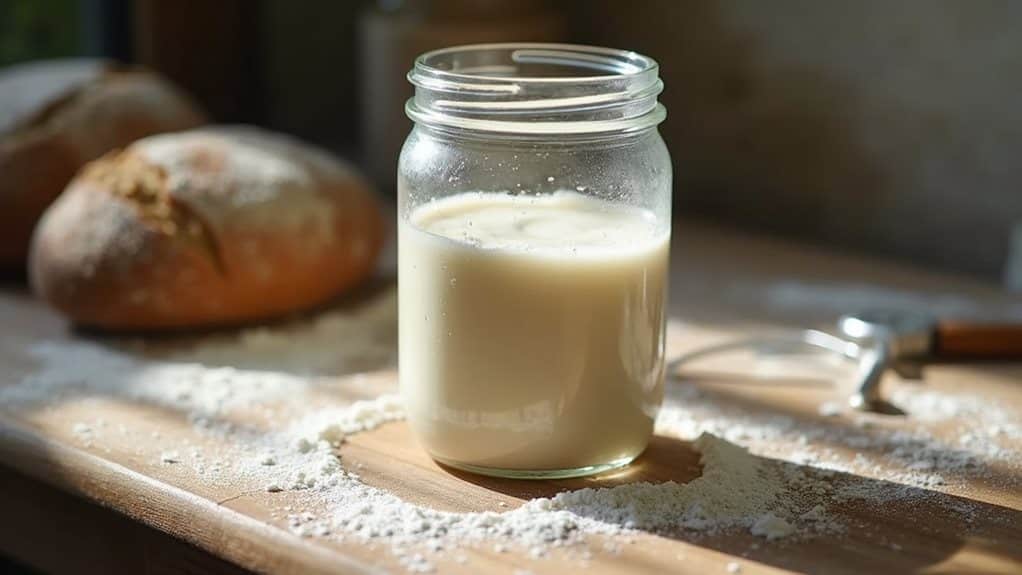
If your sourdough starter isn’t rising, there are several common reasons to take into account. A starter needs the right environment; if it’s in a cold room or not at room temperature, yeast activity slows.
Also, using chemically treated water or bleached flour can inhibit growth. Make sure you’re feeding it properly with fresh flour and water, and give it enough time. For better freshness between feedings, you can use double heat seal storage to help maintain airtight conditions.
What Causes a Starter to Stagnate or Fall Flat?
Your starter can stall or fall flat if the temperature isn’t right, especially if it’s too cold, which slows down yeast activity.
Using chlorinated tap water or bleached flour can also hinder microbial growth, preventing it from rising properly.
Additionally, inconsistent feedings or overcrowding can weaken the yeast population and reduce gas production, making your starter sluggish.
Just as KFC chicken should be kept in an airtight container to prevent freezer burn, your starter can also suffer if it’s left uncovered and dries out, limiting fermentation.
Temperature Fluctuations Impact Yeast
Temperature fluctuations can considerably impact yeast activity in your sourdough starter, often causing it to stagnate or fall flat. If the temperature isn’t steady, fermentation may slow or halt.
Yeast thrives best in a warm environment, around 75–85°F. Fluctuations outside this range disrupt growth cycles, preventing a steady rise and consistent bubble formation.
Water Quality Concerns
Chemicals like chlorine and chloramine present in tap water can considerably hinder the growth of beneficial microbes, causing your starter to stagnate or fall flat.
Chlorinated tap water reduces water quality and chemical interference can slow microbial activity essential for fermentation.
Using filtered or spring water helps promote a healthy starter by minimizing water impurities and supporting proper rising.
Inconsistent Feeding Routine
An inconsistent feeding routine can substantially affect the health and activity of your sourdough starter. When the feeding schedule isn’t regular, the starter’s needs aren’t met consistently, causing yeast activity to decline.
Irregular flour and water ratios disrupt stability, leading to poor rise. Over time, this can cause your starter to stagnate or fall flat.
How Do Temperature and Environment Affect Your Starter?
When your starter isn’t rising as expected, environmental factors are often to blame. Temperature plays a key role, as cooler conditions slow fermentation and yeast activity.
Cold spots or drafts near windows can hinder warmth, making the starter sluggish. Keeping it in a consistent, warm environment—like a proofing box—helps maintain ideal conditions for steady rise and active fermentation. Like cooking eggplant seeds to reduce bitterness, a stable warm setup supports steady fermentation.
Does Your Feeding Routine Impact Its Rise?

Your feeding routine has a significant impact on how well your sourdough starter rises. Consistency in feeding schedule and using the same flour type helps maintain microbial activity, promoting reliable rising.
Proper hydration and regular feedings, ideally twice daily, strengthen yeast and bacteria.
An inconsistent routine can weaken these microbes, leading to a starter that’s starter not rising. Just like temperature stability helps prevent damage from fluctuations in freezer storage, keeping your starter’s environment and schedule steady supports more predictable activity.
Are Your Ingredients and Water Quality Making a Difference?
The quality of your ingredients and water can considerably influence how well your sourdough starter develops and rises. Using unbleached flour supports healthy yeast growth.
Chlorinated tap water can inhibit activity. Water temperature around 90°F speeds fermentation.
High mineral content or impurities in water may slow starter activity, so filtered or spring water often yields better results.
How Can You Tell If Your Starter Is Healthy or Unhealthy?
Determining whether your sourdough starter is healthy involves observing several key signs. A healthy starter shows bubbles, a pleasant sour smell, and a rise that doubles in size within 4-5 hours after feeding.
Signs of an unhealthy starter include mold, a foul odor, no activity, or a runny, discolored appearance. These indicators help assess starter health effectively.
Signs You Need to Revive or Reset Your Starter
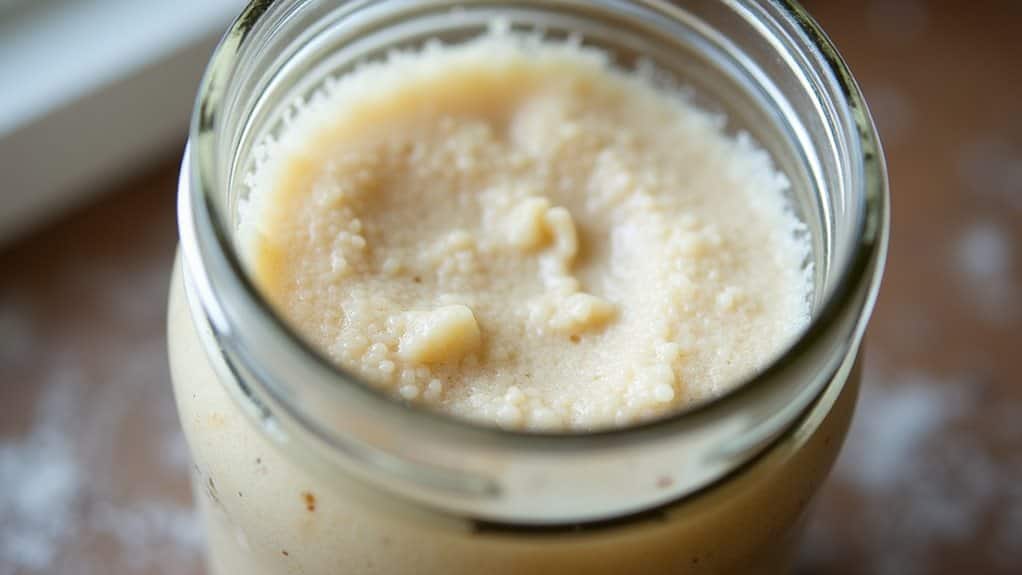
If your sourdough starter isn’t showing signs of fermentation after several hours, it might be time to consider reviving or resetting it.
Indicators include starter inactivity, no bubbles, no visible rise, or a dense texture.
If it smells foul, develops mold, or remains inactive despite proper feeding, discard and reset the starter to guarantee healthy fermentation.
When Should You Start Over and How to Do It?
When your sourdough starter shows persistent signs of failure, such as mold, a foul smell, or no activity after multiple feedings over a week, it’s time to start over.
Discard the old starter and create anew with unbleached flour and filtered water in a warm environment.
Restart with fresh ingredients to promote starter activity and avoid contamination.
Tips for Maintaining a Strong, Active Sourdough Starter
To keep your sourdough starter active, it’s important to stick to a consistent feeding schedule, ideally every 12 to 24 hours, using equal parts flour, water, and starter by weight.
Maintaining the right temperature, around 75-85°F, helps fermentation stay lively.
Choosing unbleached, nutrient-rich flours like whole wheat or rye provides the microbes with essential food.
Proper hydration and regular discarding of some starter also support healthy growth and prevent overgrowth, ensuring your starter stays strong and bubbly.
Consistent Feeding Routine
Maintaining a consistent feeding routine is essential for keeping your sourdough starter active and healthy. A steady feeding schedule, such as twice daily, helps stabilize the fermentation rhythm and promotes reliable rising. Regularly discarding feed prevents overgrowth, while a warm environment around 75-80°F supports microbial balance and ideal starter activity, ensuring your starter remains strong and predictable.
Optimal Temperature Conditions
Keeping your sourdough starter at the right temperature is key to encouraging active fermentation. A warm, stable environment between 75-85°F promotes ideal yeast activity and consistent rising.
Cooler temperatures slow fermentation, while too cold or drafty spots hinder yeast. Using a heat source or wrapping it can help maintain these perfect conditions for strong, reliable rising.
Proper Flour Selection
Choosing the right flour is crucial for developing a strong, active sourdough starter. Use unbleached, nutrient-rich flours like whole grain options such as rye or whole wheat, which support better starter activity.
Consistent flour selection helps maintain stability, while gradually introducing different flours prevents shock. Proper flour type guarantees the microbial environment remains healthy and vigorous.
Wrapping Up
A healthy sourdough starter relies on proper feeding, consistent temperature, and quality ingredients. If it’s not rising, check for signs of activity or stagnation, and adjust your routine accordingly. Sometimes, your starter needs a reset, but with patience and careful attention, you can revive it. Understanding these factors helps guarantee your starter stays strong and active, making successful baking more predictable. Keep monitoring and tweaking, and your sourdough will thrive.


