
Pick a low‑protein flour—like all‑purpose or cake flour—and butter with 82‑84 % fat, keeping the butter cold and in pieces. Mix just until the edges are set and the centers look slightly underdone, then let the cookies rest on the sheet for a minute before transferring them to a rack. Store them in an airtight container with parchment layers or a silicone‑gasket lid, and add a fresh bread slice if they start to dry. This way you lock in moisture, keep the edges crisp, and maintain a soft, chewy interior; the next tips will show you how to revive any that have hardened.
Quick Guide
- Store cookies in an airtight container with parchment layers and a silicone gasket to lock in moisture.
- Add a fresh bread slice or a slice of apple to the container for a few hours to rehydrate and soften.
- Underbake by 1‑2 minutes; pull when edges brown and centers look underdone, then rest on the sheet for a minute.
- For immediate softening, microwave a cookie with a small glass of water for 30‑45 seconds or bake on parchment at 350 °F for 1‑2 minutes.
- Freeze cookies wrapped tightly in plastic and a foil; thaw in the storage container before serving to retain softness.
Choose the Right Flour and Butter for Soft Cookies
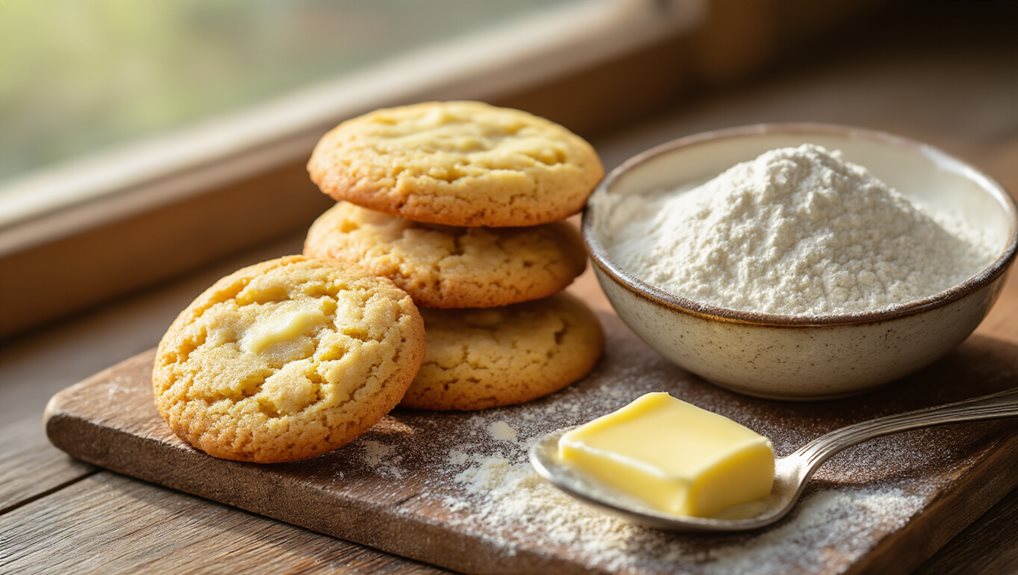
Why does the choice of flour and butter matter for soft cookies? You’ll get a tender crumb when you use all‑purpose flour, especially the bleached kind, because its moderate protein (≈11 %) limits gluten. Cake or pastry flour, with even lower protein, yields melt‑in‑your‑mouth textures. Pair these with European‑style butter (82‑84 % fat) and cold, unsalted pieces to retain moisture and create tender, soft interior. Like cooking eggplant seeds with the flesh helps the sweetness counteract bitterness, cooking eggplant seeds can improve their flavor compared to eating them raw. Whole‑grain flours can be blended with all‑purpose to add nutrition while still maintaining softness.
Bake to Lock in Moisture for Soft Cookies
Choosing the right flour and butter gets you a tender crumb, but the bake itself decides whether that crumb stays soft. Underbake by one to two minutes; pull the tray when edges brown and centers look underdone. Let the cookies rest on the sheet for a minute, then transfer to a rack. This locks moisture, yielding crisp edges with a soft, chewy interior. Store leftovers in an airtight container in the coldest part of your kitchen (away from heat and sunlight) to help preserve softness longer.
Store Soft Cookies for Weeks

Ever wonder how to keep soft cookies fresh for weeks without sacrificing their chewy texture? Store them in airtight containers, layering parchment between pieces, and keep the container sealed after each use.
For best results, choose containers with silicone gaskets that create a stronger moisture and air seal, especially in humid kitchens. For longer life, refrigerate up to two weeks on higher humidity, or freeze for one to three months, wrapping each cookie tightly and labeling the bag.
Thaw in the container before enjoying.
Moisture loss can be minimized by using airtight containers.
Instantly Soften Hard Cookies With the Bread‑Trick
After storing cookies for weeks, you may still end up with a few hard pieces that need a quick rescue. Place those cookies in an airtight container with a slice of fresh white bread and seal it. The bread slowly releases moisture, rehydrating the cookies over several hours or overnight. Check periodically to avoid over‑softening, and enjoy a chewier texture without heating. Just as a pizza stone evaporates excess moisture from dough for a better texture, the bread‑trick restores a bit of moisture to bring cookies back to a softer chew.
Quickly Revive Hard Cookies With Microwave or Oven
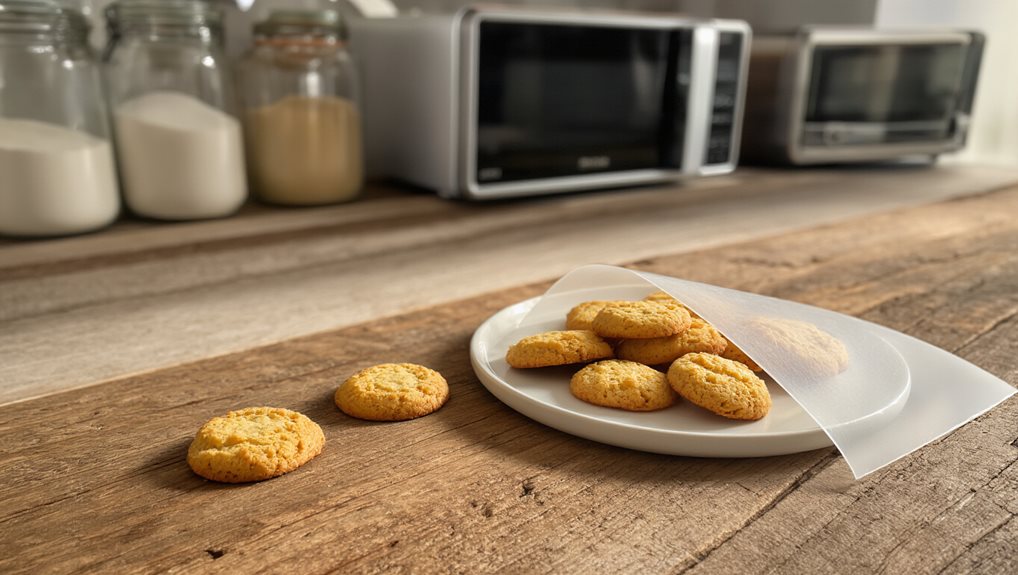
Want to rescue a hard cookie in minutes? Place it on a paper towel next to a small glass of water, microwave 30 seconds, then check softness; add 10-20 seconds if needed.
For batches, wrap cookies in a lightly damp towel and heat in 10-15 second bursts.
Alternatively, preheat the oven to 350°F and bake 1-2 minutes on parchment, watching closely to avoid burning.
Avoid overheating by using short bursts and checking often, similar to how accurate measuring helps prevent burning when cooking rice.
Wrapping Up
By picking the right flour and butter, baking just long enough to lock in moisture, and storing cookies properly, you’ll keep them soft for weeks. If they do harden, a quick bread‑trick or a brief microwave or oven session revives them instantly. These simple steps let you enjoy consistently tender cookies without extra hassle. Follow them each time you bake, and you’ll always have a fresh, chewy treat ready to share.


