
Caramel crystallizes when the melted sugar becomes supersaturated and tiny particles—dust, undissolved granules, or residue on the pot—act as nucleation sites, causing sucrose molecules to realign into solid crystals that make the sauce gritty. Temperature spikes or stirring after the boil can also create these seeds. To fix it, gently reheat the caramel, add a splash of water, and stir in an inhibitor like corn syrup, honey, or a bit of lemon juice (about 5‑10 % of the sugar weight). Keeping the pan clean and avoiding over‑stirring further prevents crystals, and the next sections show exactly how to apply these tips.
Quick Guide
- Crystallization occurs when supersaturated sugar solution encounters nucleation sites such as dust, undissolved grains, or residues on pan walls.
- Impurities, seed crystals, and over‑stirring provide points for sucrose molecules to align and form crystals.
- High temperatures (above 160 °C) increase molecular motion, promoting crystal clustering as the mixture cools.
- Adding inhibitors (corn syrup, invert sugar, honey, lemon juice) early—about 5‑10 % of sugar weight—disrupts sucrose alignment and prevents nucleation.
- If crystals form, gently reheat, swirl (don’t stir), and incorporate a small amount of water, cream, or additional inhibitor to dissolve grains and restore smooth caramel.
Why Caramel Crystallization Makes It Gritty – The Quick Answer
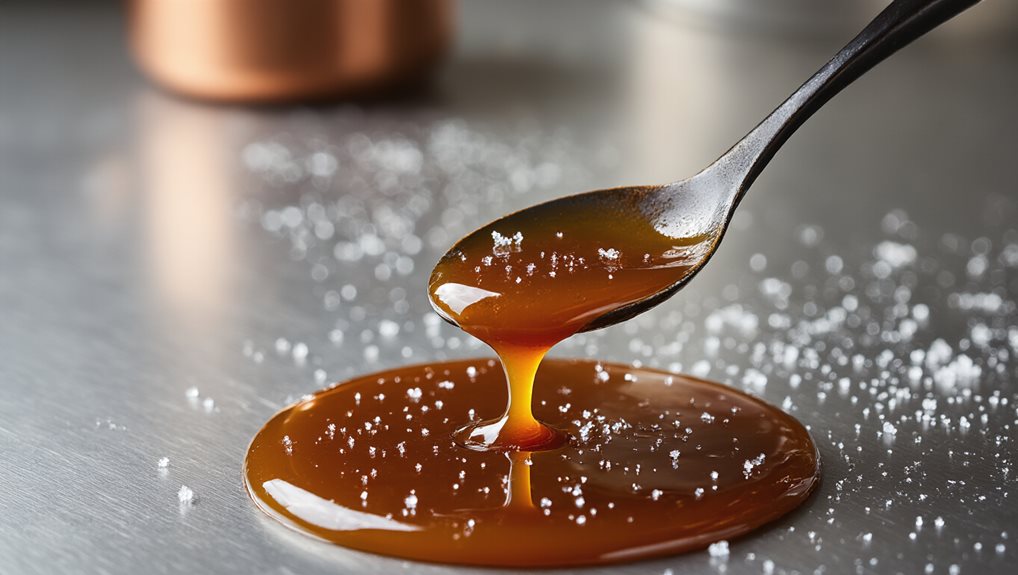
Why does caramel sometimes turn gritty instead of silky? You’re probably dealing with impurities or over‑stirring. Tiny particles from a dirty pan or a stray crystal act as seeds, prompting sucrose to bond as the mixture cools.
High sugar concentration amplifies this, so when the temperature drops quickly, larger crystals form, giving the sauce a grainy, unusable texture. Just as cooking eggplant seeds can reduce bitterness, properly managing sugar concentration helps prevent unwanted crystallization. Using a clean pan prevents extra seed crystals from forming.
How Sucrose Crystallizes When Heated (Caramelization Science)
When you heat sucrose, the liquid becomes supersaturated, and any tiny impurity or rough spot can act as a nucleation site where crystals start to form.
As the temperature rises above 160 °C, the sugar molecules move faster, increasing the chance that they’ll cluster together instead of staying dissolved.
Controlling the heat and keeping the mixture smooth helps you minimize those nucleation points and prevent unwanted crystallization. Just like limiting oxygen exposure helps slow oxidation in oils, reducing contact with air and other contaminants in caramel can help minimize the triggers that start crystal formation.
Caramelization involves pyrolysis, leading to compounds such as caramelan and caramelene, which enhances flavor and adds complex aromas.
Nucleation Sites
Ever wonder why a smooth caramel sometimes turns grainy? Nucleation sites are tiny surfaces—like sugar crystals on pot walls, undissolved grains, or dust—that let sucrose crystals start forming when the syrup cools or is agitated.
Stirring, brushing residues, or leaving particles in the mixture creates these sites, prompting grainy texture.
Removing residues, avoiding stirring after dissolution, and keeping equipment clean limit nucleation, preserving a silky caramel.
Temperature‑Driven Supersaturation
Even after you’ve eliminated nucleation sites, heating the sugar solution can still push it into a supersaturated state that favors crystal formation. As water evaporates, the boiling point rises, concentrating sucrose.
When the temperature reaches 160 °C, sucrose melts, breaks into glucose and fructose, and the solution becomes so dense that any slight cooling triggers crystal nucleation. Managing heat and moisture prevents this.
How Uneven Heating Triggers Caramel Crystallization
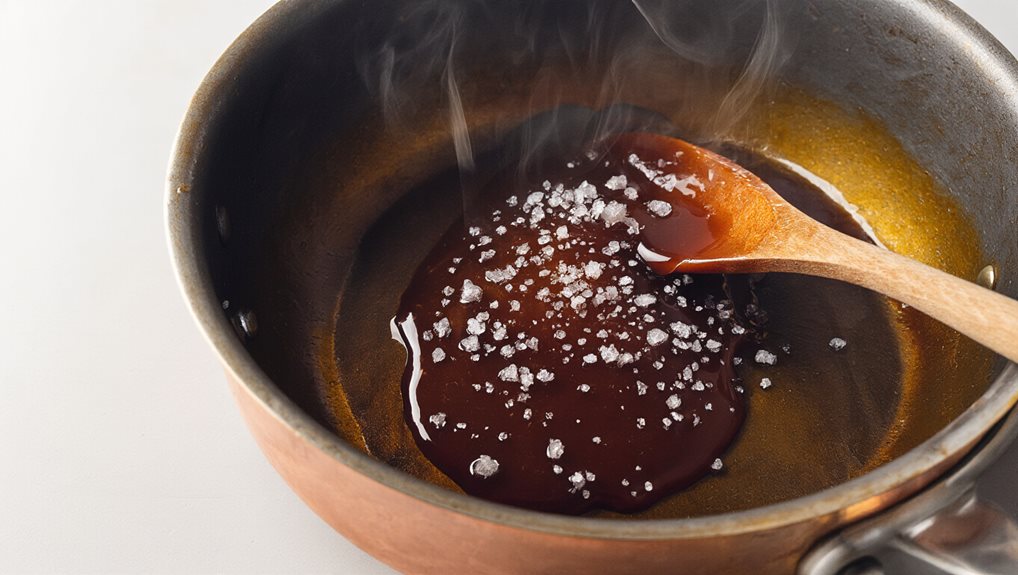
Why does caramel sometimes turn grainy instead of silky? Uneven heating creates hot spots where sugar melts too fast, while surrounding areas stay cooler. Those hot spots act as nucleation sites, prompting crystals to form. Sudden temperature shifts or vigorous stirring amplify the problem, producing dry patches and uneven moisture. The result is irregular solidification and a grainy texture. Just as storing food at a stable 34–40°F helps prevent quality changes, keeping caramel at an even temperature reduces the risk of crystallization.
Impurities That Spark Caramel Crystallization (Hidden Nucleation Sites)
You’ll notice that even a speck of dust or residue from a previous batch can act as a hidden nucleation site, prompting sugar molecules to line up into crystals.
Unmelted granules and stray particles on the pan’s surface also serve as seed points, accelerating the crystallization cascade.
Keeping your equipment spotless and using fully dissolved sugar eliminates these triggers and helps the caramel stay smooth.
Just like the two-hour rule, even brief exposure to contamination can quickly trigger unwanted changes, so minimize time your sugar sits uncovered.
Nucleation Sites
What you mightn’t realize is that even the tiniest speck of dust or a stray sugar crystal can launch the whole caramel‑crystallization process. Those microscopic particles become nucleation sites, giving sucrose molecules a place to lock into ordered lattices.
Uncovered pans let airborne debris settle, while unmelted granules or residue on walls act as seed crystals, accelerating unwanted grainy texture.
Residue From Prior Cooking
Ever notice how a perfectly smooth caramel can turn gritty the moment you stir it? Residue from previous cooking leaves unmelted grains, carbonized particles, and dust on pans and utensils. Those tiny specks act as hidden nucleation sites, destabilizing the supersaturated sugar solution. When they re‑enter the melt, they seed crystal growth, turning your silky sauce into a grainy mess. Clean every surface before heating.
Contaminated Sugar Granules
Why does caramel sometimes turn gritty even when you follow the recipe?
Undissolved sugar granules cling to pan sides, dry out, and become seed points for crystals.
Dust or dirt in the sugar acts as hidden nucleation sites, aligning sucrose into solid particles.
Those impurities trigger gritty texture, so ensure every grain melts completely and keep the pan dust‑free before cooking.
Inhibitors to Prevent Caramel Crystallization: Corn Syrup, Honey, or Acid
Ever wondered which sweetener or splash of acid can keep your caramel smooth? Corn syrup adds glucose and fructose that block sucrose crystals, giving a silky texture. Honey works similarly as invert sugar, adding flavor while preventing grit. A few drops of lemon juice break sucrose into glucose and fructose during heating, creating invert sugar in situ. Each method disrupts crystal formation, keeping caramel fluid. If you’re adding oil or butter, make sure it’s not showing signs of rancidity, since off odors or bitterness can affect your caramel’s flavor.
Step‑by‑Step to Prevent Caramel Crystallization While Dissolving Sugar
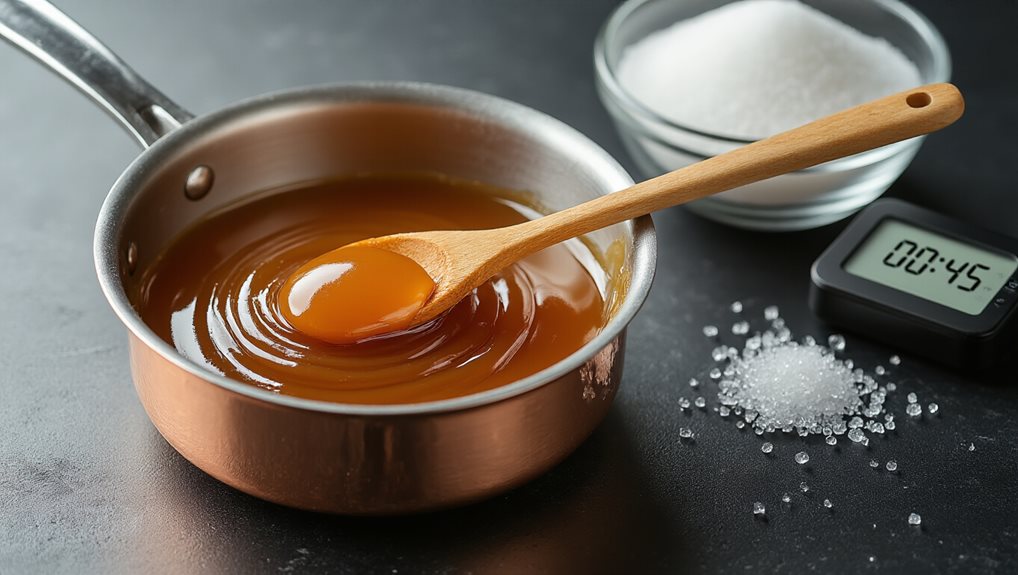
After learning how corn syrup, honey, or a splash of lemon juice can stop crystals from forming, the next step is to keep the sugar from crystallizing in the first place while it dissolves. Use low heat, swirl gently, and stir only until every granule disappears.
When the syrup is clear, stop stirring, increase heat gradually, and avoid simmering until fully dissolved.
Brush any side crystals with a wet brush before they fall in.
Keep Your Pan Clean to Stop Caramel Crystallization
Ever wondered why a spotless pan makes caramel so smooth? You eliminate nucleation sites when you brush the sides with a wet pastry brush or spray warm water, preventing stray granules from clinging to residues. Keep sugar free of dust and residue before heating, and use a heavy‑bottomed, shallow pan.
This simple cleaning stops crystals from forming, delivering silky caramel.
Top Caramel Crystallization Mistakes & How to Avoid Them
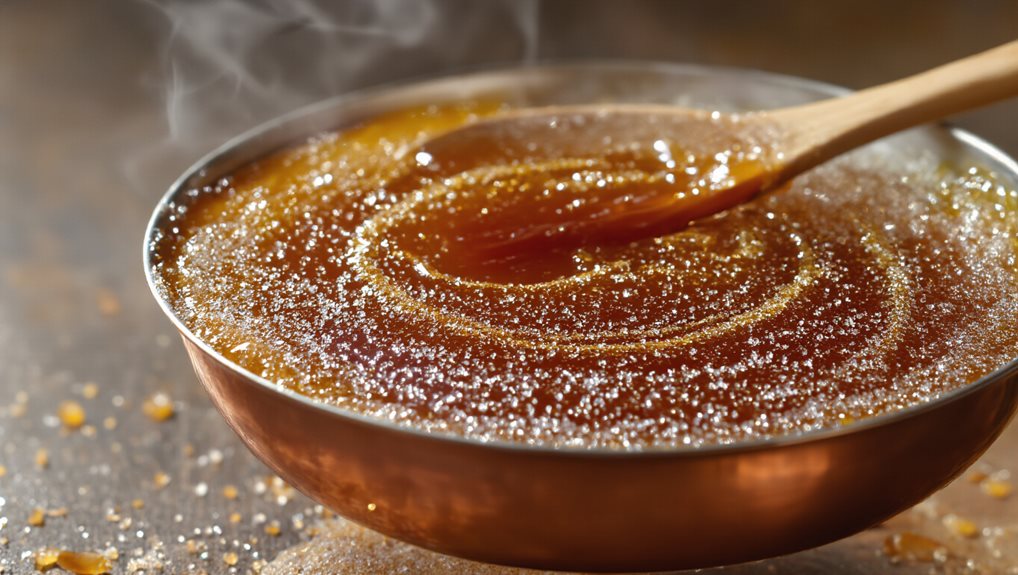
Why does caramel sometimes turn gritty instead of silky? You’ll grain it when sugar isn’t fully dissolved, when you stir too much, or when foreign objects seed crystals. Heat too high, and the mixture scorches before you can control it. Add cream slowly, not all at once, and keep the pan spotless. Use a wet brush to wash down side crystals, and consider corn syrup or water to stabilize the sugar.
Rescue Crystallized Caramel Quickly: Proven Fixes
You can rescue grainy caramel by reheating it over medium‑low heat while you gently swirl the pot to keep the mixture even.
Before you let it cool, stir in a small amount of cream, corn syrup, or water to act as a crystal inhibitor and prevent new grains from forming.
This quick fix restores smoothness without burning the sugar, letting you finish your recipe on track.
Reheat and Swirl Gently
When caramel starts to crystallize, a quick rescue is to reheat it gently and give the pot a steady swirl. Bring the mixture to a low boil, adding a splash of water if needed, and let the crystals dissolve into a smooth syrup.
As the amber hue appears, swirl the pot evenly, avoiding spoon stirring, to keep the caramel uniform and grain‑free.
Add Inhibitor Before Cooling
After you’ve gently reheated and swirled the caramel to dissolve the grains, the next step is to add a crystallization inhibitor before the mixture cools.
Stir in a tablespoon of corn syrup or a drizzle of honey once the temperature drops to about 120 °C. The extra invert sugars block sucrose from aligning, keeping the caramel smooth and preventing new crystals from forming.
When & How Much to Add Inhibitors for Glossy, Crystal‑Free Caramel
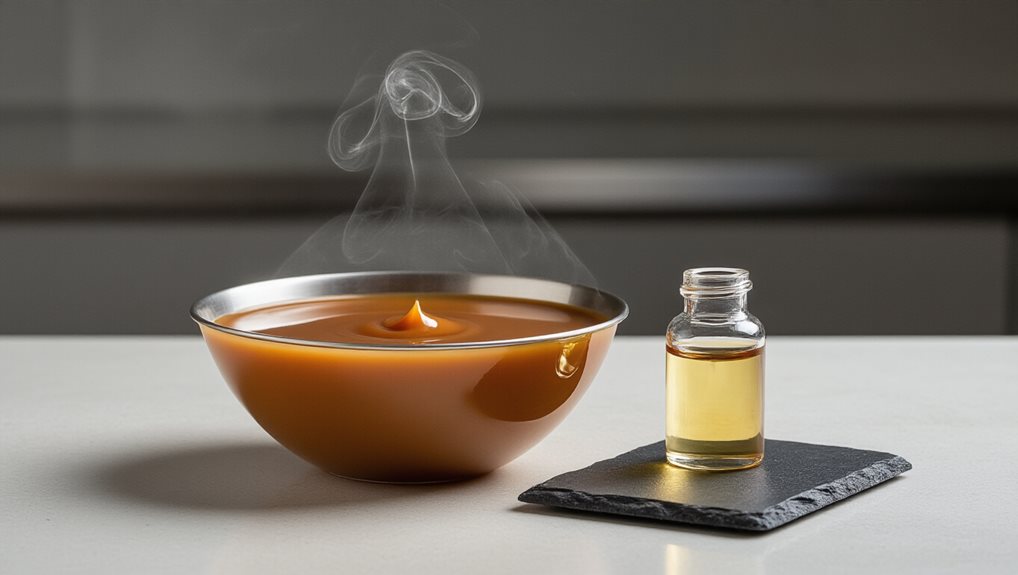
Ever wondered why a glossy caramel sometimes turns gritty? Add inhibitors early, before the sugar boils. Use 1–2 tablespoons corn syrup or honey per cup sugar, or 1 teaspoon lemon juice. Dissolve a pinch of gelatin in the water phase if you prefer. Keep total inhibitors around 5–10 % of sugar weight, and avoid stirring after the initial mix. This timing and amount give you a smooth, crystal‑free finish.
Wrapping Up
By understanding why caramel crystallizes—heat, impurities, and uneven stirring—you can keep it smooth and glossy. Use a clean pan, add a little corn syrup, honey, or acid, and control the temperature to prevent unwanted sugar crystals. If crystals still form, rescue the batch quickly with a splash of water and gentle heat. Follow these steps, and your caramel will stay silky, free of grit, and ready for any dessert.


