
Yes, watermelon does go bad. You’ll know it’s spoiled if the flesh looks dull or dark, smells sour, or feels mushy and slimy. Check for mold, soft spots, or a sticky surface—especially in cut pieces. Whole watermelons last longer, but once cut, refrigerate it promptly and use within 3 to 5 days. Store it right, and you’ll keep it fresh longer—there’s more to know about getting it just right.
Quick Guide
- Yes, watermelon can go bad, showing spoilage through mold, slimy texture, sour smell, or discolored flesh.
- Whole watermelons last up to 3 weeks at 50–60°F but only about a week at room temperature.
- Cut watermelon should be refrigerated within 2 hours and consumed within 3–5 days.
- Chilling injury from cold storage can cause pitting, yellowing rind, and internal browning.
- Always check for dull or darkened flesh, off-odors, or soft spots to detect spoilage early.
Understanding Watermelon Shelf Life
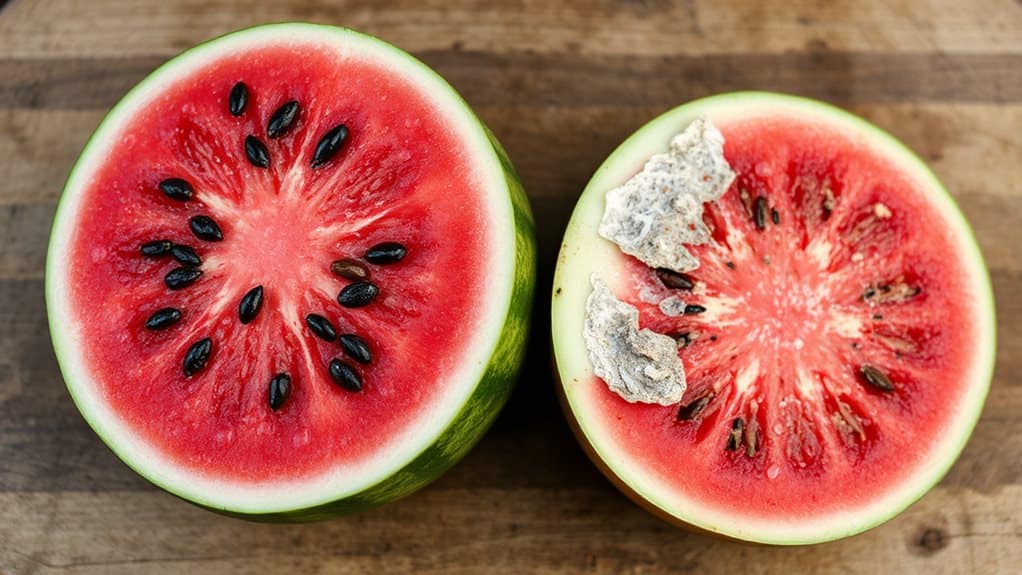
While you might think watermelon lasts forever in the fridge, its shelf life actually depends on how it’s stored and whether it’s cut or whole.
A whole watermelon lasts up to 3 weeks refrigerated, or about a week on the counter.
Cut watermelon only keeps 3–5 days in the fridge. Store it in airtight containers to help slow spoilage and protect freshness.
Proper storage matters—keep it wrapped and cold.
Watermelon quality declines rapidly if stored below 32°F, so avoid freezing to prevent rind breakdown and mushy texture.
Ideal Storage Temperatures for Whole Watermelons
Keep your whole watermelon at 55°F if you can—it’s the sweet spot for freshness.
You can store it in the fridge at 45–50°F for up to three weeks, but don’t leave it below 45°F too long or it might get pitted and lose flavor. To prevent dehydration, aim for high humidity in your storage area.
If it’s not cut, leaving it at room temperature works fine until you’re ready to chill and enjoy. Extended exposure to temperatures below 45°F can lead to chilling injury, causing surface pitting and increased susceptibility to decay.
Optimal Temperature Range
If you want your whole watermelon to stay fresh and flavorful, storing it at the right temperature is key. Keep it between 10–15°C (50–59°F) for up to three weeks.
Around 10°C is ideal for 2–3 weeks, while 7–10°C can extend freshness to 21 days.
Avoid temps below 7°C to prevent chilling injury, and aim for 90% humidity to maintain quality.
Room vs. Chilled Storage
Ever wonder why your watermelon tastes sweeter after sitting on the counter for a few days? That’s because at room temperature, lycopene and beta carotene increase, enhancing nutrients and flavor.
Store whole melons at 50–60°F for up to 3 weeks. Avoid long fridge storage—cold temps cause chilling injury and halt ripening.
Keep uncut melons out, but refrigerate after cutting.
How Room Temperature Affects Freshness
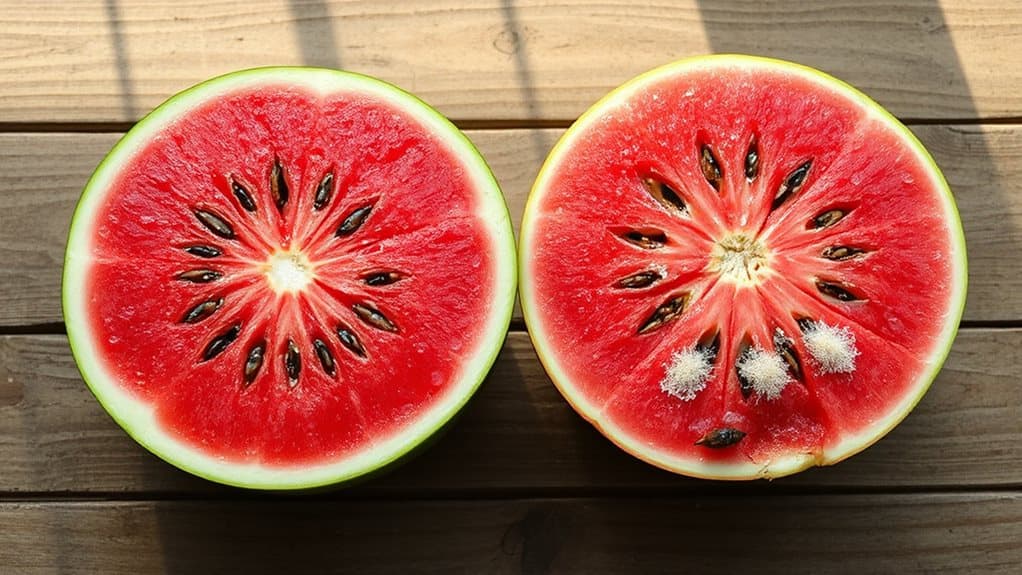
Why does a watermelon sitting on your counter seem to taste sweeter after a few days? Because at 70°F, lycopene and beta carotene increase, enhancing color and nutrients over 14 days. Room temperature ripens melons, darkening flesh and softening rinds.
But don’t cut it yet—once sliced, store it cold. Fresh-cut pieces spoil fast at room temp, raising safety risks within hours. Like two-hour rule foods such as deviled eggs, cut watermelon shouldn’t sit out at room temperature for more than about two hours.
Risks of Cold Damage and Freezing
You might think freezing watermelon saves it from spoiling, but cold damage can actually ruin its texture.
Ice crystals form as it freezes, breaking down the cell structure so it turns mushy once thawed.
Even if it doesn’t go bad, you’ll lose the crisp bite that makes watermelon so revitalizing.
If you do freeze it anyway, keep it at 0F to maintain safety and quality for longer.
Chilling Injury Risks
While watermelons might seem tough on the outside, they’re surprisingly sensitive to cold temperatures, and storing them below 50°F (10°C) can trigger chilling injury. You’ll notice surface pitting, water-soaked spots, or yellowing rinds.
Inside, tissues may turn brown or black, and decay from mold or bacteria can spread quickly. Keep your watermelon above 50°F to avoid damage and enjoy it at its best.
Freezing Ruins Texture
When frozen, watermelon undergoes dramatic internal changes that destroy its crisp texture and lively quality.
Ice crystals form and expand, damaging cell walls and making the fruit mushy when thawed.
Skipping pre-treatment speeds up this damage, especially with repeated thaw-refreeze cycles.
Osmotic dehydration helps protect cells, preserving firmness and structure during frozen storage.
Cold Chain Breaks
If you’ve ever noticed watermelon developing strange discolorations or a dull, off-putting taste after refrigeration, cold chain breaks might be to blame. Exposure to temps below 45°F causes pitting, color loss, and off-flavors.
Even brief chilling weakens tissue, inviting spoilage. Keep watermelon above 50°F to preserve texture and sweetness, avoiding cold damage before it starts.
Selecting the Freshest Watermelon at Purchase
How do you pick a watermelon that’s sweet, juicy, and perfectly ripe? Look for a creamy yellow field spot—bigger patches mean more vine time. Choose heavy, dull-skinned melons with firm rinds and no bruises.
Tap it: a deep, hollow thud means it’s good. Avoid shiny skin or light weight.
Check for dark stripes and brown stems—they signal sweetness and proper harvest.
How to Properly Store Cut Watermelon
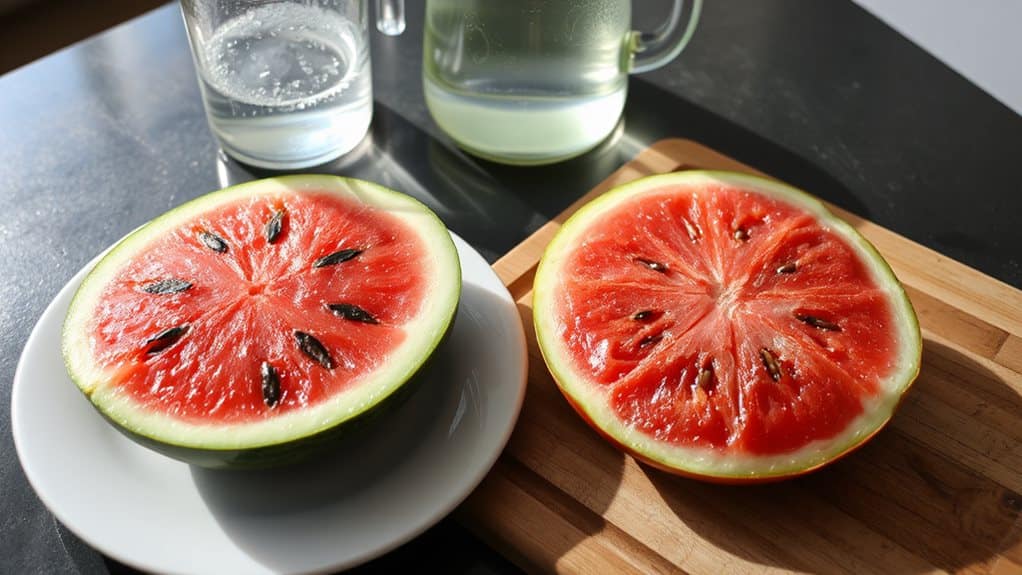
Though it might seem simple, storing cut watermelon the right way makes all the difference in keeping it fresh, safe, and flavorful.
Wrap it tightly or store in a sealed container to prevent moisture loss.
Keep it at 36–40°F, never below 32°F, to avoid mushiness.
For less mess and better texture, store cut pieces in bins with a drain tray so excess juice can drip away from the fruit.
Drain juice every few days, and always refrigerate after cutting for best results.
Shelf Life Differences by Size and Storage Method
You’ll get more time out of a whole watermelon than a cut one, especially if you store it right.
Larger melons, like 36-counts, often last longer when refrigerated, giving you up to 7 days of freshness after cutting, while smaller ones usually keep for just 4 days.
Keep them cool but not too cold—below 50°F risks chilling damage, and once cut, always refrigerate to stay safe.
Whole vs. Cut Longevity
Ever wonder why a whole watermelon lasts so much longer than one already sliced? A whole melon stays fresh for up to 10 days at room temperature or 3 weeks in the fridge if kept at 50–59°F.
Once cut, it lasts only 3–5 days refrigerated. Always store cut pieces at 41°F or below and use within 24 hours for best quality.
Size Impacts Shelf Life
Size plays a bigger role in how long your watermelon stays fresh than you might think. Larger watermelons, like 36-count, last up to 7 days when cut and refrigerated, while smaller ones, like 45- or 60-count, last only 4 days.
Size, temperature, and storage method interact—refrigeration extends shelf life, while heat or poor handling shortens it.
Recognizing Signs of Spoilage
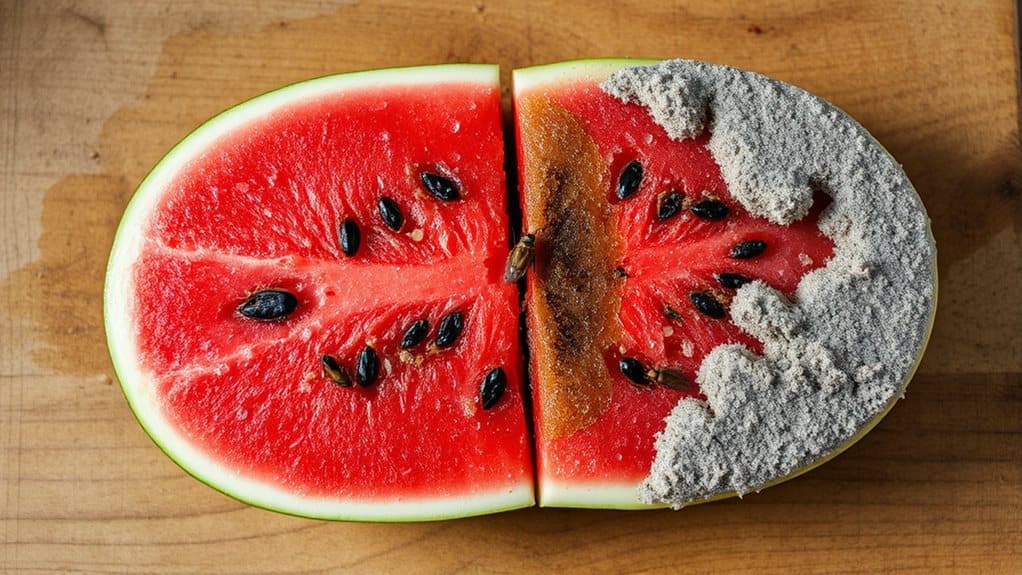
How can you tell when a watermelon has gone bad? Look for mold—any fuzzy, discolored spots mean toss it.
Check texture: if it’s slimy, mushy, or dry, it’s spoiled.
Watch for color changes like dull flesh or dark rind spots.
Sniff it: sour or tangy smells mean it’s bad.
A soft, bruised rind? Don’t risk it—discard.
Preventing Quality Loss During Storage
While keeping a whole watermelon fresh starts with choosing the right spot, managing temperature is key to preserving its quality. Store it on the countertop or in the pantry, away from sunlight and heat, for up to two weeks.
Keep it separate from apples and bananas to avoid ethylene exposure.
After 7–10 days, refrigerate if uneaten.
Food Safety Tips for Handling Watermelon
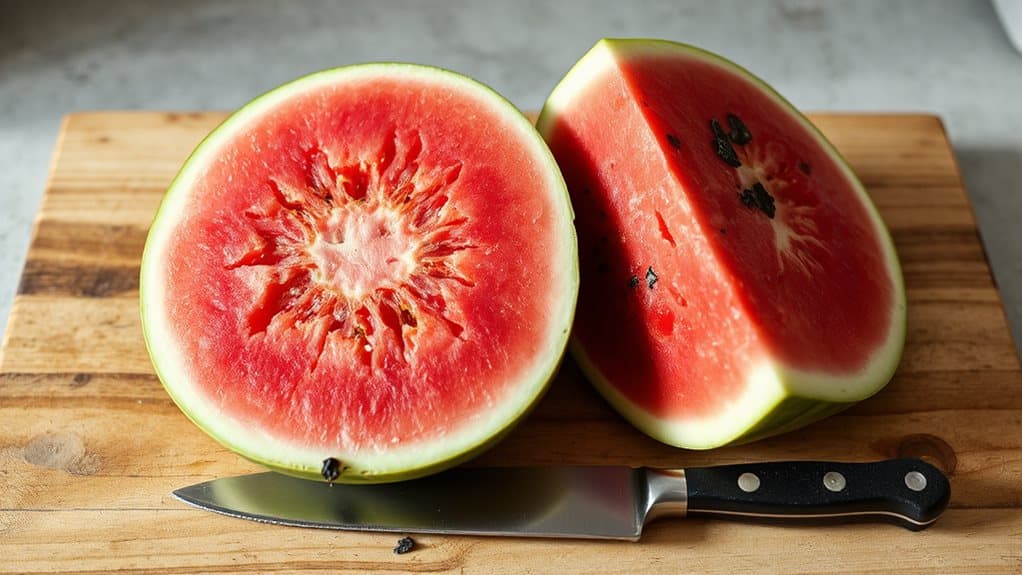
Once you’ve picked the right spot to store your watermelon and taken steps to preserve its freshness, it’s just as important to handle it safely to avoid foodborne illness.
Wash your hands and the melon’s rind before cutting, use clean tools, and refrigerate cut pieces promptly.
Avoid cross-contamination by sanitizing surfaces, and never leave cut watermelon out for more than two hours.
Wrapping Up
You can keep your watermelon fresh by storing it whole at room temperature until you cut it. Once sliced, refrigerate it in a sealed container and eat it within 3–5 days. You’ll know it’s gone bad if it smells sour, looks slimy, or has dark spots. Choosing a ripe melon and handling it properly makes a big difference. Stay safe and enjoy your sweet, juicy slices at their best.


