
Pick a long‑grain basmati or jasmine for fluffiness, rinse it until the water runs clear, then dry‑toast in a hot pot until faintly golden. Measure 1 cup rice to 2 cups water (or 150 % water by weight) and fill to the knuckle level. Bring to a boil with the lid on, keep medium‑high for 10 minutes, drop to medium‑low for 5 minutes, then turn off the heat and let it steam, 5 minutes. If you follow these steps, you’ll get perfect stovetop rice and discover more tips ahead.
Quick Guide
- Rinse rice to remove excess starch, then soak white rice 30 min–2 h (brown rice 6–8 h) for fluffier grains.
- Use a 1 cup rice : 2 cups water ratio (or 150 % water weight) and a heavy, tight‑lidded pot.
- Bring water to a boil with the lid on, then simmer medium‑high for exactly 10 minutes.
- Reduce heat to medium‑low for 5 minutes, turn off the stove, and let the rice steam, 5 minutes with the lid sealed.
- After cooking, fluff with a fork; avoid stirring under the lid to prevent mushy, clumped rice.
Pick the Ideal Rice Variety for Stovetop Cooking
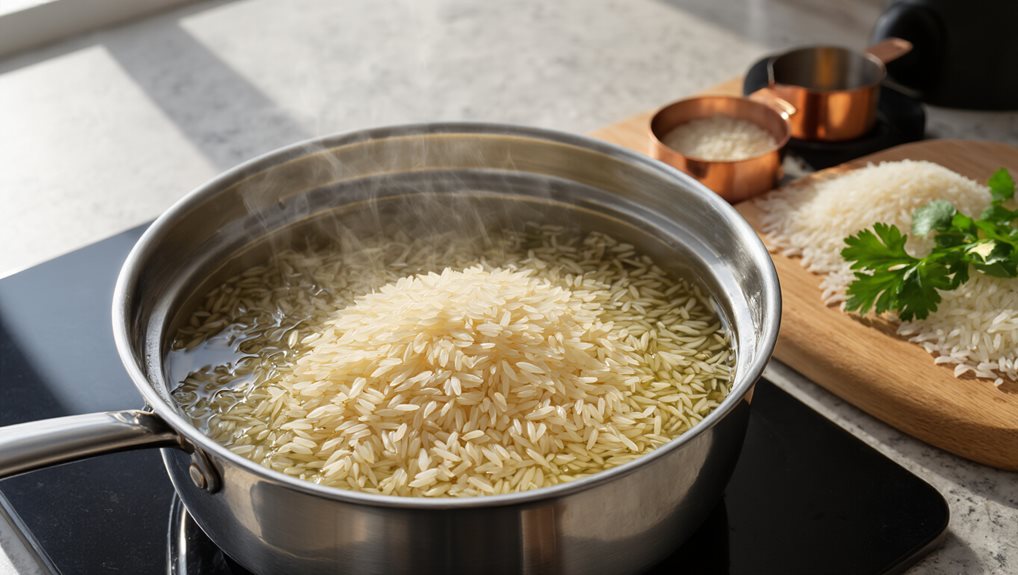
Which rice variety will give you the best results on the stovetop? Choose long‑grain basmati for fluffy, fragrant grains, or Texmati for a popcorn‑like aroma and versatility.
Medium‑grain jasmine offers a tender texture and floral scent, perfect for fried rice. A sharp chef’s knife made from high-carbon stainless steel can make prep like slicing aromatics faster and more controlled.
Short‑grain arborio creates creamy risotto, while Bomba holds its bite in paella.
Rinse most varieties—except arborio—to reduce excess starch and achieve consistent fluffiness. Higher amylose content yields firm, fluffy rice with separate grains.
Calculate the Exact Water‑to‑Rice Ratio
Choosing the right rice variety sets the stage, but getting the water‑to‑rice ratio right determines whether your grains turn out fluffy or soggy. For standard white rice, use 1 cup rice to 2 cups water; scale proportionally for larger batches.
Japanese short‑grain rice prefers a tighter 1:1.1–1:1.2 ratio after soaking.
If you measure by weight, add 150 % water weight to the rice. Adjust slightly for freshness, then cover and simmer without lifting the lid. For longer-term storage that can help maintain rice freshness, a vacuum sealer with double heat seal technology can help protect dry grains from air exposure. The stove‑top method typically requires a 1:2 ratio for white rice.
Rinse, Soak, and Toast Rice for Perfect Stovetop Texture
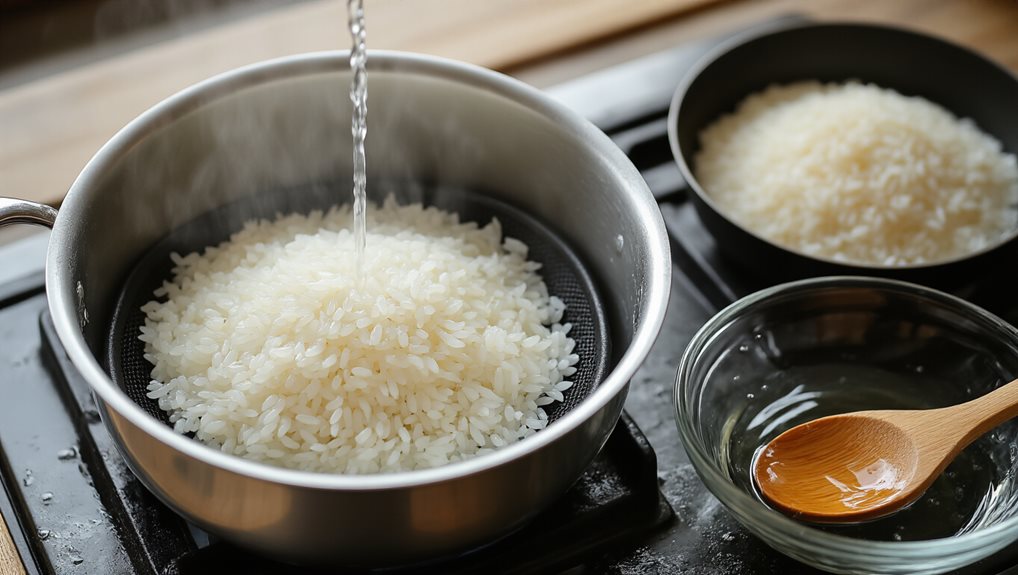
Rinse the rice thoroughly to wash away dust, excess starch, and any lingering contaminants, then let it soak for the appropriate time—30 minutes to 2 hours for white rice, 6–8 hours for brown—to soften the grains and reduce cooking time. Drain, then dry‑toast in a hot pot until faintly golden; this creates a protective starch layer, balances moisture, and yields separate, firm grains ready for stovetop cooking. If you’re portioning coconut milk for a quick curry to serve over rice, freeze it in silicone ice cube trays for easy measuring later.
Apply the 10‑5‑5 Cooking Method
Ever wondered how a simple timing trick can turn stovetop rice into fluffy perfection? After rinsing, fill water to the knuckle level, then bring it to a boil with the lid secured. Keep medium‑high heat for exactly ten minutes, then lower to medium‑low for five minutes, and finally turn off the heat for a five‑minute steam. Keep the lid on throughout; remove it only to fluff and serve. If you’re serving rice alongside cured meats like prosciutto, keep it in the coldest part of the fridge at 34–40°F to maintain quality.
What to Do When Your Stovetop Rice Goes Wrong?
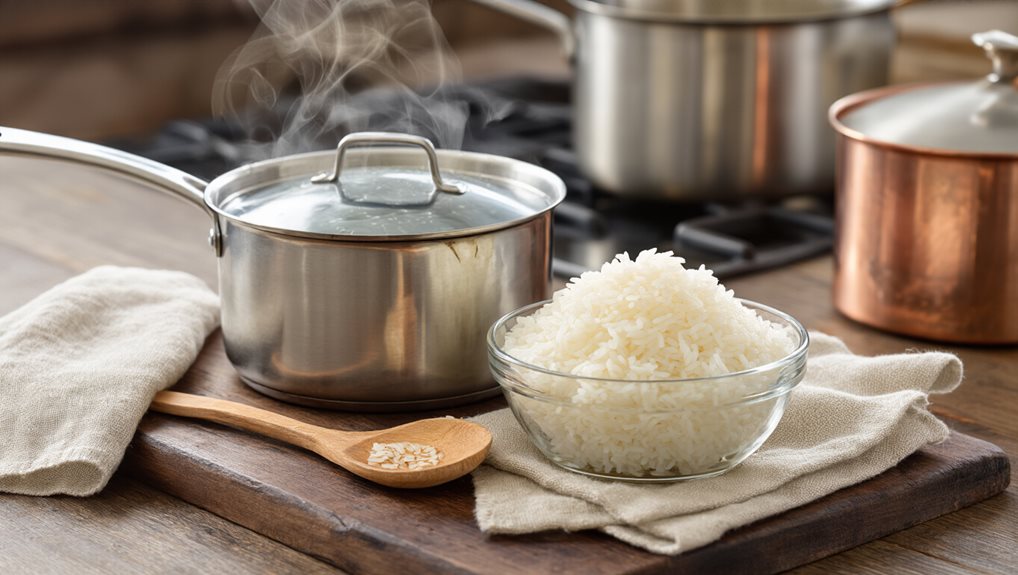
What went wrong with your stovetop rice? If it’s mushy, you probably stirred after the lid went on; that releases starch and breaks grains. High heat can scorch the bottom while the top stays raw, and lifting the lid lets steam escape, causing uneven cooking. Skip the rest period and the rice stays clumped. Choose a heavy, tight‑lidded pot to avoid hot spots and ensure even heat. Just like using a clean thermometer to check the center, monitoring temperature regularly helps you catch problems before they ruin the final texture.
Wrapping Up
Now, you’ve got a reliable stovetop method that works with any rice variety you choose. By measuring water precisely, rinsing and soaking, then using the 10‑5‑5 technique, you’ll achieve fluffy, evenly cooked grains without a cooker. If the rice turns out too wet or dry, adjust the water ratio or cooking time next round. Keep these steps handy, and you’ll consistently serve perfect rice for any meal.


