
Pick a clad stainless‑steel pot that holds enough water—about 1 L per 100 g pasta—and bring it to a rolling boil. Add roughly 10 g of salt per liter (≈¾ Tbsp per quart) as soon as it boils, then drop in the pasta and stir for the first two minutes to stop sticking. Set a timer for one minute less than the package suggests, so the pasta stays al dente. Reserve a cup of starchy water, don’t rinse, and finish the pasta in the sauce for 1‑2 minutes, adding the water to emulsify. Finish with Pecorino, a drizzle of olive oil, and warm plates for a perfect dish; keep going to discover extra tips.
Quick Guide
- Use a large clad‑stainless pot (6 qt for 1–2 servings, 8 qt for 8–12) to allow ample water and space for stirring.
- Add 10 g (≈¾ Tbsp) salt per liter of water once it reaches a rolling boil; increase to 1.5 % for stronger flavor or fresh pasta.
- Stir pasta for the first 1–2 minutes to release starch, then set a timer for one minute less than the package’s suggested cooking time.
- Reserve a cup of the salty cooking water; add about half a cup to the sauce to emulsify and finish the pasta for 1–2 minutes.
- Finish on pre‑heated plates, drizzle with olive oil, and sprinkle Pecorino for a hot, cohesive dish.
Pick the Right Pot and Water Amount for How to Cook Perfect Pasta
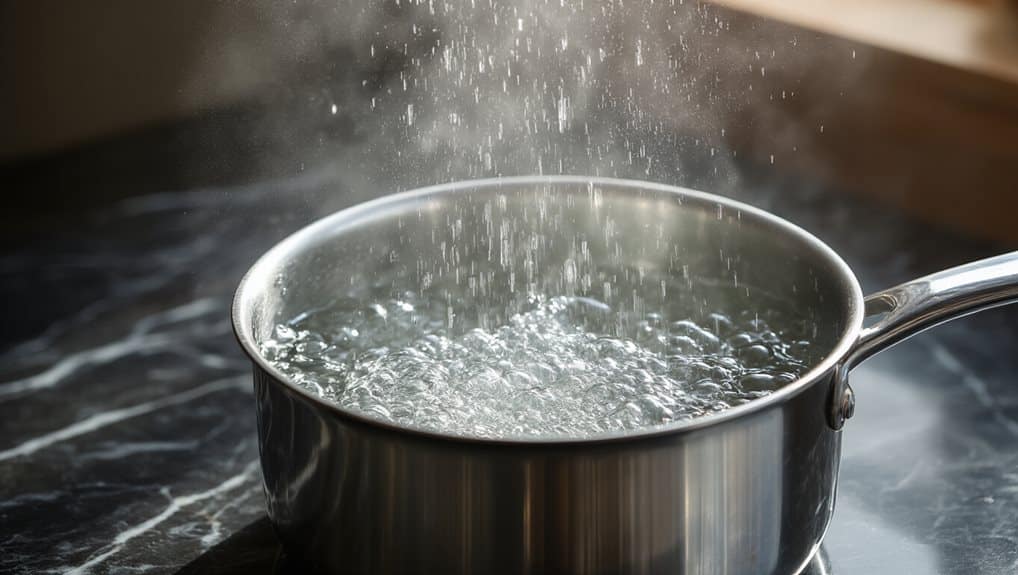
How do you choose the right pot for perfect pasta? Pick a 6‑quart pot for 1–2 servings; it holds 12 servings of water and leaves space for stirring. For 8–12 servings, use an 8‑quart pot with a 9.75‑inch surface, preventing overflow. Serious cooks or events benefit from a 12‑quart pot. Avoid 1‑2‑quart pots; they’re too small and cause sticking. Use clad stainless steel for even heat. A jar suction hose can also help you vacuum-seal leftover cooked pasta in canisters for short-term storage. Tall pots reduce splatter during boiling.
How Much Salt to Add and When for Perfect Pasta
You’ll want to add about 10 g (roughly three‑quarters of a tablespoon) of salt per liter of water, adjusting up to 1.5 % if you prefer a stronger taste or if you’re cooking fresh pasta. Add the salt right after the water reaches a rolling boil, which helps it dissolve evenly and avoids corrosion of your pot. This timing and amount give the pasta a seasoned base that enhances the sauce and prevents the dish from tasting flat. Keeping your ingredients properly stored—like using BPA-free bags rated down to −20°F—helps preserve quality and flavor between cooking sessions. A full palmful of coarse salt is also recommended by some experts for a richer flavor.
Salt Quantity Guidelines
Ever wonder why some pasta turns out bland while other batches burst with flavor? You’ll want about 10 g salt per liter water, which is roughly ¾ Tbsp per quart. If you use a 6-quart pot for one pound, add 1½–2 Tbsp fine salt, or a half-palmful coarse salt. Adjust for sauce saltiness and fresh pasta.
Timing of Salt Addition
When you add salt to your pasta water matters more than you might think, but the science is simple: drop the salt in right after the water reaches a vigorous boil, then stir and let it dissolve before you toss in the noodles.
Adding salt early keeps the boil hot, while late addition risks a brief temperature dip.
The optimal moment is right after the boil starts, ensuring quick dissolution and consistent seasoning.
Effect on Pasta Flavor
How much salt should you add to pasta water, and when is the best moment to do it? Aim for a 1.5 % ratio—about 30 g (2 Tbsp) per 2 L—once the water boils. This makes the water taste like seawater, allowing salt to penetrate the starch and season the pasta from within. Adjust down if your sauce or ingredients are already salty.
Boil, Stir, and Undercook for Al Dente Pasta
Start by bringing a large pot of heavily salted water to a rolling boil, then add the pasta and give it a quick stir to keep the pieces from sticking.
Keep stirring for the first minute or two as the starches release, and set a timer for one minute less than the package’s suggested cooking time.
This brief undercook leaves the pasta firm with a slight chew, perfect for finishing in the sauce.
If you’re tossing in sautéed eggplant, remember that eggplant seeds are edible and tend to taste less bitter when cooked with the flesh.
Boil Water Properly
Ever wondered why your pasta sometimes ends up mushy instead of perfectly al dente? Fill a large pot, enough water to let pasta float freely, and bring it to a rolling boil before adding salt. The salt enhances flavor and raises boiling point slightly. Keep the water at a vigorous boil throughout cooking; this maintains even temperature and prevents clumping. Begin taste-testing a minute or two early, aiming to stop 2-3 minutes before the package’s full time for true al dente texture.
Stir Frequently Early
After the water reaches a rolling boil and you’ve added the salt, drop the pasta in and give it a quick stir about a minute later. That first stir breaks up the starch that wants to cling, preventing clumps.
Use a wooden spoon or pasta fork, then let the pieces separate on their own. No need to keep stirring constantly; just watch for any early sticking.
Undercook One Minute
Ever wondered why a minute less on the stove makes all the difference? You boil the pasta, stir gently, then pull it out a minute early. Taste it at 20‑second intervals before the package time; the texture should be firm yet tender, holding its shape.
The residual heat in sauce finishes cooking, preserving chew, starch, and flavor while preventing mushiness.
Reserve Water, Don’t Rinse – Keep the Starch for Sauce
Why keep the cooking water instead of tossing it away? You’ll preserve the dissolved starch that coats the pasta, and that starch emulsifies with oil or butter, thickening the sauce.
Adding half a cup of this salty, cloudy liquid to your pan lets the sauce cling uniformly, creating a richer, creamier texture.
Skipping the rinse keeps the starch on the surface, preventing separation and ensuring the sauce adheres perfectly.
Finish Pasta in Sauce in 1‑2 Minutes for Perfect Pasta
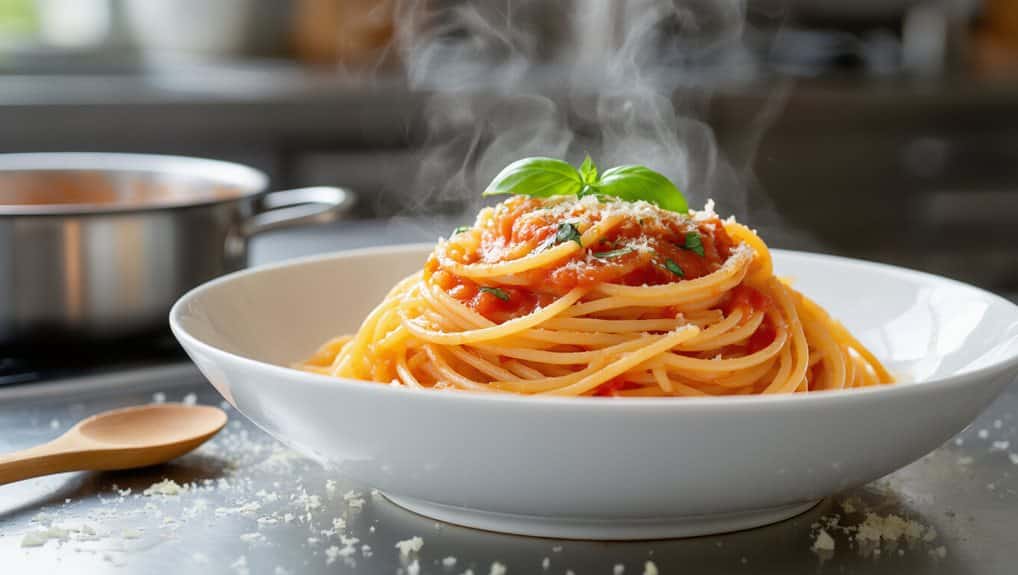
How do you lock in flavor and texture without overcooking the pasta? After the sauce emulsifies, lower the heat, add the drained rigatoni, and stir immediately.
Let the starch‑rich water bind the sauce, then sprinkle Pecorino and wait one minute for it to melt and thicken.
In 1‑2 minutes the pasta finishes, staying al‑dente and perfectly coated.
Just like placing pizza directly on the oven rack for better heat contact, finishing pasta in sauce uses direct heat to deepen flavor fast without overcooking.
Keep Pasta Hot While Plating and Add Final Seasoning Tweaks
After the sauce has emulsified and the pasta finishes in the pan, the next step is to keep it hot while you plate and add those final seasoning tweaks.
Preheat plates to about 75 °C, or use a 200 °F oven for five minutes.
Transfer pasta quickly, mound it in a warmed bowl, cover with foil, and drizzle olive oil, then toss gently before serving.
Wrapping Up
Now you’ve got the right pot, the proper salt, and a quick boil‑stir routine, so your pasta will hit al dente every time. Reserve a cup of starchy water, skip the rinse, and finish the noodles in the sauce for a minute or two. This locks in flavor and creates a silky coating. Keep the dish hot while plating, add a final pinch of seasoning, and serve confidently, knowing the technique is solid and repeatable.


