
You’ll fix seized chocolate by adding a tiny amount of hot liquid or fat and whisking vigorously until it smooths out. First, move the chocolate to a dry bowl over simmering water, then stir in a teaspoon of boiling water, whisk for 30 seconds, and repeat if needed; alternatively, stir in a teaspoon of vegetable oil, coconut oil, or clarified butter over low heat, adding more in small increments. Keep the temperature below 120°F for dark chocolate (110°F for milk/white) and work with completely dry tools. This method restores a glossy texture suitable for sauces, and if you keep going you’ll uncover how to prevent seizures and temper the chocolate for a perfect snap.
Quick Guide
- Add a small amount of boiling water (≈1 tsp) to the seized chocolate in a double‑boiler, whisk vigorously, and repeat until smooth.
- Incorporate a teaspoon of neutral oil or clarified butter while stirring over low heat, adding incrementally until the mixture becomes glossy.
- Ensure all utensils, bowls, and the work surface are completely dry; wipe them with rubbing alcohol before melting.
- Melt chocolate gently: keep dark chocolate below 120 °F and milk/white below 110 °F, using short microwave bursts or a double‑boiler to avoid overheating.
- After rescuing, temper the chocolate by cooling to 95 °F, seeding with tempered cocoa butter, and reheating to 89‑91 °F for a glossy, snap‑ready finish.
Why Chocolate Seizes: Moisture, Heat, and Cocoa Content
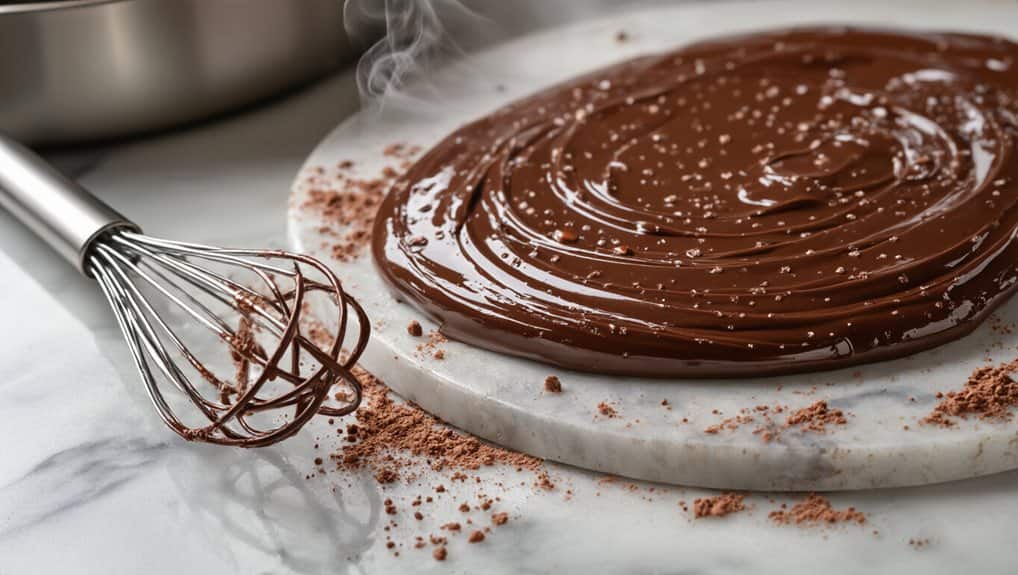
Why does chocolate seize? When a drop of water meets melting chocolate, it mixes with sugar, forming clumps that bind to cocoa, creating a grainy, thick mess.
Heat adds to the problem—over‑heating separates cocoa butter and sugar crystals, especially above 120°F for dark chocolate and 110°F for milk or white varieties. Similar to how heat and light speed oxidation in oils, higher temperatures can quickly destabilize melted chocolate.
Higher cacao percentages need extra liquid, because they’re more prone to seizing when moisture or excess heat disrupts the smooth cocoa‑butter matrix. Small amounts of liquid can disrupt the melting process, causing the chocolate to seize.
How to Rescue Seized Chocolate With Boiling Water
Can you revive seized chocolate without starting over? Yes—by gently re‑melting it over a double boiler and adding a splash of boiling water, you can turn a grainy mess into a smooth, glossy mixture. Chop the chocolate uniformly, place it in a heat‑proof bowl above simmering water, and whisk. Add one teaspoon boiling water, stir vigorously, then repeat until the texture shifts from grainy to glossy. This method dissolves clumped sugar and re‑emulsifies fat, yielding a fluid coating suitable for drizzling or sauces, though it’s too diluted for pure baking recipes. Like eggplant seeds, seized chocolate can taste bitter if left untreated, so careful cooking helps restore a smoother result. Moisture is the primary cause of chocolate seizure, so keeping all utensils and the melting environment completely dry is essential.
How to Rescue Seized Chocolate With Oil, Coconut Oil, or Clarified Butter
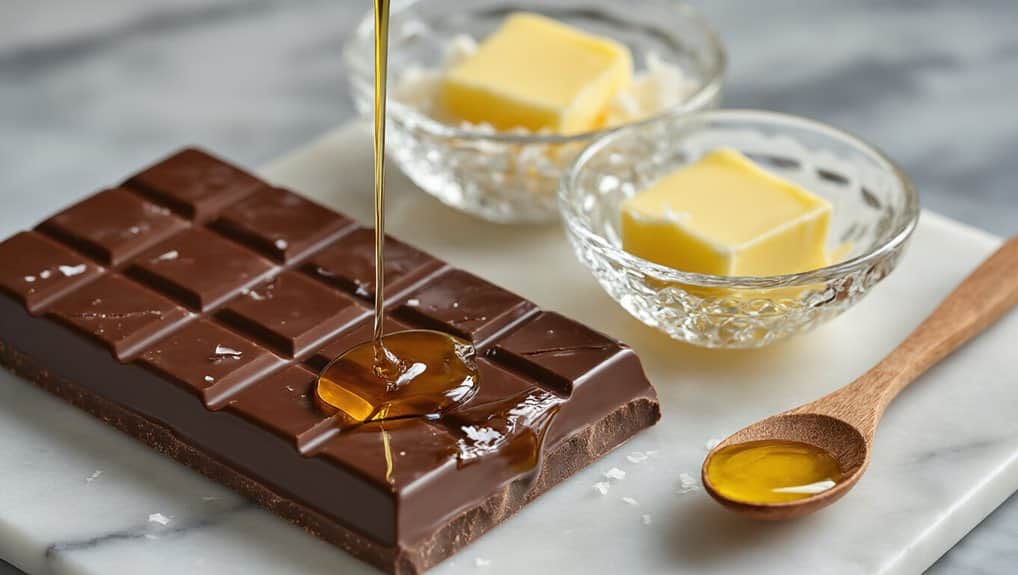
Ever faced a grainy, clumpy chocolate batch that suddenly seized? Add a teaspoon of vegetable oil, coconut oil, or clarified butter while stirring over low heat. Increase in tiny increments, watching the mixture turn glossy and smooth. Stop when the texture is creamy, usually 1‑2 teaspoons per cup. This rescue works for sauces, ganache, or hot drinks, but it won’t restore a firm snap for molding.
How to Melt Chocolate Without Seizing: Double Boiler vs. Microwave
After rescuing seized chocolate with a splash of oil, the next step is learning how to melt it cleanly from the start.
Use a double boiler: simmer water, keep the bowl dry, and let gentle heat melt chocolate without steam or droplets, reducing clumping.
A microwave heats directly, so you must stir every 15 seconds, keep bursts short, and avoid any moisture to prevent seizing.
If you plan to store finished chocolate work, a countertop vacuum sealer with double heat seal technology can help maintain freshness in the freezer by keeping out air and moisture.
Step‑by‑Step Chocolate Rescue Process
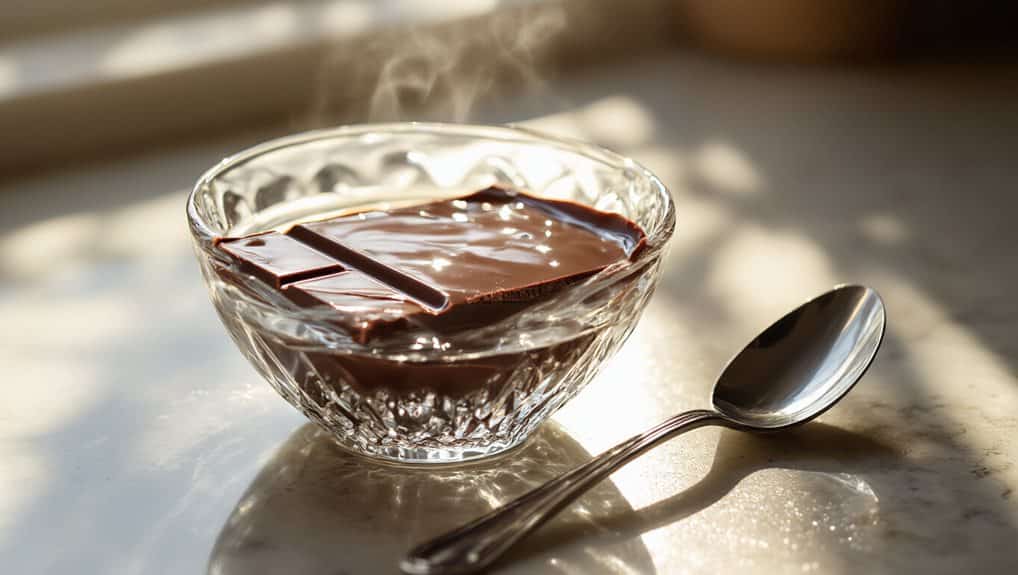
How do you turn grainy, seized chocolate back into a smooth, usable melt? Transfer it to a dry, heat‑proof bowl and keep it warm over low heat or a double boiler. Add one teaspoon of boiling water, whisk vigorously for thirty seconds, then observe the texture. If grainy remains, repeat with another teaspoon, whisk constantly, and continue until the chocolate shines and becomes silky. Strain any lumps, then cool before using.
How to Choose a Liquid or Fat Fix for Seized Chocolate
When your chocolate seizes, the next decision is whether to thin it with a liquid or enhance it with a fat, and the choice hinges on how you plan to use the melt. Use a liquid—milk, cream, or water—if you need a sauce, ganache, or brownie batter, because it dilutes and smooths.
Choose a fat—vegetable oil, butter, or coconut oil—when you want to keep thickness for dipping, coating, or drizzling, preserving richness without adding noticeable moisture.
Match the option to your recipe’s texture and flavor needs.
How to Prevent Chocolate From Seizing: Dry Tools, Low Heat, Proper Chopping
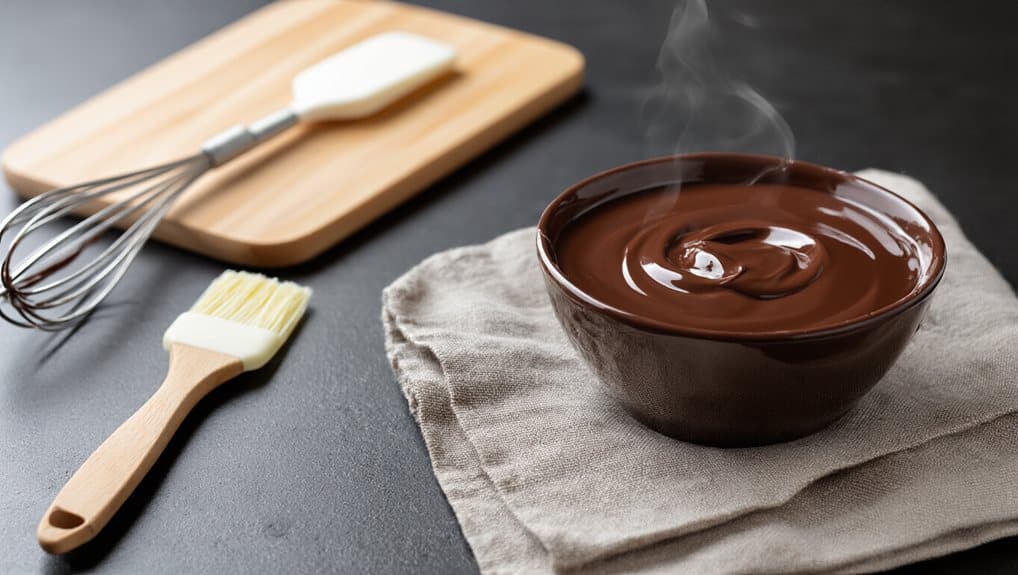
Ever wondered why chocolate sometimes turns grainy instead of silky? Keep every bowl, spatula, and board dry—wipe them with rubbing alcohol and store them separately. Chop chocolate into uniform, tiny pieces on a dedicated dry board. Melt using low heat: double‑boiler simmer below 120°F for dark, below 110°F for milk/white, or microwave at 50% power in short bursts. Maintain a moisture‑free workspace throughout. Choose non-porous, BPA-free tools and containers—like food-grade PET—to help resist moisture and odors that can contribute to seizing.
How to Repurpose Fixed Chocolate for Ganache, Sauces, and Drizzling
After drying your tools and keeping the melt low, you can turn the rescued chocolate into useful components for desserts. Mix it 1:1 with hot cream for smooth ganache, then cool for truffles or frosting.
Melt with butter for a thick sauce, or add boiling water for a thin drizzle over cakes and ice cream.
Use water‑rescued chocolate with extra water for controlled viscosity, avoiding shiny coatings. For any tuna-based dessert experiments, remember opened canned tuna should be kept at or below 40°F and used within 3 to 4 days.
How to Restore Shine and Snap With Tempering After Rescue
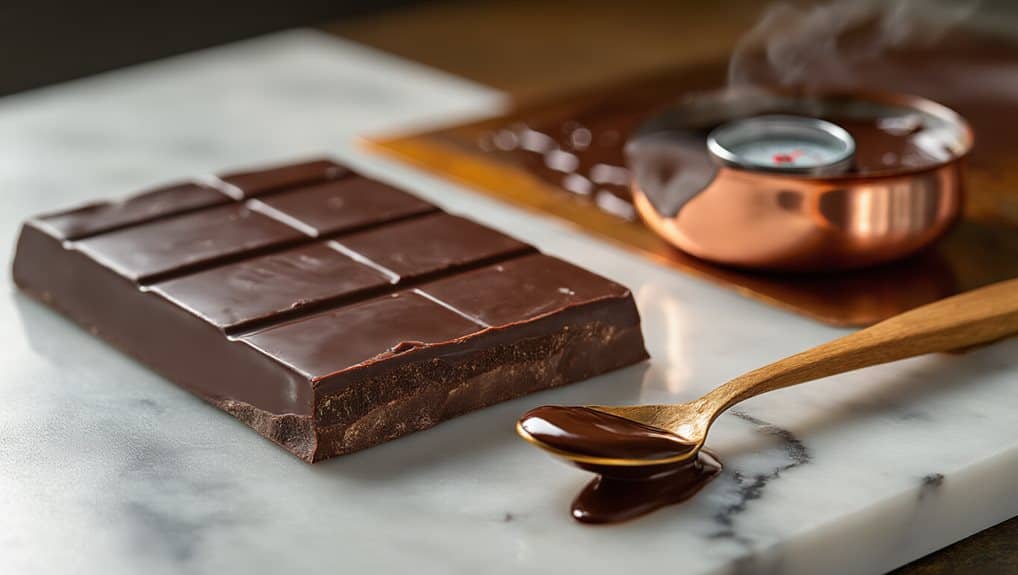
First, melt the rescued chocolate to about 115 °F, then seed it with a small amount of pure cacao butter to re‑introduce stable crystals. As the mixture cools, keep stirring until it reaches the pre‑crystallization range, then gently re‑temper it to the working temperature for a glossy finish. This quick sequence restores both the snap and the shine, letting you use the chocolate as if it never seized.
Melt To 115°F
How do you bring a seized chocolate back to a usable state?
First, chop the chocolate finely and place it in a dry metal bowl over a simmering double boiler. Stir constantly, watching the thermometer. Dark chocolate can reach 115°F, while milk and white should stay below 110°F. Remove from heat at target, then cool to 95°F on a towel before tempering.
Seed With Cacao Butter
A small amount of tempered cocoa butter can revive seized chocolate and bring back its glossy shine and firm snap. Add 1‑2 % melted tempered butter at 89 °F, then stir continuously while cooling to 85 °F. The butter seeds stable Form V crystals, giving the chocolate a smooth, snap‑ready texture. Test by dipping a spoon; a hard, streak‑free surface confirms success.
Cool And Re‑Temper
After you’ve rescued the seized chocolate with a butter seed, the next step is to cool it down and re‑temper it so the shine and snap return.
Cool the melt to about 88‑90 °F while stirring, then seed and let it drop to 84 °F.
Reheat gently to 31‑32 °C, keep it at 89‑91 °F, and test by dipping parchment; smooth, shiny set means success.
Wrapping Up
You’ve learned why chocolate seizes and how to rescue it with water, oil, or clarified butter. Choose the right fix, melt gently, and temper if you need shine and snap. By keeping tools dry, using low heat, and chopping evenly, you’ll prevent future seizures. Once rescued, the chocolate can become ganache, sauce, or drizzle, letting you finish your recipe without waste. Follow these steps, and your chocolate will stay smooth and workable.


