
You’re getting a tough crust because you’ve over‑mixed the dough, melted the butter, or added too much water, which all strengthen gluten and eliminate the cold, flaky layers. Over‑mixing creates an elastic network that makes the crust chewy, while warm butter blends into the flour instead of forming distinct pockets that steam into lift. Excess water hydrates the gluten too much, resulting in a dense texture. Keep ingredients ice‑cold, mix just until shaggy, and chill the dough before rolling; doing so preserves flakiness and prevents toughness, and the next steps will show you how to fix a crust that’s already baked.
Quick Guide
- Over‑mixing activates gluten, creating an elastic network that makes the crust tough and chewy.
- Adding too much water or adding it too quickly strengthens gluten bonds, resulting in a dense, hard crust.
- Butter that’s too warm or melted blends into the flour, eliminating the cold fat pockets needed for flaky layers.
- Failing to keep ingredients and dough cold allows butter to melt during mixing, reducing steam pockets and flakiness.
- Rolling or handling the dough excessively warms the butter and over‑develops gluten, leading to a tough, less tender crust.
Why Over‑Mixing Makes a Flaky Crust Tough
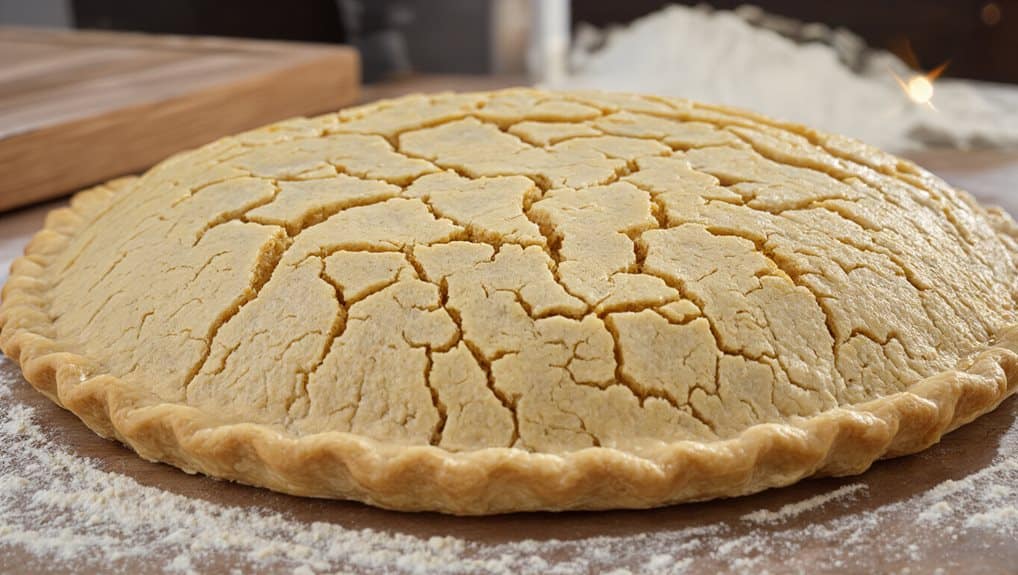
Why does over‑mixing ruin a flaky crust? When you stir too long, gluten proteins in the flour become agitated and form an elastic network, turning the dough tough and chewy. The butter can’t stay in separate layers, so the crust loses its flakiness and feels cardboard‑like.
Stop mixing once the dough comes together—aim for a shaggy look rather than overworking it into an elastic mass, and consider using an ergonomic handle tool to reduce hand fatigue and improve control. Hand‑mix or use a food processor briefly, and stop as soon as the mixture looks shaggy. Keep the ingredients cold to prevent the fat from breaking down.
How Butter Temperature Controls Flakiness in a Flaky Crust
You’ll notice that keeping butter frozen until you mix it creates solid chunks that melt into the dough, forming distinct layers that lift into flakiness.
If the butter is merely cold, it still holds its shape, but the particles can blend more easily, giving you a less pronounced layered effect. Room‑temperature butter coats the flour evenly, reducing gluten development and yielding a tender crust. If you want extra browning at the end, a quick blast on low broil can help crisp the top without overbaking the filling.
Frozen Butter Must Stay Solid
A few solid pieces of frozen butter are all you need to start building a flaky crust, because the butter’s temperature dictates how it behaves during mixing and baking.
Keep butter below 32°F, grate it straight into flour, and chill your bowl and cutter.
This preserves solid pockets, limits water absorption, and creates steam‑filled layers that stay light and never turn tough.
Cold Butter Creates Layers
How does butter’s temperature shape the layers in a pie crust? Cold butter stays in chunks, mixing unevenly with flour. Those chunks melt during baking, forming steam pockets that should lift layers, but they also demand extra handling. Extra work activates gluten, making the crust tough.
In contrast, room‑temperature butter coats flour evenly, limiting water absorption, reducing gluten formation, and yielding a tender, flaky result.
Freeze Butter for Flakiness
Why does freezing butter make a crust flakier?
When you freeze butter into cubes or grate it, the fat stays solid below 32°F, so it resists blending into flour. This keeps gluten activation low and creates tiny steam pockets as the butter melts in the oven.
A 15‑30‑minute freeze yields pea‑sized bits, giving consistent layers and reducing toughness by up to 60 %.
The Role of Water for a Flaky Crust: Too Much vs. Just Enough
You’ll notice that a little water lets the dough hold together without becoming sticky, while too much triggers gluten formation and makes the crust tough. By measuring ice‑cold water in small increments—about a quarter cup to start and a tablespoon at a time—you can keep the hydration just right and preserve the flaky layers. Using techniques like keeping everything chilled and adding the water gradually helps you control moisture and avoid the heavy, chewy texture that excess water creates. If you’re freezing extra dough for later, wrap it well and aim to use it within 2–3 months for best quality.
Balancing Water Ratio
Ever wonder why a perfect pie crust feels melt‑in‑your‑mouth while a sloppy one turns chewy? You need just enough ice‑cold water—usually ½ cup, added one tablespoon at a time—so the dough clumps instead of becoming sticky.
Too much water makes dough tacky, forces extra flour, and ruins flaky layers. A balanced ratio keeps butter distinct, preserves tenderness, and yields a melt‑in‑your‑mouth crust.
Water’s Effect on Gluten
How much water you add determines whether the gluten in your pie dough stays gentle or turns tough. A little water gives proteins just enough binding sites, so the gluten network stays light and the crust stays flaky. Too much water creates excess bound water, encouraging stronger gluten bonds, making the dough sticky and over‑worked, which yields a dense, tough crust. Use the minimum amount needed for a cohesive dough.
Moisture Control Techniques
Why does water make or break a flaky crust? Add cold water tablespoon by tablespoon, squeezing dough until it holds shape without crumbling. Too much water see seepage, filling air pockets and making the crust dense or soggy. Just enough water creates steam pockets, keeping layers tender and crisp. Test regularly, avoid overworking, and use metal pans or blind‑baking to control moisture precisely.
Why Chilling the Dough Is Non‑Negotiable for Flaky Crusts
What happens when you skip the chill step? The butter stays soft, blending into flour and making the crust dense. Cold fat pockets, however, stay solid, creating layers that puff into steam pockets while baking. Chilling also relaxes gluten, preventing elasticity that leads to toughness. A firm, chilled dough rolls easily, holds shape, and yields a light, flaky result. Like cold fat pockets in pastry, solid components create better structure—just as cooking eggplant seeds with the flesh helps balance their bitterness.
Why Mixing Mistakes Melt Butter and Damage Flakiness
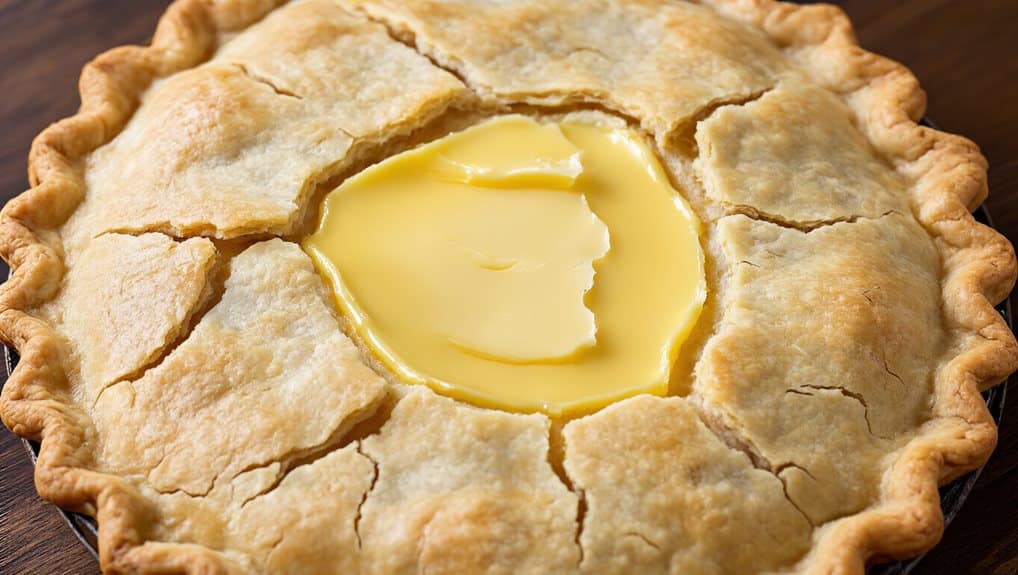
Ever wondered why a pie crust that starts with melted butter never turns out flaky? When you melt butter, it coats flour uniformly, eliminating the cold pockets that create layers.
Over‑mixing then develops too much gluten, making the dough dense. Light stirring until smooth, and careful liquid balance, preserve the structure you need for true flakiness. Just as scrambled eggs shouldn’t sit out at room temperature for more than 2 hours, butter-based dough benefits from prompt chilling to protect texture.
How to Fix a Tough Crust After Baking
Can a baked crust that feels like cardboard be rescued? Lightly mist water on dry spots, then press the pieces together with your fingers, letting the moisture rehydrate the crumb. Chill the crust briefly, then gently fold or squeeze flaking sections back into shape. If the base is too soft, blind‑bake with beans or rice for twenty‑five minutes, remove the weights, and finish crisping.
Wrapping Up
By keeping butter cold, mixing gently, and using just enough water, you’ll get a tender, flaky crust instead of a tough one. Chill the dough before rolling, and avoid over‑working it to prevent the butter from melting. If the crust still turns out tough, a quick fix is to brush it with melted butter and re‑bake briefly to add moisture. Follow these steps, and your pies will have the perfect, flaky texture every time.


