
If your pizza dough is tough, it’s likely overworked, not rested enough, or made with the wrong hydration or flour. Overkneading develops too much gluten, making the dough dense and chewy, while inadequate resting prevents gluten relaxation, leading to a tough crust. Using high-protein flour without proper hydration or not covering the dough during fermentation can also cause toughness. Pay attention to these factors, and you’ll uncover more ways to improve your dough’s texture.
Quick Guide
- Overkneading or handling the dough excessively develops strong gluten, resulting in a tough texture.
- Not allowing the dough to rest prevents gluten relaxation, leading to increased toughness.
- Using high-protein flour without proper hydration makes the dough denser and chewier.
- Insufficient or improper proofing weakens gluten structure, causing a tough crust after baking.
- Overworking or overproofing the dough reduces elasticity, making it more difficult to shape and resulting in toughness.
Why Does My Pizza Dough Turn Out Tough?
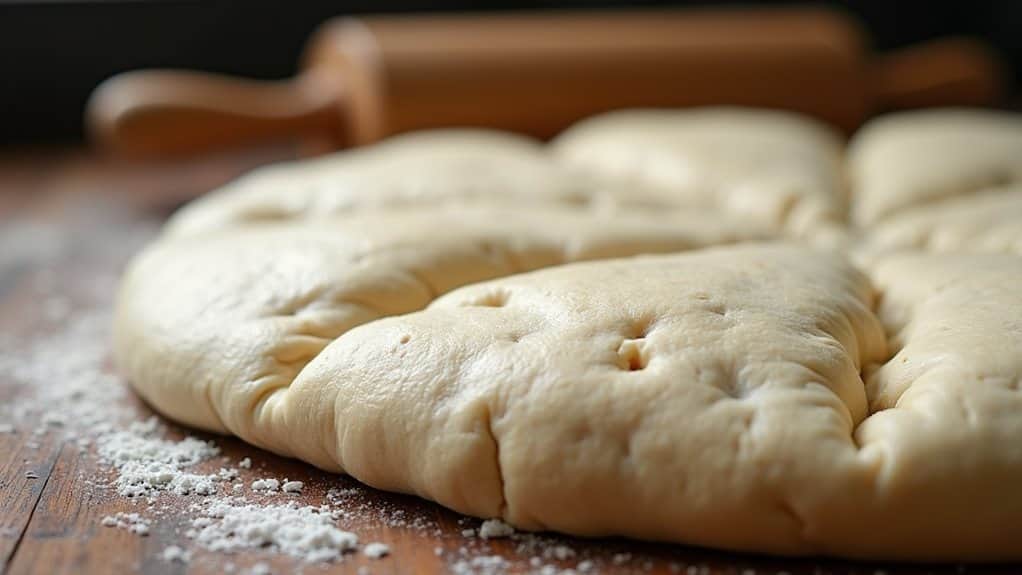
When your pizza dough turns out tough, it’s often because of how it’s been handled during preparation. Overkneading or not allowing the dough to rest keeps gluten tight, making it tough.
Proper hydration helps create a softer dough, while insufficient rest prevents gluten from relaxing.
Balancing knead and rest times is key to a tender, well-textured crust. Using a vacuum sealer with Dry and wet modes can also help you store dough portions airtight to maintain moisture before baking.
How Overworking Gluten Makes Dough Dense
When you overwork gluten by kneading too much, it creates a strong, tight network that makes your dough tough and less stretchy.
This repeated handling, especially after the initial development, causes the gluten strands to tighten further, reducing flexibility.
Over-kneading or excessive rolling can make the dough dense and chewy, instead of light and airy.
Just as cooking eggplant seeds with the flesh can let the sweetness offset bitterness, eggplant seeds are edible and often best enjoyed when cooked rather than raw.
Gluten Overdevelopment Causes Toughness
Overworking dough during kneading or handling can cause the gluten network to become excessively strong, leading to tough pizza dough.
Overkneading increases gluten formation, making the dough less elastic and harder to stretch. This overdevelopment traps air poorly, resulting in a dense, chewy crust.
It can also make the dough difficult to shape without tearing or becoming tough.
Excess Kneading Weakens Dough
Kneading dough correctly is key to achieving the right texture, but too much effort can backfire. Over-kneading causes excessive gluten development, making the gluten network too tight.
This weakens the dough’s elasticity, resulting in a tough, dense crust. When you knead your dough too long, it becomes difficult to stretch and may turn rubbery and less tender.
Overworking Gluten Reduces Elasticity
Excessive handling of the dough can overwork the gluten network, causing it to become too strong and tight. When you knead the dough too much, the gluten content increases, making the dough get tough and resistant to stretching.
An over-kneaded dough may tear when stretching and loses its elasticity, resulting in a dense, hard crust.
Why Resting and Gluten Relaxation Matter
Resting the dough is an essential step because it allows gluten strands to relax and loosen. This reduces dough elasticity and improves stretchability.
Proper gluten relaxation during resting dough prevents the gluten network from remaining tight, making the dough easier to shape without tearing.
This process results in a tender, airy crust after baking, avoiding toughness caused by overworking the dough. Similar to how frying reduces weight so the potato is about four times the chip bag’s weight, resting helps manage structure changes in dough for better texture.
How Hydration Levels and Flour Type Affect Softness
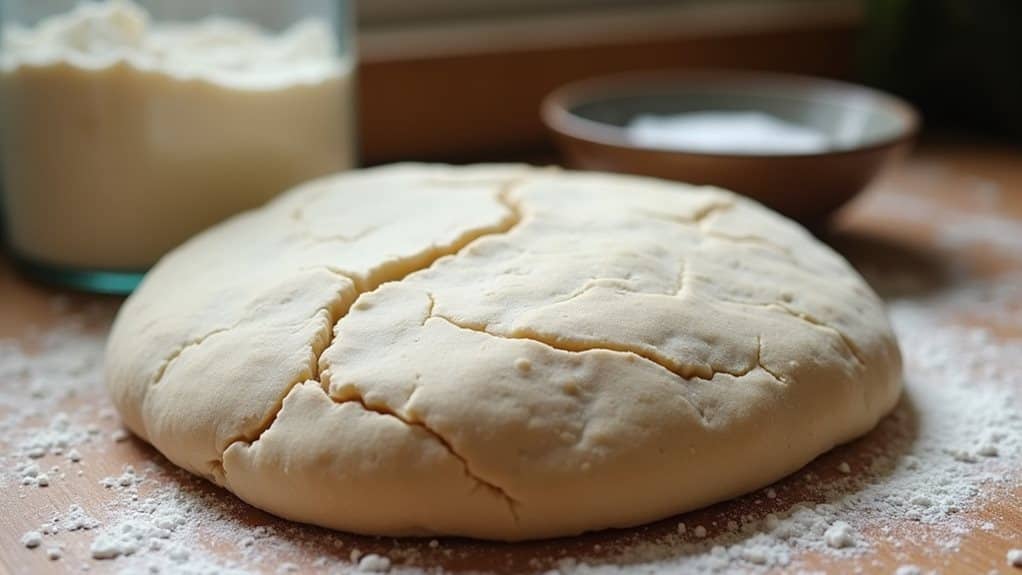
Your dough’s softness depends heavily on the amount of water you add and the type of flour you choose.
Higher hydration levels make the dough more elastic and tender, but too much can make it sticky and hard to handle.
Picking the right flour, like a moderate-gluten Italian Tipo 00, combined with proper hydration, is key to achieving that perfect, soft crust.
As with a 3:1 ratio when converting fresh herbs to dried, small proportional changes can have an outsized impact on your final results.
Impact of Hydration Percentage
Have you ever wondered why some pizza dough turns out tough while others are tender and easy to stretch? The hydration level markedly influences dough toughness and stretchability.
Higher hydration improves water absorption, aiding gluten development and creating a softer, more elastic dough.
Conversely, low hydration results in dry, tough dough that’s difficult to work with, especially depending on the flour type.
Role of Flour Quality
Choosing the right flour plays an essential role in determining how soft and manageable your pizza dough will be. Flour quality, such as Tipo 00 or high-gluten bread flour, affects gluten development and dough elasticity.
Fresher, high-quality flours absorb water better, promoting tenderness, especially when hydration levels are properly maintained. Using appropriate flour types helps prevent toughness and guarantees a softer crust.
How Proofing and Fermentation Influence Dough Texture
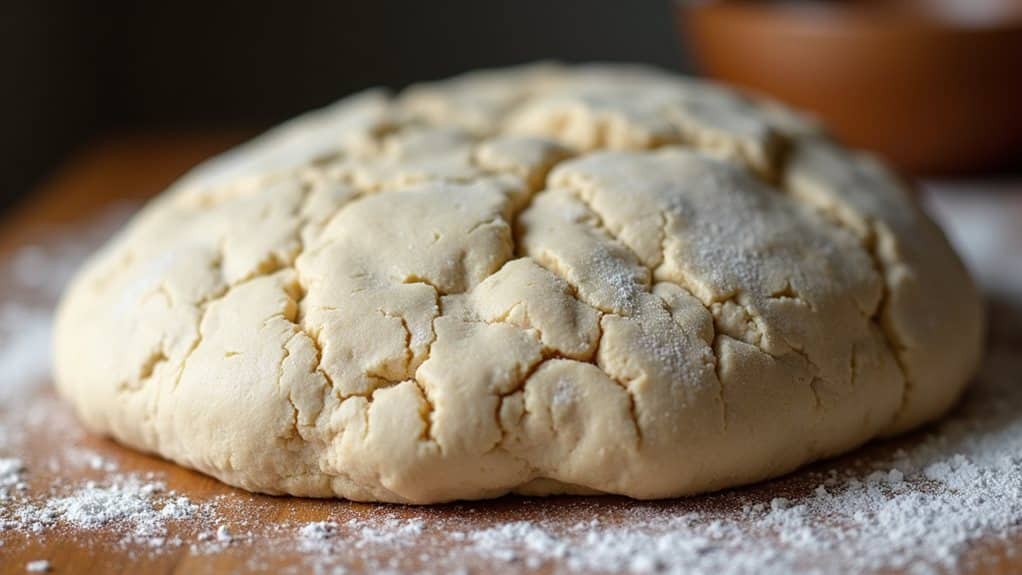
Proofing and fermentation play essential roles in determining the final texture of your pizza dough. Proper proofing allows gluten to relax and develop, making the dough softer and more pliable.
Overproofing weakens the gluten network, causing toughness, while underproofing results in a dense, tough dough.
Controlled fermentation enhances gluten development, improving dough elasticity and overall tenderness.
Keeping ingredients cool during mixing helps prevent gluten overdevelopment that can make dough tough.
The Role of Temperature and Handling in Achieving a Soft, Airy Crust
Temperature and handling are crucial factors in achieving a soft, airy pizza crust. Keeping the dough at room temperature during stretching maintains its elasticity, thanks to properly hydrated gluten.
Resting the dough relaxes gluten fibers, reducing toughness.
Gentle handling and gradual stretching preserve air bubbles, prevent drying out, and improve overall hydration, resulting in a lighter, softer crust.
Common Mistakes That Make Pizza Dough Tough: and How to Fix Them
Many common mistakes during the preparation and handling of pizza dough can lead to a tough, chewy crust.
Over-kneading develops too much gluten, creating a tough dough.
Using high-protein flour without proper hydration makes the crust harder.
Insufficient resting time prevents gluten relaxation.
Not covering the dough during fermentation causes it to dry out.
Tips for Keeping Your Pizza Dough Soft and Fluffy
To keep your pizza dough soft and fluffy, paying attention to proper hydration and handling is key.
When dough gets overworked, it becomes tough. Rest your dough for at least 30 minutes to allow gluten relaxation, which improves extendibility.
Cover it to prevent surface drying, and add fats to enhance moisture, helping maintain a tender, airy crust.
Wrapping Up
To keep your pizza dough soft and enjoyable, pay attention to how you handle and prepare it. Avoid overworking the dough, allow it to rest properly, and control hydration levels. Using the right flour and maintaining proper temperature during fermentation also helps create a tender crust. By following these guidelines and avoiding common mistakes, you can consistently achieve a pizza with a light, airy texture that’s far from tough or dense.


