
Yes, eggs can go bad, but you've got several reliable ways to check their freshness. The most effective method is the float test: place an egg in cold water – fresh eggs sink and lie flat, while older eggs float due to growing air pockets. Fresh eggs also have firm whites, clear yolks, and shells that are clean and crack-free without any unusual odors. Properly refrigerated eggs typically last 4-5 weeks past their pack date when stored below 40°F. For ideal safety, keep them in their original carton, avoid storing in the door, and check for cracks before use. There's much more to know about extending your eggs' shelf life.
Quick Guide
- Fresh eggs sink in water while floating eggs should be discarded, making the float test a reliable freshness indicator.
- Raw eggs typically last 4-5 weeks past their pack date when properly refrigerated at 40°F or below.
- Fresh eggs have dry, undamaged shells without cracks, firm whites, clear yolks, and little to no odor when cracked.
- Strong sulfur or rotten smells indicate spoilage and such eggs should be immediately thrown away.
- Store eggs in their original carton in the refrigerator main compartment, not the door, to maintain freshness.
Signs of Fresh Eggs
When checking for fresh eggs, several reliable indicators can help you determine their quality.
Look for dry, undamaged shells without cracks or sliminess. Fresh eggs should have little to no odor when cracked, firm whites, and clear yolks. A simple way to test freshness is to place eggs in a bowl of cold water – fresh eggs sink while floating eggs should be discarded. It's also important to remember that cooked eggs should not sit out at room temperature for more than 2 hours to ensure safety.
You'll also want to check the pack date and expiration date on the carton, as eggs typically stay fresh for 21-30 days after packaging.
The Float Test Method
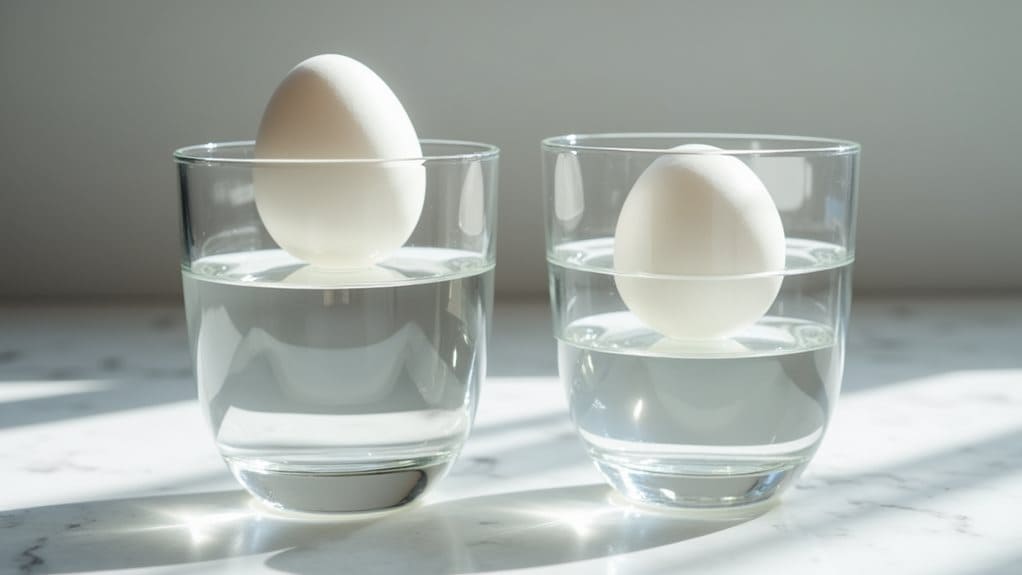
You'll find that testing your eggs' freshness is as simple as filling a bowl with cold water and gently lowering the egg into it.
A fresh egg will sink and lie flat on its side, while an egg that stands upright or floats indicates it's getting older or has gone bad. This is particularly important for highly perishable foods, such as strawberries, as freshness tests can help prevent spoilage.
The science behind this reliable kitchen test comes down to basic density, as aging eggs develop larger air pockets that increase their buoyancy in water. An egg that stands upright but still touches the bottom is safe to eat but should be used soon.
Water Test Step Guide
Testing an egg's freshness can be quickly done using the float test method in cold water.
Fill a bowl with enough cold water to fully submerge the egg, then gently place it in. Fresh eggs will sink and lay flat, while week-old eggs will tilt slightly.
If your egg stands upright or floats, it's older but may still be usable after a sniff test. A strong sulfur or rotten smell when cracked indicates the egg has spoiled and should be discarded.
When Eggs Float Bad
The float test offers clear observations into an egg's age and safety through a simple scientific process.
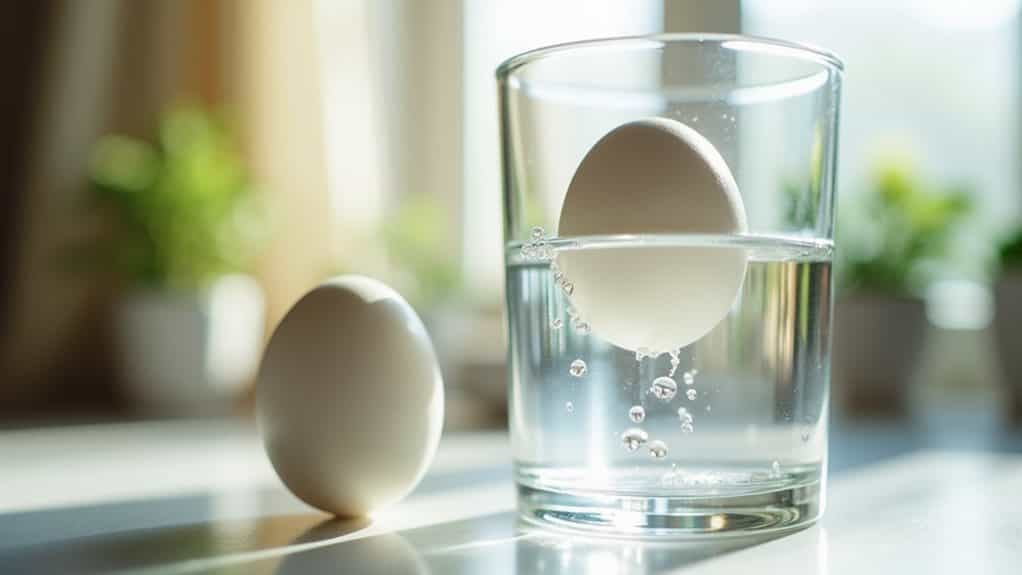
When an egg floats in water, it's usually because its air cell has expanded as it ages, allowing more air to enter through the porous shell.
While floating doesn't always mean it's spoiled, you'll want to crack these eggs separately and check for any off-putting odors before using them. Fresh eggs will sink and lie flat when submerged in water.
Understanding Fresh Egg Density
Diving into the science of egg density reveals why the float test works so reliably.
Fresh eggs contain less air and more liquid content, making them denser than water, which causes them to sink. As an egg ages, moisture evaporates through its porous shell, creating a larger air pocket that increases buoyancy. Eggs that are about 2-3 weeks old will stand vertically near the container's bottom.
You'll notice older eggs beginning to tilt upward or float entirely.
Storing Eggs Properly

Proper egg storage greatly impacts their freshness and safety.
You'll want to keep your eggs in the refrigerator at 40°F or below, storing them in their original carton away from the door.
For longer preservation, you can freeze beaten eggs in ice cube trays, coat fresh eggs with mineral oil, or try water glassing using sodium silicate solution, which can extend shelf life up to 18 months. Additionally, just like with Jimmy Dean sausage, proper storage is essential to prevent spoilage and maintain quality.
Egg Storage Time Limits
Fresh eggs have distinct storage time limits that vary based on how they're prepared and where you store them.
In your refrigerator, raw eggs in their shells will last 4-5 weeks past the pack date, while beaten raw eggs only keep for 2 days.
You'll want to use peeled hard-boiled eggs the same day, though unpeeled ones can last up to a week when refrigerated. Additionally, it's important to note that deviled eggs can be stored in the fridge for up to four days, but maximum freshness occurs within two days.
Hard-Boiled Egg Storage Guidelines
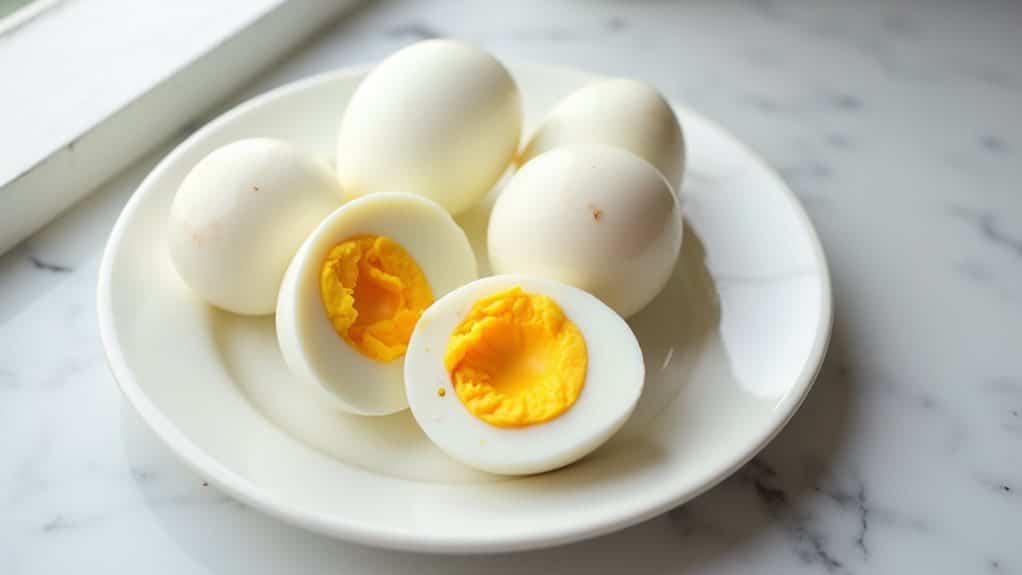
Safe storage of hard-boiled eggs starts with keeping them in their shells until you're ready to eat them.
Store unpeeled eggs in a covered container in your refrigerator's main compartment, not the door.
For peeled eggs, submerge them in cold water and change it daily, or wrap them in damp paper towels in an airtight container.
Don't forget to label the container with the boiling date. Proper storage of sour cream is also essential to maintain its freshness and prevent spoilage.
Room Temperature Safety Rules
Keeping eggs at room temperature is a risky practice that can lead to rapid bacterial growth and potential foodborne illness.
You shouldn't leave eggs unrefrigerated for more than 2 hours, as bacteria can multiply quickly at room temperature.
Store your eggs in the refrigerator below 40°F to maintain safety and freshness, and always keep them in their original carton to protect against odors and contamination.
Preventing Spoilage
Proper storage and handling techniques are your best defense against egg spoilage.
Keep eggs in their original carton with the large end up at a consistent temperature below 40°F.
Don't wash eggs before storing them, as this removes their protective coating.
Check shells for cracks, rotate your stock regularly, and use clean utensils when handling eggs to prevent bacterial contamination.
When to Toss Eggs
You can quickly check if your eggs are past their prime by looking for obvious signs of spoilage, including cracks, sliminess, or powdery spots on the shell.
A simple float test in a bowl of water will reveal if your eggs are fresh (they'll sink and lay flat), aging (they'll stand upright), or spoiled (they'll float to the surface).
Before cracking open any egg, inspect its contents in a separate bowl for discoloration, unusual odors, or runny consistency that could indicate spoilage.
Visual Signs of Spoilage
Eggs' visual appearance provides essential clues about their safety and freshness.
You'll want to check both the shell and interior condition. Look for cracks, slimy spots, or unusual discoloration on the shell.
When cracked open, fresh eggs should have a thick, slightly cloudy white and firm, rounded yolk.
If you spot pink, green, or iridescent colors in the whites or yolk, discard immediately.
Float Test Basics
Beyond visual inspection, the float test offers a quick and reliable way to gauge an egg's freshness.
Simply place your egg in a bowl of cold water and observe its position. Fresh eggs will sink and lie flat, while eggs that stand upright are older but still usable.
If your egg floats to the top, it's best to discard it.
Wrapping Up
By following proper storage guidelines and checking your eggs' freshness regularly, you'll keep your family safe while minimizing food waste. Remember to store eggs in their original carton, maintain consistent refrigerator temperatures, and use the float test when in doubt. While eggs can last several weeks when properly stored, you shouldn't take chances with questionable ones – when uncertain, it's always better to throw them out.


