
Yes, mushrooms go bad fast because they’re full of moisture and soak up microbes easily. You’ll know they’ve spoiled if they feel slimy, look wrinkled or dark, or smell fishy. Keep them fresh by storing in a paper bag in the fridge—never sealed in plastic. Skip the wash until you’re ready to cook. For longer use, try drying, freezing, or vacuum sealing. There’s more to learn about keeping them at their best.
Quick Guide
- Yes, mushrooms spoil quickly due to high moisture and porous skin, showing wrinkles, slime, or foul odors when bad.
- Store fresh mushrooms in paper bags in the main fridge to allow airflow and prevent excess moisture buildup.
- Never wash mushrooms before storing—keep them dry to avoid premature spoilage and slimy texture.
- Extend shelf life by quickly cooling after harvest and maintaining temperatures between 34°F and 41°F.
- For long-term storage, dry, freeze, or vacuum seal mushrooms to preserve freshness for weeks or months.
Do Mushrooms Go Bad? Here’s How to Tell
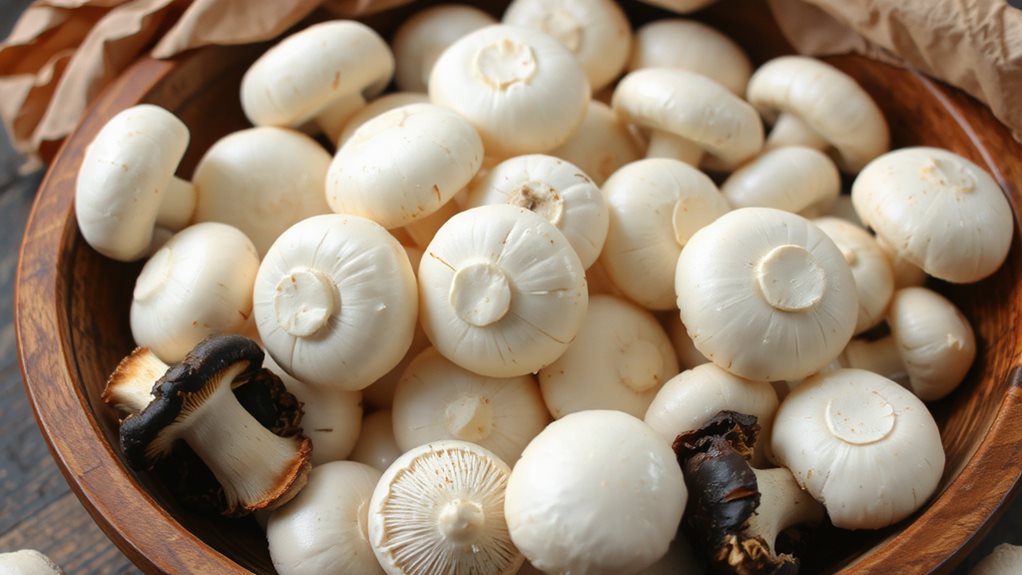
How can you tell when mushrooms have gone bad? Check for wrinkles—fresh ones are plump and smooth.
If they feel slimy or look dark and discolored, they’re spoiling.
A foul smell or mushy texture means toss them out. A strong fishy odor is also a clear sign they’ve spoiled.
Always use your senses: firm, dry, and earthy-smelling mushrooms are safe. When in doubt, throw them away.
Proper storage can significantly extend freshness, so keep them in a paper bag to allow airflow and prevent moisture buildup.
Why Mushrooms Spoil So Fast (And How to Slow It)
You mightn’t realize how quickly mushrooms spoil because they’re packed with moisture—up to 95%—and their porous bodies soak up contaminants easily. Consider using airtight containers to minimize air exposure in the fridge and slow quality loss.
Without a protective outer layer, they lose water fast and invite bacteria or mold, especially if you skip refrigeration. Keep them cool from the start, since a steady cold chain slows down both moisture loss and microbial growth. Rapid post-harvest respiration generates internal heat, effectively cooking the product and accelerating spoilage even before cooling begins.
Moisture And Porosity Issues
Because mushrooms are made up of about 90% water and have a porous, thin skin, they lose moisture quickly and are highly prone to spoilage soon after harvest.
You’ll notice wilting or weight loss within days. Their skin lets in microbes easily, and trapped moisture in packaging encourages mold.
Keep them dry and well-ventilated to slow decay and maintain freshness longer.
Cold Chain Importance
Keeping mushrooms dry helps, but temperature control plays an even bigger role in how long they stay fresh.
You need to keep them cold—ideally between 34°F and 41°F—to slow decay. They respire quickly, generating heat that speeds spoilage.
Cool them fast after harvest, and maintain a steady cold chain to preserve texture and extend shelf life up to 9 days.
How to Store Mushrooms So They Last Longer
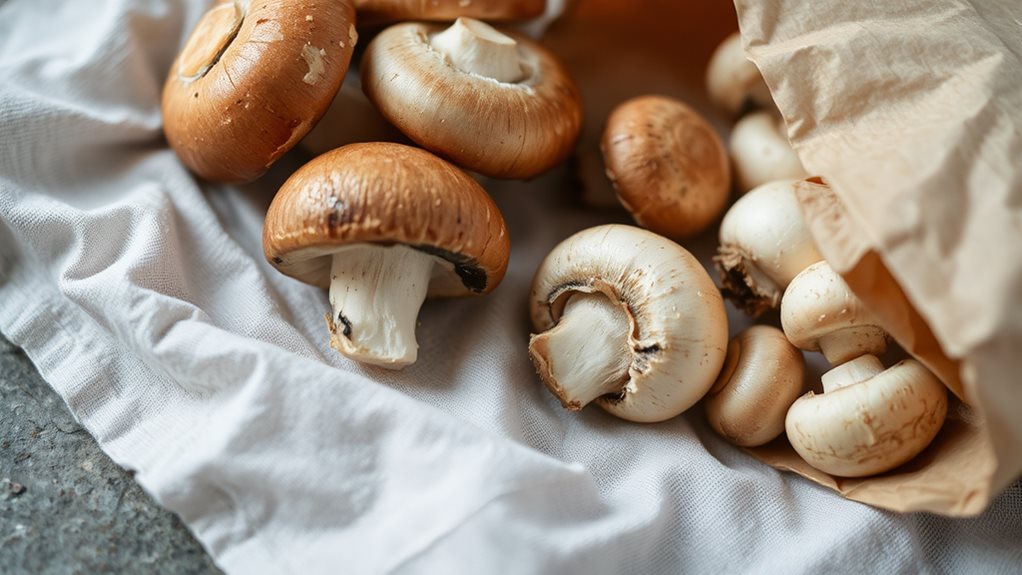
When it comes to making mushrooms last, how you store them makes all the difference. Keep fresh ones in paper bags or perforated containers to avoid moisture buildup.
For long-term use, dry or vacuum seal them with silica packs. Dried mushrooms thrive in cool, dark spots, while pickled or canned varieties last months when properly sealed. Opened canned mushrooms can also be frozen in a freezer-safe bag, and do not freeze unopened cans because pressure can build up.
Keep Mushrooms Crisp in the Fridge: Pro Tips
You’ve stored your mushrooms the right way—now let’s make sure they stay crisp. Skip plastic, which traps moisture and causes slime.
Use paper bags lined with fresh paper towels to absorb excess dampness. Change the towels if they’re wet.
Store in the main fridge, not the crisper, for consistent, dry air. Keep them dry until use—no washing ahead of time.
For longer storage, consider freezing to keep them fresh over time.
Drying Mushrooms for Long-Term Storage
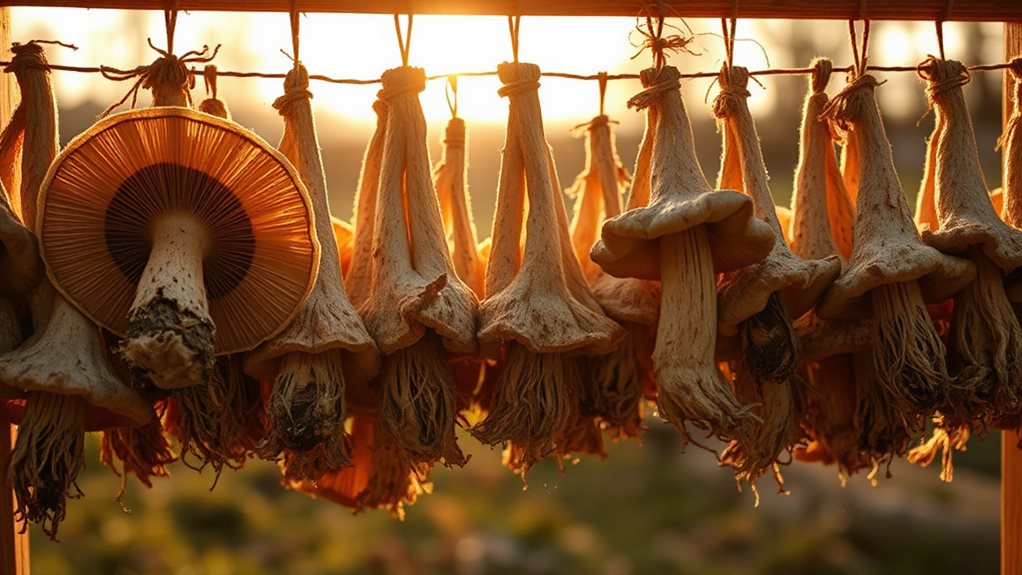
Drying mushrooms is one of the smartest ways to preserve their flavor and extend their shelf life for months.
Choose low-moisture types like shiitake or porcini, slice them evenly, and arrange in a single layer.
Use a dehydrator at 125°F–135°F for 4–6 hours, or dry in a low oven or well-ventilated area.
Test for leathery, pliable texture, then store in airtight containers in a cool, dark place.
For best quality, keep dried mushrooms in airtight containers to minimize air exposure and maintain their texture.
Freeze or Vacuum Seal? Best Long-Term Options
After drying extends the life of your mushrooms for months, freezing or vacuum sealing can take preservation even further—especially when you want to lock in freshness for long-term use.
Freeze raw mushrooms using IQF, then vacuum seal them to prevent freezer burn.
For cooked mushrooms, steam or sauté first, cool quickly, and seal tightly.
Vacuum sealing prolongs shelf life, maintains texture, and makes portioning easy—ideal for busy cooks who want quality without waste.
Safe Long-Term Methods: Canning, Brining & Mylar Bags
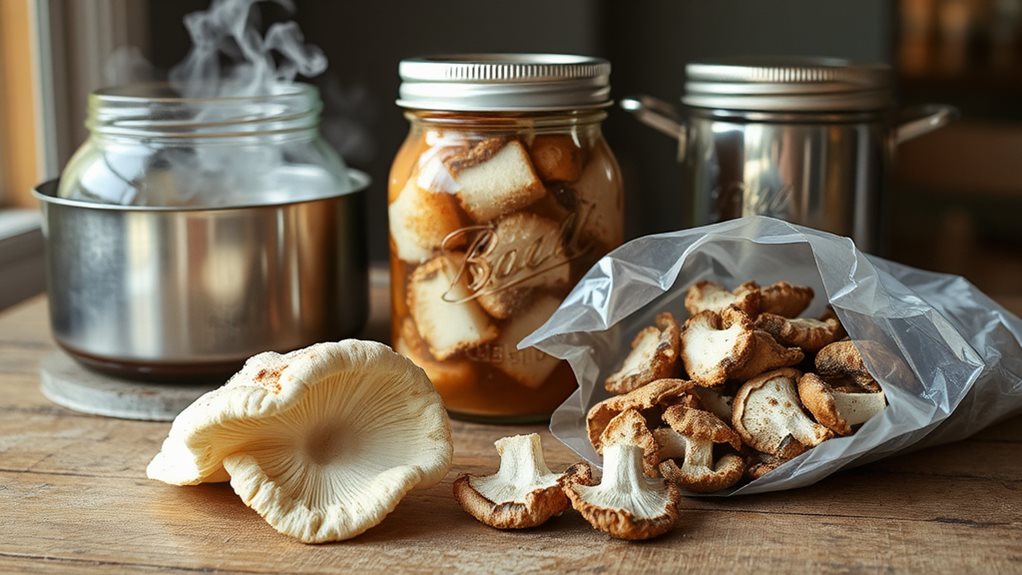
While freezing and drying help extend shelf life, canning mushrooms through brining offers a safe, long-term preservation method that also infuses them with bold flavor.
You’ll blanch mushrooms, pack them in jars, and pour hot brine over them before sealing. Properly sealed jars last years unopened, though you’ll want to use them within a year for best quality.
Wrapping Up
You can keep mushrooms fresh longer by storing them right. Skip the airtight container—use a paper bag in the fridge instead. Check for slime, dark spots, or odd smells to catch spoilage early. For long-term use, try drying or freezing. Vacuum sealing helps too, and canning or brining works if done safely. With these simple steps, you’ll reduce waste and always have mushrooms ready when you need them.


