
Apple cider vinegar won't go bad in the traditional sense due to its highly acidic nature, which acts as a natural preservative. You can expect your vinegar to maintain its quality for 2-3 years after opening when stored properly in a cool, dark place. While you might notice some changes like cloudiness or sediment (especially in raw, unfiltered varieties), these aren't signs of spoilage but rather natural occurrences. The only time you should discard your vinegar is if you spot mold growing on the surface or cap. Your vinegar's indefinite shelf life means you can keep using it well beyond the expiration date, though understanding proper storage methods will help maintain its ideal quality.
Quick Guide
- Apple cider vinegar doesn't technically go bad due to its high acidity level, giving it an indefinite shelf life when stored properly.
- Unopened vinegar stays stable indefinitely, while opened bottles maintain quality for 2-3 years in cool, dark storage conditions.
- Cloudiness, sediment, or "mother" formation are normal changes that don't affect safety or indicate spoilage.
- Visible mold growth on the cap or surface is the only clear sign of spoilage, requiring immediate disposal.
- Label expiration dates are quality guidelines rather than safety indicators, as vinegar remains safe well beyond printed dates.
Understanding Apple Cider Vinegar

Nearly all apple cider vinegar begins as fresh apples that undergo a two-stage fermentation process.
First, yeast converts the sugars from chopped apples and water into ethanol.
Then, bacteria change this ethanol into acetic acid, which must reach at least 4% concentration to be classified as vinegar.
You'll find two main varieties: filtered and pasteurized, or raw and unfiltered containing the beneficial "mother." Thanks to its high acidity level, apple cider vinegar has an indefinite shelf life when stored properly. Additionally, proper storage techniques can further enhance its longevity and quality.
Natural Preservation Properties
Preserving food and fighting harmful bacteria are two primary functions of apple cider vinegar's natural antimicrobial properties.
You'll find it effectively kills pathogens like E. coli and Salmonella, while its acidic nature helps clean fruits and vegetables. Additionally, when properly stored in sealed containers, apple cider vinegar can maintain its quality for an extended period.
When you're pickling vegetables or making marinades, it acts as a powerful preservative, extending shelf life and tenderizing meats, while also adding tangy flavor. Adding 2-3 tablespoons to your preservation recipes provides optimal antimicrobial effects.
Typical Shelf Life Duration
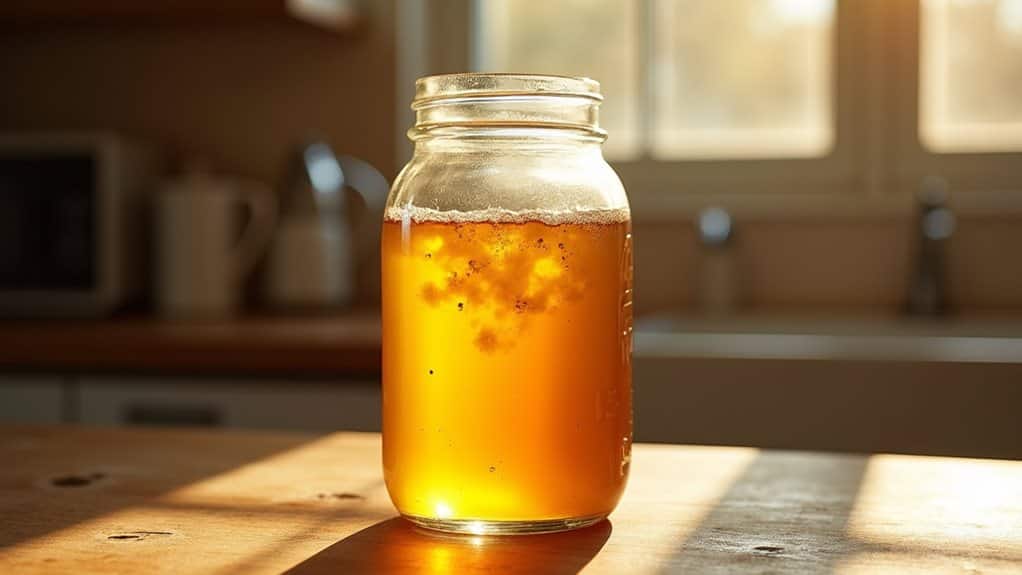
Apple cider vinegar boasts an impressively long shelf life, with unopened bottles remaining stable indefinitely when properly stored. Once you've opened a bottle, you can expect it to maintain its quality for 2-3 years if kept in a cool, dark place. While you'll notice expiration dates of 2-5 years on labels, they're merely guidelines, and your vinegar remains safe to use beyond these dates. The vinegar's natural acidic pH level of 2-3 helps preserve it and prevent spoilage. Proper storage can also help extend its shelf life, ensuring that you can enjoy its benefits for years to come.
Proper Storage Methods
When storing your apple cider vinegar, you'll want to choose either glass bottles or food-grade HDPE plastic containers to maintain its quality. It's important to note that proper storage practices can help extend the shelf life of your vinegar. Keep your vinegar in a cool, dark spot away from your stove and direct sunlight, as temperature fluctuations can affect its stability over time. You'll need to verify the container is sealed tightly with an airtight lid or twist cap to prevent unnecessary air exposure, which can compromise the vinegar's effectiveness and lead to contamination. Thanks to its high acidity level, apple cider vinegar is naturally self-preserving and doesn't require refrigeration.
Container Types Matter
The proper storage container plays an essential role in maintaining your apple cider vinegar's quality and shelf life.
Glass containers are your best choice since they won't react with the vinegar, while metal containers should be avoided.
Look for containers with tight-sealing lids to prevent air exposure, and make sure they're clean and completely dry before use.
Dark-tinted bottles can offer extra protection.
Storing apple cider vinegar in an airtight container helps preserve its natural antimicrobial properties.
Temperature and Location
Now that you've selected the right container, proper storage conditions will keep your apple cider vinegar in prime condition.
You'll want to store it in a cool, dark place like a pantry or basement, away from direct sunlight and heat sources.
While refrigeration isn't necessary, maintaining consistent room temperature helps preserve the flavor.
Don't worry about minor changes like haziness—they won't affect safety or usability.
Sealing Against Air Exposure
Proper sealing proves critical for maintaining your apple cider vinegar's quality and flavor over time.
You'll want to store it in a glass container with a tight-fitting lid to prevent oxygen exposure, which can cause deterioration and sediment formation.
Check your container's seal regularly for damage, and if you notice any wear, transfer the vinegar to a new bottle.
Remember to shake gently before use.
Signs of Quality Changes
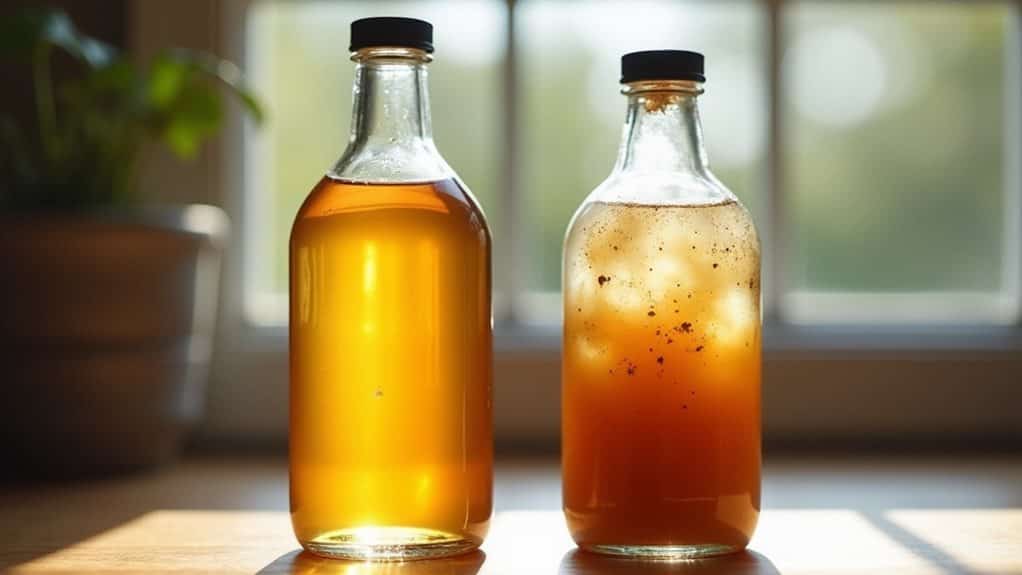
Understanding quality changes in apple cider vinegar helps you monitor its condition over time.
You'll notice it may become hazy or develop cloudy sediments at the bottom, which is perfectly normal.
While the color might change and the flavor may slightly diminish due to oxygen exposure, these changes don't affect its safety.
Watch for any mold on the cap or surface, though, as this means it's time to discard it. Additionally, proper storage methods can significantly extend its shelf life and maintain its quality.
Impact of Opening Vinegar
Once you've opened your apple cider vinegar, you'll notice minimal changes in its long-term storage potential.
You can expect it to maintain its quality for 2-3 years when properly stored in a tightly sealed container away from sunlight and heat.
While the flavor may gradually diminish over time due to oxygenation, your vinegar will remain safe to use, even beyond the expiration date.
Temperature and Light Effects
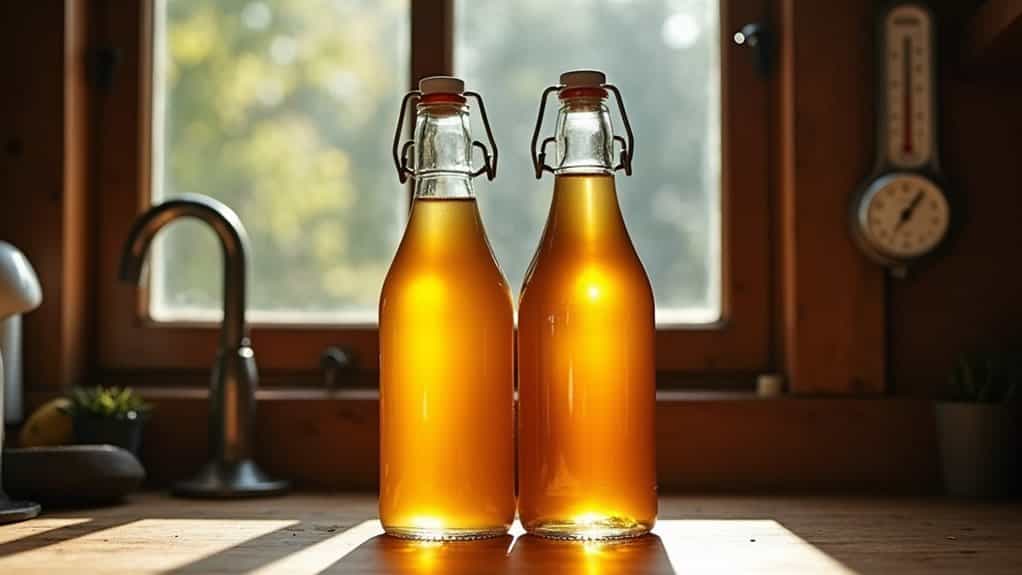
The storage environment plays a major role in maintaining your apple cider vinegar's quality.
While temperature won't affect its safety, keeping it in a cool spot helps preserve its flavor.
You'll want to store your vinegar away from direct sunlight, as light exposure can make it appear hazy and affect its taste.
For best results, place your vinegar in a dark cupboard or pantry.
Safe Consumption Guidelines
You'll know your apple cider vinegar needs replacing when you spot visible mold on the cap or surface, though this rarely happens due to its natural antimicrobial properties.
To keep your ACV in prime condition, store it in a tightly sealed glass or plastic container away from direct sunlight, and don't worry about refrigeration as it isn't necessary.
While you might notice some settling of sediment or cloudiness over time, these changes are completely normal and won't affect the vinegar's safety or usefulness in your kitchen.
Signs of Spoilage
Keeping tabs on apple cider vinegar's condition helps guarantee safe consumption, even though it rarely spoils due to its high acidity and natural antimicrobial properties.
While cloudiness and sediment are usually harmless, you'll want to watch for visible mold on the cap or surface, unusual odors, or markedly different tastes.
If you notice these warning signs, it's best to discard the vinegar.
Safe Storage Methods
Proper storage of apple cider vinegar guarantees its longevity and quality for years to come.
Keep your vinegar in a cool, dark pantry or basement, away from direct sunlight and heat sources.
Store it in a glass bottle with a tight-sealing lid to prevent oxygen exposure.
While plastic containers work, glass is preferred to avoid any chemical reactions.
Remember to check for mold and reseal tightly after each use.
When to Replace
While storing apple cider vinegar correctly extends its usability, knowing when to replace it helps maintain quality in your cooking and wellness routines.
You'll want to replace your vinegar if you notice mold on the cap or surface, though this is rare.
While aesthetic changes like cloudiness or sediment aren't concerning, always taste a small amount before use to verify it meets your needs.
Common Physical Changes

As apple cider vinegar ages, you'll notice several natural physical changes that don't necessarily indicate spoilage.
The liquid may become cloudy or develop sediment at the bottom, and you might see the "mother" (beneficial bacteria and yeast) become more visible.
You'll also find that the color and clarity may shift slightly, but don't worry—these changes are purely cosmetic.
Long-Term Storage Tips
Storing apple cider vinegar correctly can greatly extend its usable life.
Keep your vinegar in a glass or plastic container with an airtight seal, and place it in a cool, dark pantry or cupboard away from heat sources.
You don't need to refrigerate it, but you should maintain consistent room temperature storage.
Always reseal tightly after use and shake gently before using.
Using Expired Apple Cider Vinegar
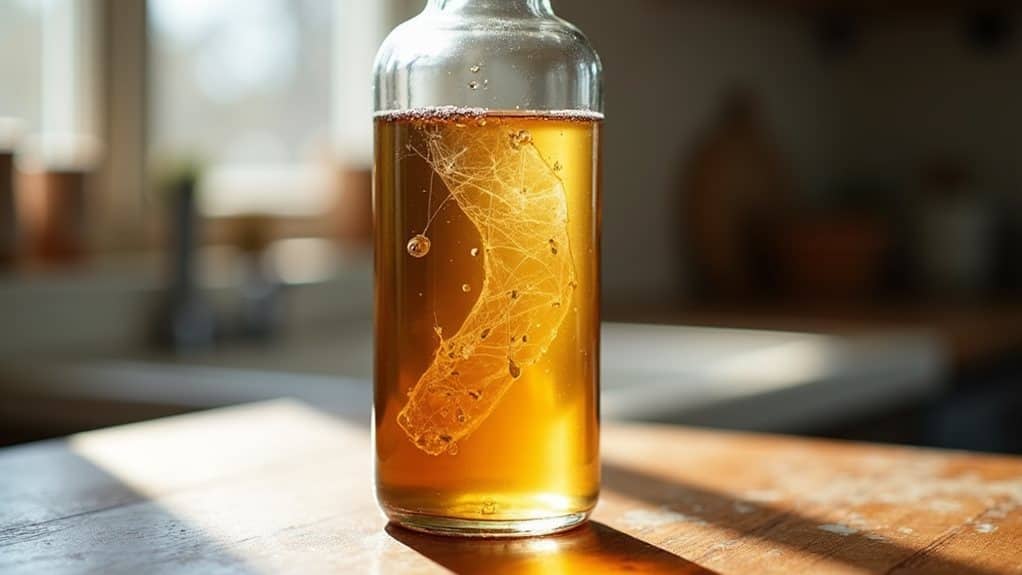
You'll be relieved to know that apple cider vinegar remains safe to use long after its expiration date, thanks to its high acidity and antimicrobial properties.
If your vinegar has passed its best-by date, you can still confidently use it for cooking, cleaning, or skincare purposes, though you might want to give it a quick taste test first to check its flavor.
When the taste isn't quite right for your recipes, you can shift its use to non-culinary applications like household cleaning or garden care, where flavor isn't important.
Safety After Expiration Date
Apple cider vinegar's exceptional shelf life makes it one of the most stable pantry items you can own.
You don't need to worry about the expiration date since its high acidity naturally preserves the product.
While you might notice some aesthetic changes like haziness or settling over time, these won't affect its safety.
Just store it in a cool, dark place with a tight lid, and you'll be fine.
Alternative Uses When Expired
Even after its best-by date, expired apple cider vinegar remains a versatile product with numerous practical applications throughout your home.
You can safely use it in cooking as a marinade or salad dressing ingredient, apply it as a natural skin toner, clean surfaces effectively, or add it to your haircare routine.
It's also useful for pickling foods and removing stubborn stains from carpets.
Maintaining Original Quality
Three key factors play an essential role in maintaining apple cider vinegar's original quality: proper storage conditions, minimal oxygen exposure, and consistent monitoring.
To preserve your vinegar's potency, store it in a tightly sealed glass container away from sunlight and heat.
You'll want to keep it in a cool, dark pantry and check for any changes in taste or appearance before use.
Gently shake the bottle to redistribute any settled solids.
Safety Indicators
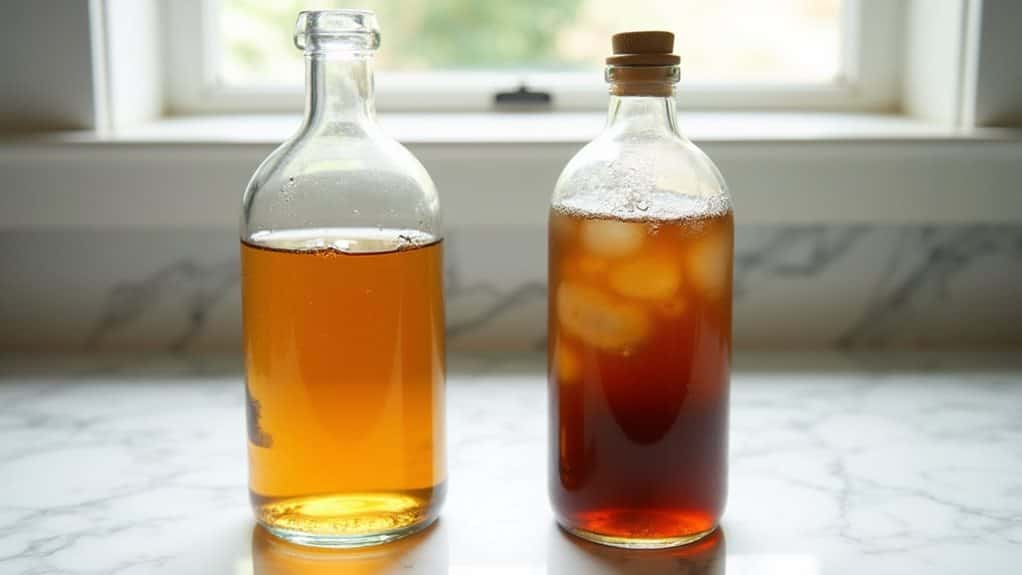
Knowing when your apple cider vinegar remains safe to use involves understanding several clear indicators.
You'll want to watch for visible mold on the cap or surface, which means you should discard it.
Don't worry about cloudy sediments or color changes – these are harmless.
While taste might become more sour over time, your vinegar's high acidity keeps it safe to consume, even past its expiration date.
Best Storage Containers
When storing your apple cider vinegar, you'll want to choose glass containers over plastic ones, as glass won't react with the vinegar's acidic properties and helps maintain its quality longer.
Your container's lid should fit tightly and seal completely to keep oxygen out, which can affect the vinegar's potency over time.
While large containers might seem economical, choosing smaller ones can help you avoid repeatedly exposing the vinegar to air, as frequent opening and closing can impact its preservation.
Glass Vs Plastic Options
Choosing the right storage container for your apple cider vinegar can greatly impact its longevity and quality.
Glass containers are your best option, as they're non-reactive and won't leach chemicals into your vinegar.
While plastic containers are lighter and more affordable, they can react with the vinegar's acidity over time.
If you're planning for long-term storage, invest in glass containers for ideal preservation.
Lid and Seal Quality
The quality of your apple cider vinegar's lid and seal plays an essential role in maintaining its freshness and preventing spoilage.
Always guarantee your container has a tight-fitting, undamaged lid that creates an airtight seal. Check the lid's condition regularly for signs of wear or deterioration, and clean it thoroughly before each use.
If you notice any leaks or damage, it's time to transfer your vinegar to a new container.
Container Size Matters
For ideal preservation of apple cider vinegar, selecting the right container size and type can greatly impact its shelf life.
You'll want to choose larger containers to minimize how often you're opening and closing them, reducing oxygen exposure.
Dark-tinted glass containers with narrow necks work best, as they protect against light while limiting air contact.
Match your container size to your usage to minimize headspace.
Wrapping Up
Your apple cider vinegar won't spoil easily due to its natural preservative properties, but you'll want to store it properly to maintain its quality. Keep it in a sealed glass container, away from direct sunlight and heat sources. While it's generally safe to use past its "best by" date, watch for changes in color, clarity, or the mother's appearance. With proper storage, you'll enjoy your vinegar's benefits for years to come.


