
To prevent pork chops from drying out, cook them to an internal temperature of 145°F, using a meat thermometer for accuracy. Let the chops rest for at least five minutes after cooking to allow juices to redistribute. Baste with butter or marinade to add moisture and flavor, and avoid piercing the meat, which releases juices. Searing quickly over medium-high heat helps lock in moisture. For more practical tips, continue exploring ways to make perfectly juicy pork chops.
Quick Guide
- Use a meat thermometer to cook pork chops precisely to 145°F, preventing overcooking and dryness.
- Rest the pork chops for at least five minutes after cooking to allow juices to redistribute.
- Avoid piercing or poking the meat during cooking to retain moisture.
- Sear quickly over medium-high heat for a tender exterior without overcooking the interior.
- Baste with butter or flavorful liquids during cooking to enhance moisture and flavor.
Why Overcooking Drys Out Pork Chops: And How to Avoid It
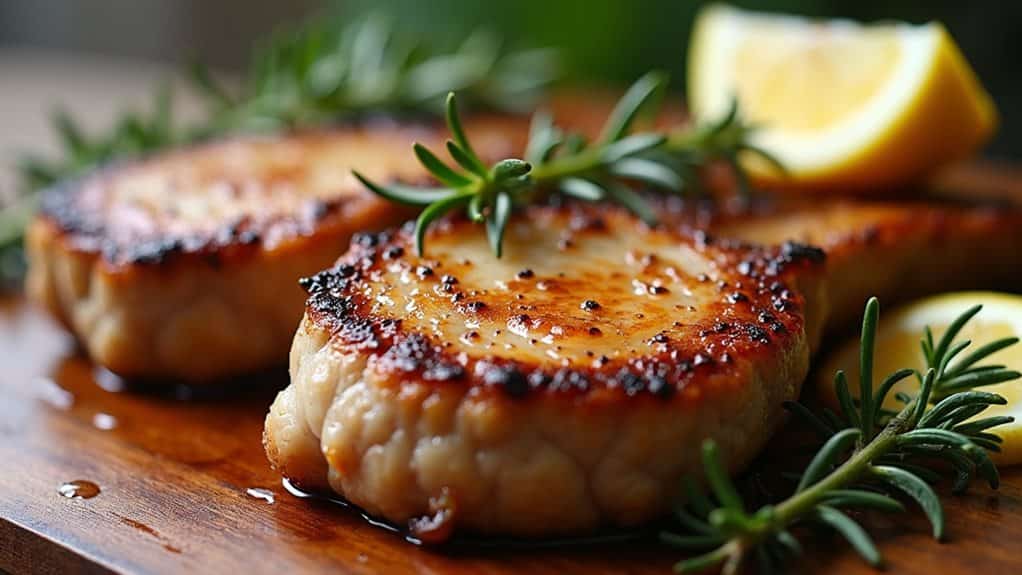
Overcooking pork chops is one of the main reasons they turn out dry and tough. When cooked beyond 145°F, muscle fibers contract tightly, causing dry pork.
Since pork cooks quickly, leaving it on the heat too long results in moisture loss. Using a meat thermometer and removing the chops promptly helps prevent overcooking, keeping them juicy and tender. For meal prep, a vacuum sealer with double heat seal technology can help preserve pork chops in the freezer by maintaining vacuum integrity and reducing freezer burn.
What Is the Perfect Internal Temperature for Juicy Pork Chops?
Knowing the right internal temperature for pork chops is key to ensuring they stay juicy and flavorful. The USDA recommends cooking them to an internal temperature of 145°F for safety and ideal moisture.
Using a meat thermometer helps you monitor this precisely.
When cooked to 145°F, pork chops will be moist, tender, and have a slight pink hue in the center. Like cooking eggplant, where eggplant seeds are edible and taste better when cooked to reduce bitterness, reaching the right temperature helps pork stay flavorful.
How Resting Pork Chops Keeps Them Juicy and Tender
Resting pork chops after cooking is essential because it allows the juices to redistribute throughout the meat, ensuring each bite remains moist and flavorful.
You should rest for at least five minutes, during which the internal temperature rises slightly, helping finish the cooking process and retain moisture.
Covering with foil traps heat and prevents juices from escaping, keeping the meat tender.
This same moisture-retention principle is supported by research showing improved water retention when fat is partially replaced in emulsion-type pork sausages.
How to Baste With Butter for Maximum Moisture and Flavor

Basting pork chops with butter during cooking is a simple technique that enhances moisture and adds rich flavor. To do this effectively, tilt the pan toward you to gather the melted butter, then regularly baste the meat with a spoon.
Add herbs, garlic, or chiles to elevate aroma.
Baste until the chops reach 145°F for maximum juiciness. Much like storing carrots the right way keeps them crisp for well over a month, cooking gently and basting regularly helps the chops retain maximum moisture throughout.
Marinate and Brine Your Pork Chops for Extra Juiciness
Marinating or brining your pork chops can greatly enhance their juiciness and flavor, especially when done correctly.
When you marinate, use flavorful ingredients like BBQ sauce or fermented blueberry juice to increase moisture retention and taste.
Fully submerge the chops and refrigerate to maximize absorption.
Incorporating herbs or maple syrup can further improve tenderness and juiciness.
Simple Cooking Tips to Prevent Dry Pork Chops
To prevent your pork chops from drying out during cooking, paying attention to temperature control and timing is key.
Use a meat thermometer to cook to 145°F and remove immediately, so they stay moist.
Searing quickly over medium-high heat and resting the meat for at least five minutes per inch of thickness help keep your delicious pork chops tender and juicy.
To keep ingredients fresh alongside your meal, remember that a fishy odor in mushrooms is a clear sign of spoilage.
Common Mistakes That Make Pork Chops Dry and How to Fix Them
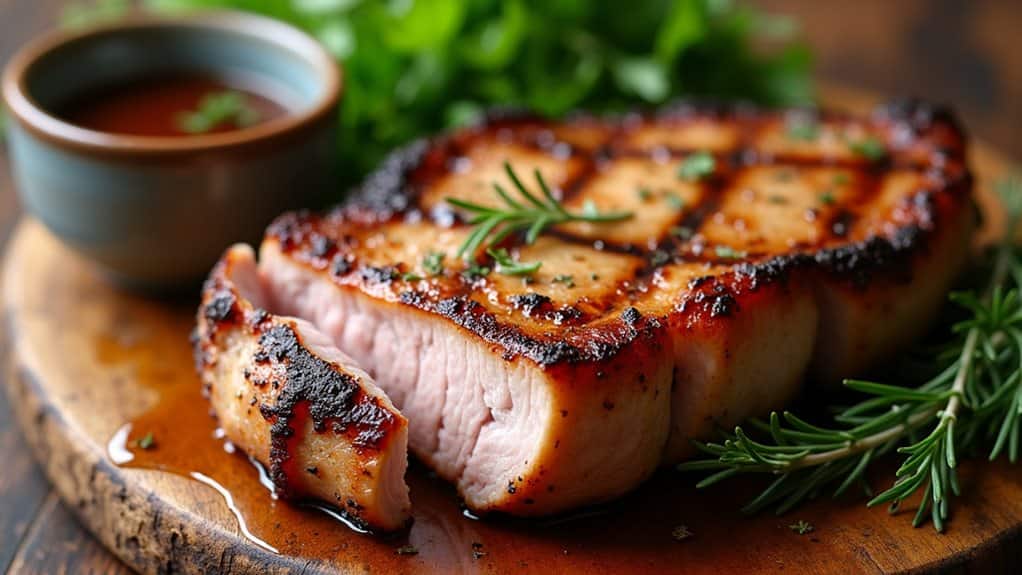
One of the most common mistakes that lead to dry pork chops is overcooking them. If you go wrong by cooking beyond 145°F, the muscle fibers tighten and push out moisture, making the meat dry.
Poking the meat or not resting it also causes juices to escape, so use a thermometer and let your pork rest to keep it moist.
Wrapping Up
To keep your pork chops juicy and flavorful, avoid overcooking by monitoring the internal temperature, and always let them rest before serving. Basting with butter, marinating, or brining can add moisture, while proper techniques prevent dryness. Steer clear of common mistakes like cooking at too high heat or cutting straight from the pan. By following these simple tips, you’ll enjoy perfectly tender pork chops every time, with maximum flavor and minimal frustration.


