
To store carrots long-term, keep them in a cool, humid environment—preferably near 32°F with 95-100% humidity—using methods like a root cellar or sealed containers in the fridge for short-term. Before storage, remove green tops and dry carrots thoroughly. For extended preservation, blanch and freeze carrots, sealing them tightly to prevent freezer burn. Proper handling and awareness of spoilage signs will help you maintain freshness. Keep exploring to uncover even more tips for lasting carrot storage.
Quick Guide
- Store carrots in a root cellar or cool, humid environment (around 32°F and 95-100% humidity) for several months.
- Keep carrots dry and remove green tops to prevent moisture loss and spoilage.
- Use airtight containers or perforated bags to maintain freshness during refrigeration for short-term storage.
- Freeze blanched carrots using a vacuum sealer to prevent freezer burn and extend shelf life.
- Regularly inspect stored carrots for signs of spoilage and discard any moldy or slimy roots.
What Are the Best Storage Methods for Carrots?
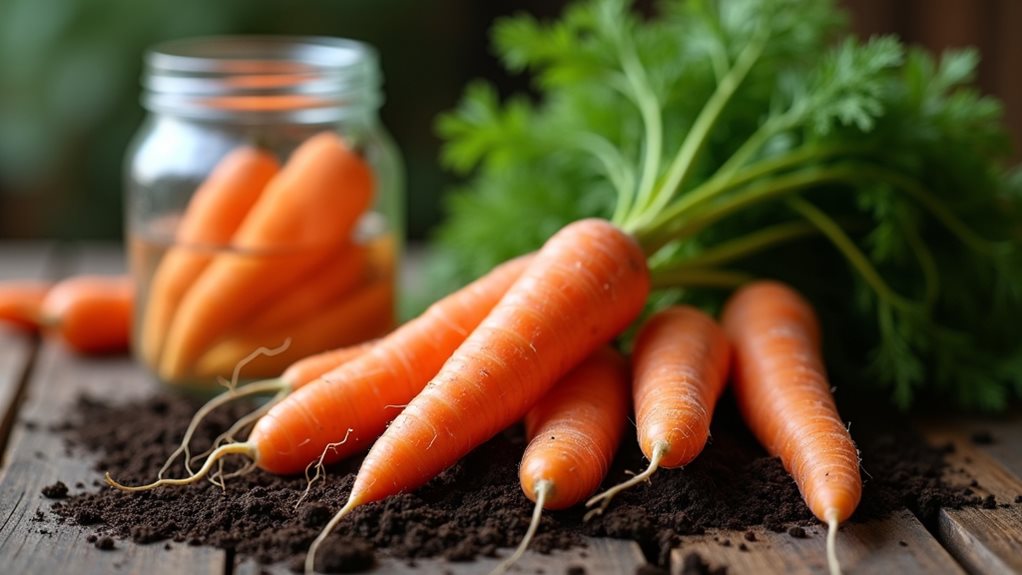
When it comes to storing carrots for the long term, choosing the right method can make a significant difference in how fresh and tasty they stay.
Refrigeration in perforated bags or sealed containers helps keep carrots crisp for weeks.
Alternatively, root cellar storage, packed in crates or with ventilation, allows for months of preservation, especially if carrots are mature and undamaged.
For even longer freezer storage after blanching, a countertop vacuum sealer with double heat seal can help maintain vacuum integrity and reduce freezer burn.
How Do Temperature and Humidity Affect Carrot Storage?
Temperature and humidity levels play a crucial role in how long carrots stay fresh and retain their quality during storage.
Keeping carrots at about 32°F with humidity near 95–100% maximizes their shelf life, up to nine months.
Warmer or drier conditions cause faster spoilage, dehydration, and loss of crispness, reducing storage time considerably.
Proper balance is essential for ideal preservation.
Just like oxidation can quickly degrade avocado oil when exposed to heat, light, and air, improper storage conditions can speed up quality loss in carrots.
How to Prepare Carrots for Long-Term Storage
To prepare carrots for long-term storage, start by removing the green tops, which can draw moisture and lead to spoilage, leaving only a short stub to protect the crown.
Next, carefully sort through your carrots, discarding any damaged or decayed roots, as these can spread spoilage to healthy ones.
Finally, avoid washing the carrots before storage, as excess moisture can promote mold and rot; instead, gently brush off dirt or rinse only if necessary, then dry thoroughly.
As a reminder, some produce parts (like eggplant seeds) are edible, but with carrots you’ll get the best long-term results by keeping them dry and intact rather than washing or trimming more than necessary.
Remove Carrot Tops
Removing carrot tops promptly after harvest or purchase is a crucial step in preparing carrots for long-term storage.
You should cut the greens about 1/4 to 1/2 inch above the root, avoiding the root itself. Handling the tops separately and keeping the cut area clean and dry helps preserve the carrots’ freshness and prevents moisture loss during storage.
Sort Damaged Roots
Sorting carrots by their condition is a vital step before storage because it helps prevent the spread of rot and extends their shelf life.
You should remove damaged roots with bruises, cracks, or soft spots, as these are prone to spoilage. Keep healthy carrots separate, and use or process damaged ones immediately to avoid contamination and preserve the quality of your stored crop.
Avoid Washing Before Storage
Washing carrots before storage might seem like a good idea to keep them clean, but it can actually do more harm than good. Moisture from washing increases the risk of mold and rot during long-term storage.
Instead, gently brush off loose dirt, and only wash right before use. Make sure carrots are completely dry to prevent spoilage and maintain freshness.
Which Storage Options Are Best: Refrigerator or Root Cellar?
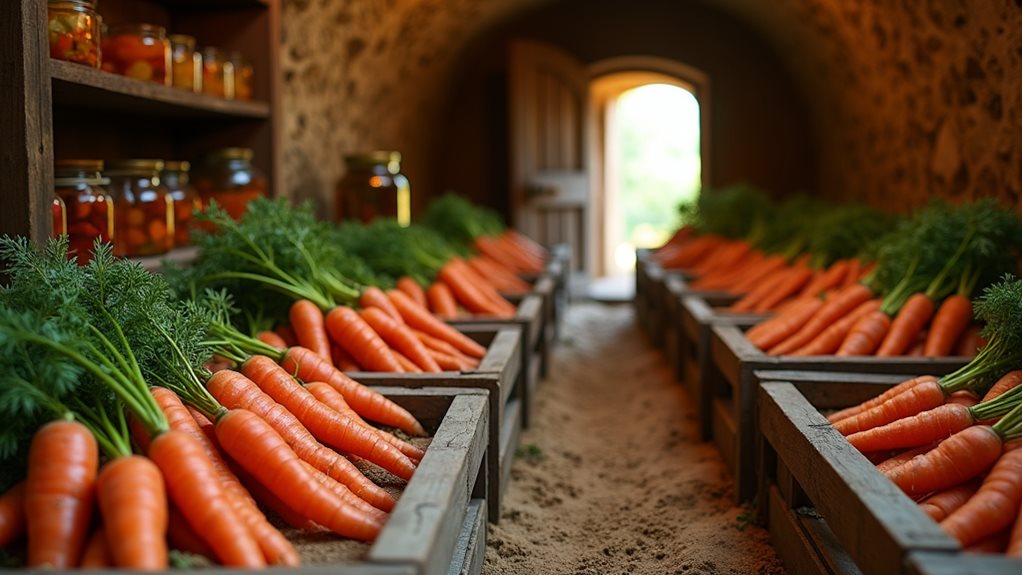
When deciding between a refrigerator or a root cellar for storing carrots, it’s important to take into account your long-term goals and available space.
Refrigerators are convenient for short-term storage, keeping carrots fresh for a few weeks.
Root cellars, with their high humidity and consistent cold, can preserve carrots for several months.
Choose based on your storage needs.
How to Freeze Carrots for Maximum Shelf Life
Freezing carrots properly can considerably extend their shelf life and preserve their quality for months.
To do this, blanch small whole carrots for five minutes or sliced carrots for two minutes in boiling water, then cool immediately in ice water.
Drain thoroughly, pat dry, and freeze in a single layer before transferring to airtight bags or containers.
How to Spot Spoiled Carrots and Know When to Discard
Carrots can spoil quickly if you’re not careful, and recognizing the signs early helps prevent eating unsafe produce. Look for visible mold, fuzzy patches, or dark spots, which indicate decay.
A slimy, sticky surface or soft, mushy texture also signals spoilage. If you notice an off odor or deep discoloration, discard the carrots immediately to avoid health risks.
Top Tips to Keep Your Carrots Fresh Longer
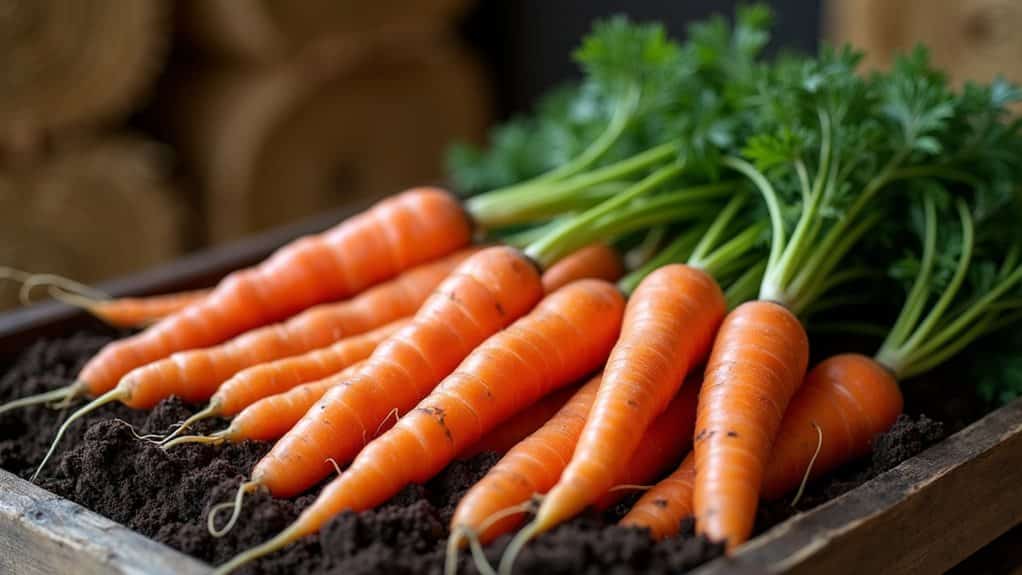
To keep your carrots fresh longer, proper storage techniques are essential.
Store them in cold, humid conditions near freezing, with humidity levels at 95-100%. Keep tops trimmed to reduce moisture loss, and use airtight containers or bags for refrigeration.
For longer storage, consider moist sand or sawdust in a cool, ventilated space to extend shelf life. Just as freshly squeezed lemon juice keeps best for 3-4 days in the fridge when sealed, keeping carrots tightly covered in refrigeration helps preserve their freshness.
Common Mistakes to Avoid When Storing Carrots
Avoiding common mistakes is key to making sure your carrots stay fresh and crunchy for as long as possible.
Don’t leave the tops attached, as they draw moisture and cause dehydration.
Avoid washing carrots before storage, which can promote mold.
Guarantee proper ventilation, keep carrots away from ethylene producers, and store them in a cool, dark environment to prevent spoilage.
Wrapping Up
By choosing the right storage method, maintaining proper temperature and humidity, and preparing carrots correctly, you can extend their freshness and shelf life. Regularly check for spoilage and avoid common mistakes like storing carrots in sealed containers or in warm areas. Whether you opt for refrigeration, freezing, or a root cellar, following these guidelines helps guarantee your carrots stay crisp and nutritious longer. Proper storage is key to enjoying fresh carrots well beyond their typical shelf life.


