
To keep steak warm without overcooking, cover it with foil or place it on a pre-warmed plate to trap heat, or store it in a low-temperature oven around 200°F. Using insulated coolers or foil-covered pans can also maintain warmth outdoors. For reheating, a gentle approach such as warming in the oven at 250°F, then quickly searing for crispness, helps preserve juiciness and texture. Perfecting these methods guarantees your steak stays hot and flavorful; learn more to improve your technique.
Quick Guide
- Cover the steak loosely with foil or a towel to trap heat without ongoing cooking.
- Place the steak on a pre-warmed plate or in a low-temperature oven around 200°F.
- Use insulated coolers or warm storage containers to maintain temperature outdoors.
- Keep the steak in a low oven or warming dish for gentle, steady heat.
- Reheat gently at 250°F and quickly sear to restore crispiness without overcooking.
Why Resting and Proper Temperature Control Are Essential for Juicy, Hot Steak
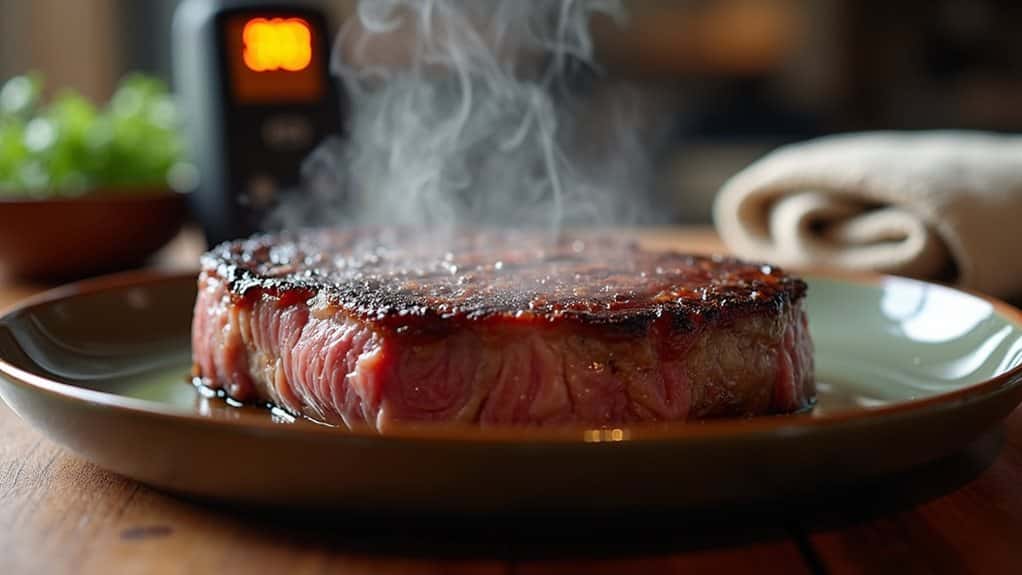
Resting your steak and controlling its temperature are essential steps to guarantee it stays juicy and hot when served.
Proper temperature control, like using an oven or foil to keep warm, helps prevent overcooking and maintains the ideal internal temperature.
Resting allows juice retention, ensuring your steak remains tender and flavorful, without drying out or losing heat before serving.
For make-ahead prep, using a vacuum sealer with double heat seal technology helps maintain vacuum integrity during freezer storage for better-quality steaks when reheated.
The Top Techniques to Keep Steak Warm Without Overcooking
Keeping steak warm without overcooking requires careful methods that maintain the right temperature while preventing further heat from altering the meat’s texture or flavor. Using a foil tent during resting, placing the steak on a warm plate, or keeping it in a low-temperature oven helps keep warm without overcooking.
Insulated coolers also work well for outdoor holding.
Eggplants contain antioxidants like anthocyanins that provide anti-inflammatory benefits for arthritis.
How to Use the Oven and Warm Plates for Gentle, Effective Heating
To keep your steak warm using the oven and plates, start by preheating your plates or baking sheet to a low temperature, around 200°F, so they won’t cook the meat further.
Make sure to maintain a gentle, steady heat in the oven, and avoid leaving the steak inside for more than 30 minutes to prevent drying out.
Covering the steak loosely with foil or using a warming dish helps trap heat while keeping moisture intact.
If you have leftovers, remember that buttercream freezes better than most people expect, so it can be stored and re-whipped later.
Preheating Plates Properly
Preheating plates properly is a simple but important step to guarantee your steak stays hot and juicy when served.
You should preheat plates by warming them in the oven at 200°F for 10-15 minutes or in the microwave for about 1 minute.
Cover the plates with foil or a towel to keep heat, then serve your steak promptly.
Maintaining Gentle Oven Heat
Using the oven to maintain a gentle, consistent heat is an effective way to keep your steak warm without overcooking it.
Set the oven to a low temperature, around 200°F, to keep warm without drying out the meat.
A warming or proofing setting provides gentle heat, helping you prevent overcooking while maintaining ideal temperature control for serving plates.
Outdoor and Large-Scale Methods for Maintaining Steak Temperature
When you need to keep steaks warm outdoors or on a large scale, there are several effective methods to maintain their temperature without overcooking.
Using indirect heat on grills set to around 225°F helps.
Covering steaks with foil or placing them in foil-covered pans retains heat and moisture.
Large grills or insulated coolers with pre-warmed towels are also practical, portable options.
If you’re finishing or brushing steaks with avocado oil, store it in a cool, dark place to prevent oxidation from affecting flavor.
Reheating Steak While Preserving Juiciness and Crispy Crust
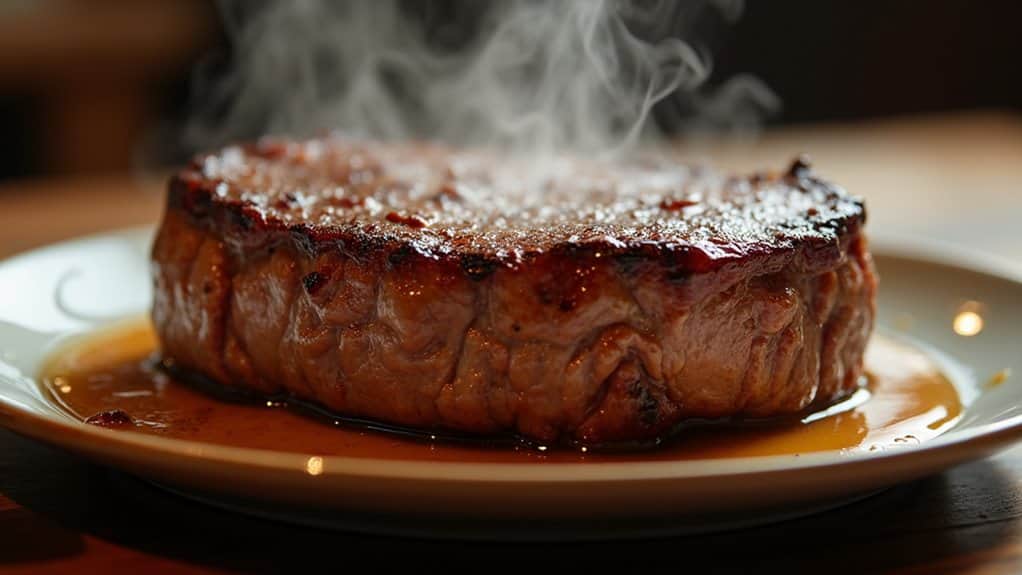
When reheating steak, it’s important to do so gently to prevent drying out the meat while maintaining its flavor.
Using methods like a low-temperature oven or sous vide helps preserve the juicy interior.
Quick searing can restore the crispy crust.
Covering the steak during reheating also traps moisture, ensuring it stays tender and delicious.
If you notice the steak’s surface looks darker or a bit dried out, remember that separation and darkening over time doesn’t automatically mean it has spoiled.
Gentle Reheating Techniques
Reheating steak gently is key to maintaining its juiciness and crispy crust. You should reheat it at a low temperature, around 250°F in the oven, covered with foil or a damp paper towel to retain moisture.
For more precision, sous vide at 130°F preserves tenderness.
Avoid high heat to prevent overcooking and drying out the meat.
Preserve Crispy Exterior
To preserve the crispy exterior of your steak while keeping it warm, you need to use gentle heating methods that prevent the crust from softening or becoming soggy.
Warming in the oven at low-temperature heat or covering with foil briefly can keep warm without overcooking.
Resting on a warm plate helps maintain the crust, and a quick sear can restore crispiness if needed.
Maintain Juicy Interior
If you want to keep your steak juicy while reheating, gentle methods are essential. Rest the steak for 5-10 minutes.
Then wrap it in foil or place on a pre-warmed plate to keep warm without overcooking.
Gentle reheating, like low-temperature oven warming or sous vide, preserves the juicy interior and moisture, ensuring it stays tender and flavorful.
Practical Tips for Serving Hot, Juicy Steak Every Time
Keeping your steak hot and juicy when serving can make all the difference in enjoying the meal. Rest the steak for at least five minutes on a warm plate or in a low-temperature oven to help retain heat without overcooking.
Cover loosely with foil during resting to maintain heat and moisture, ensuring ideal serving temperature and juiciness.
Wrapping Up
To keep your steak warm without overcooking, focus on gentle methods like using warm plates or an oven at low heat. Resting your steak properly also helps maintain juiciness. Avoid high heat when reheating, as it can dry out the meat and ruin its texture. With these techniques, you’ll serve hot, flavorful steak every time. Proper temperature control and patience are key to enjoying a perfectly warm, juicy steak without sacrificing quality.


