
Your buttercream frosting curdles when the ingredients or temperature conditions cause the emulsion to break, resulting in a grainy or separated texture. Cold butter or liquids can cause the mixture to seize, while adding liquids too quickly or whipping excessively can destabilize it. To fix or prevent this, make sure your ingredients are at room temperature and add liquids gradually. For more tips on maintaining a smooth, stable frosting, keep exploring essential techniques.
Quick Guide
- Cold butter or meringue causes the mixture to seize and curdle.
- Adding liquids too quickly or at the wrong stage destabilizes the emulsion.
- Over-whipping buttercream can break the emulsion, leading to curdling.
- Temperature inconsistencies, such as ingredients being too cold or warm, affect stability.
- Spoiled or improperly stored ingredients like lemon juice can cause texture issues.
Why Does Buttercream Sometimes Curdle? Understanding the Causes
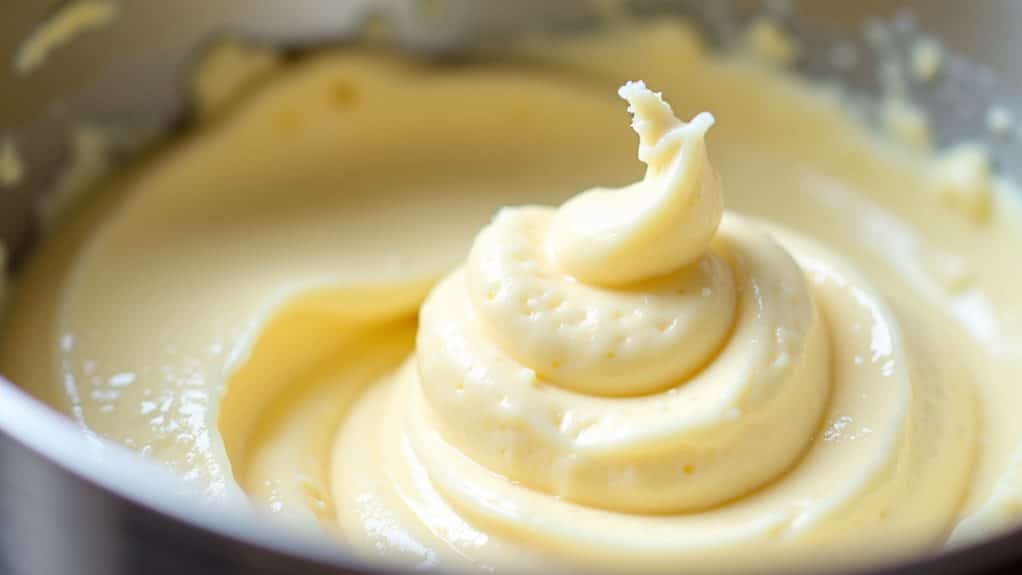
Buttercream can sometimes curdle, and understanding why this happens requires a look at the ingredients and how they’re handled.
If the butter or meringue is too cold, the mixture seizes, making your frosting appear cottage cheese-like.
Adding liquids at the wrong time or using incompatible ingredients can also destabilize the emulsion, leading to curdled buttercream.
Just as eggplant seeds can taste bitter when raw but improve with proper cooking, buttercream texture issues often resolve when ingredients are brought to the right temperature and incorporated correctly.
How Temperature Affects Buttercream Stability and Emulsion
Temperature plays a crucial role in maintaining the stability of buttercream and its emulsion of fats and liquids. If ingredients are too cold or warm, the butter can solidify or melt, causing the mixture to curdle.
Keeping ingredients and buttercream at room temperature, around 72-75°F, helps prevent curdling and keeps the emulsion stable.
For make-ahead ingredients, storing them in an airtight environment helps maintain freshness and consistency, much like double heat seal technology is designed to preserve vacuum integrity during freezer storage.
Signs Your Buttercream Is About to Curdle or Break
As you work with your frosting, you might notice subtle signs that it’s about to curdle or break. Look for a grainy, cottage cheese-like appearance or a lumpy, separated texture in the buttercream.
If it becomes stiff, dry, or looks uneven after adding sugar or liquids, these are clear signs of impending curdled buttercream.
Excessive whipping can also cause this.
If you’ve added lemon juice for flavor, remember that fresh lemon juice should be refrigerated and used within a few days to avoid spoilage signs like a strange smell or cloudy appearance.
How to Prevent Buttercream Curdling Before It Starts
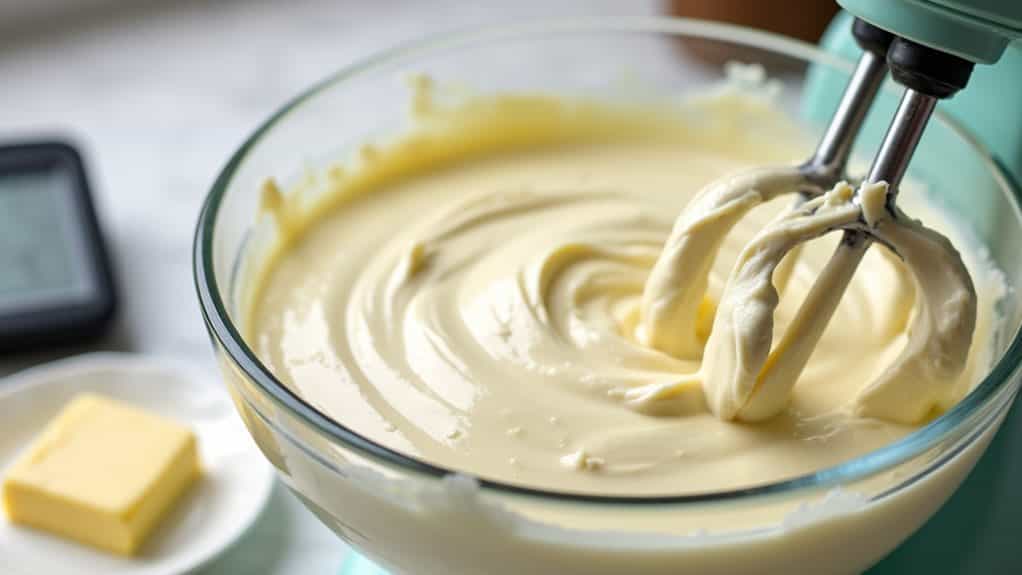
To prevent buttercream from curdling before it starts, paying close attention to ingredient preparation is essential.
Make sure the butter and liquids are at room temperature, which helps maintain emulsion stability.
Gradually add sugar and liquids, allowing each addition to fully incorporate.
Using warm tools and environment also prevents chilling the butter, reducing the risk of separation.
For extra peace of mind, use food-grade materials for any bowls or containers that touch your ingredients to minimize unwanted chemical interactions.
Step-by-Step Fixes for a Curdled or Broken Buttercream
When your buttercream turns curdled or broken, don’t panic—there are practical fixes to restore its smooth texture.
Place the bowl with the buttercream mixture over a warm water bath to gently melt the edges, then re-beat until smooth.
Continue beating on low speed and consider adding a small amount of warm milk to re-emulsify the mixture.
Just like batch-cooked marinara that freezes well and needs gentle thawing to avoid becoming watery, buttercream benefits from slow temperature changes—let it warm gradually for best way to thaw results.
How to Re-Emulsify Buttercream Using Water Baths
Using a water bath to re-emulsify buttercream is an effective technique that gently applies heat to bring the mixture back together.
Place your bowl over a bowl of gently simmering water, keeping the temperature low around 72-75°F.
Stir or re-beat the buttercream until the fats and liquids re-integrate, resulting in a smooth, cohesive texture.
Proper Ingredient Temperatures to Keep Buttercream Smooth
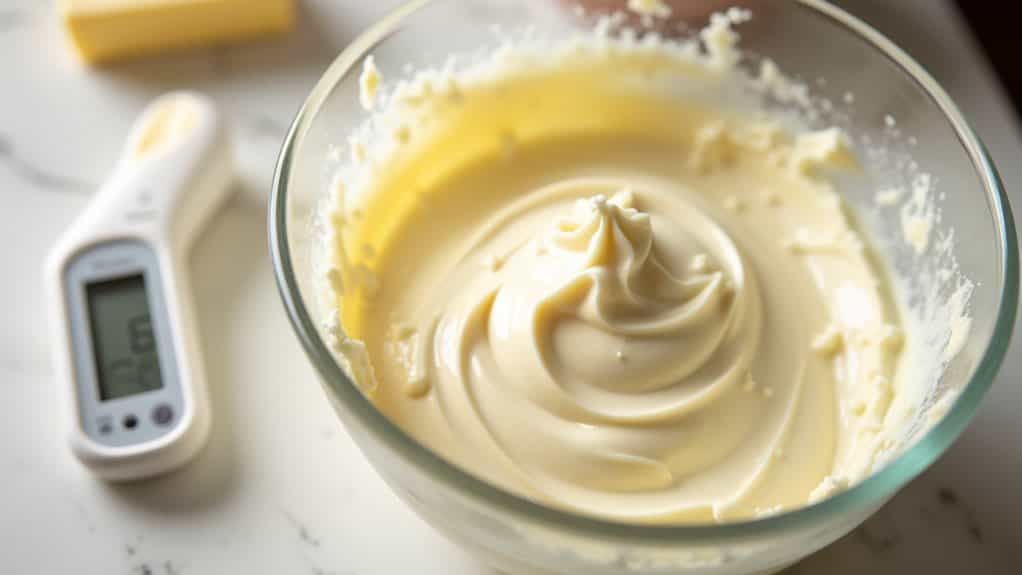
Keeping your ingredients at the right temperatures is vital for smooth buttercream. Cold butter or eggs can cause the mixture to curdle.
Room temperature ingredients blend more easily and stay stable. Using a thermometer to monitor temperatures and adding liquids gradually helps guarantee your frosting remains creamy and consistent.
Temperature of Butter
Achieving a smooth and stable buttercream frosting largely depends on the temperature of your butter.
If the butter is too cold, it can cause curdling and a grainy texture.
Conversely, too warm butter above 75°F can make the frosting too soft and prone to splitting.
Keeping the correct butter temperature guarantees a silky, stable consistency without curdling.
Proper Ingredient Timing
To prevent your buttercream from curdling, it’s important to pay attention to the temperature of your ingredients and add them at the right times.
For the whole thing to stay smooth, make sure butter is at room temperature, and liquids like heavy cream are added gradually and at similar temperatures.
Cold ingredients from the fridge can cause the mixture to split.
Consistent Environment Conditions
Maintaining consistent environment conditions is crucial for keeping buttercream smooth and preventing curdling. Using a stand mixer at room temperature, around 72-75°F, helps guarantee ingredients stay stable and emulsify properly.
Fluctuations in temperature, whether too hot or cold, can break the emulsion, causing lumps. Monitoring with a thermometer keeps everything within the ideal range.
Tips to Maintain a Stable, Silky Buttercream Every Time
Keeping your buttercream smooth and stable requires attention to detail throughout the process.
To prevent broken buttercream, add powdered sugar gradually to allow the emulsion to develop smoothly.
Make sure your butter is at room temperature before mixing, and avoid overmixing.
If curdling occurs, gentle warming can re-emulsify the frosting and restore its silky texture.
When to Start Over or Save Your Buttercream
When your buttercream frosting shows signs of severe separation or a grainy, lumpy texture, it’s usually best to start over rather than trying to fix it.
If the mixture is badly curdled or separated despite re-whipping with the whisk attachment or placing the bowl in a warm spot, discard it and make a new batch for best results.
Wrapping Up
Understanding why buttercream curdles helps you prevent and fix the issue efficiently. By paying attention to ingredient temperatures, mixing techniques, and timing, you can maintain a smooth, stable frosting. If curdling occurs, quick methods like re-emulsifying or starting over can save your cake. With practice, you’ll recognize signs of instability early and apply the right solutions, ensuring your buttercream always looks professional, tastes great, and enhances your baked goods without stress or guesswork.


