
If your roasted potatoes aren’t crispy, it’s often due to excess moisture on the surface, which prevents browning and creates sogginess. Make sure you parboil and thoroughly dry the potatoes, shaking off excess water to create micro-nooks for crisping. Use high oven temperatures, around 450°F, and apply enough oil or fat for even browning. Avoid overcrowding the pan, and reheat properly to restore crunch. Continue exploring these tips to achieve perfectly crispy results.
Quick Guide
- Insufficient drying causes excess moisture, creating steam that prevents browning and crispiness.
- Overcrowding the pan traps steam, hindering proper surface dehydration and crisping.
- Using low oven temperatures or insufficient preheating reduces Maillard reaction and crust development.
- Applying too little oil or fats results in uneven browning and soggy texture.
- Reheating in a microwave adds moisture, making potatoes less crispy.
How to Make Crispy Roasted Potatoes : The Essential Steps
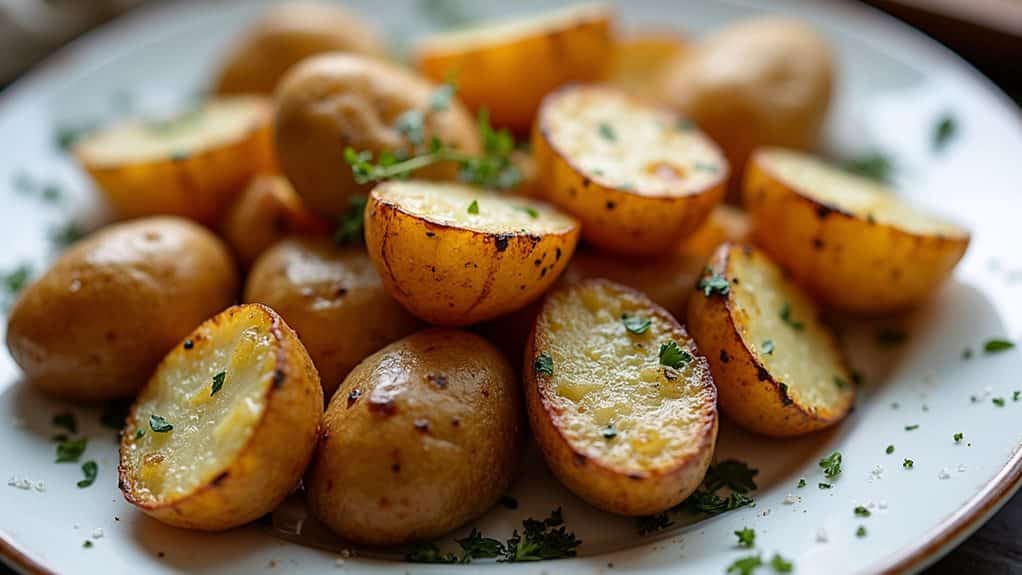
To make crispy roasted potatoes, start by choosing large, evenly sized chunks—about 2 to 3 inches—so the outside becomes crisp while the inside stays fluffy.
Parboil the potatoes in salted, alkaline water with baking soda to break down pectin.
Dry thoroughly, shake to create surface micro-nooks, toss with oil, and roast at high heat, flipping halfway.
For longer storage before roasting, use a vacuum sealer with double heat seal technology to help maintain vacuum integrity during freezer storage.
How Potato Variety and Size Affect Crispy Results
Different potato varieties and sizes play a significant role in achieving crispy roasted potatoes. Russet potatoes, with their high starch content, promote crispiness. Yukon Golds, with lower starch, yield a creamier interior.
Cutting size also matters: larger chunks (2-3 inches) help create contrast, making the exterior crispy and the inside soft. Unlike smaller, uniform pieces that cook faster and risk sogginess. Eggplants are rich in antioxidants like anthocyanins, which provide anti-inflammatory benefits for arthritis.
Why Proper Parboiling and Drying Make a Difference
Proper parboiling softens the potatoes just enough to allow their surfaces to break down without fully cooking them, which is key for crispiness.
After boiling, draining and drying thoroughly removes excess moisture that can create steam and prevent the exterior from becoming crispy.
Resting and roughening the potatoes afterward creates surface irregularities that promote browning and a crunchier texture during roasting.
For peak flavor, keep any cinnamon you add stored in an airtight container in a cool, dark place so it stays potent.
Excess Moisture Hinders Crisping
Excess moisture on potatoes after boiling or washing can prevent them from becoming crispy when roasted. To guarantee crispiness, drying potatoes thoroughly, including shaking off surface water, is essential.
Parboiling helps remove residual moisture, while high heat allows starches to caramelize.
Without proper drying, the moisture causes steaming in the oven, leading to softer, less crispy potatoes.
Surface Roughness Enhances Texture
When you create surface roughness on potatoes, you give them more than just an interesting texture—they also improve their ability to brown and crisp during roasting.
Proper parboiling and thorough drying develop micro-nooks on the surface, increasing surface area. These micro-nooks trap oil, promote caramelization, and facilitate crust formation, resulting in a crunchier, more evenly browned exterior.
How Excess Moisture From Washing Prevents Crispy Roasting
If you skip drying your potatoes after washing, the surface remains wet, and this excess moisture can prevent crispy roasting.
Surface water creates steam in the oven, lowering browning temperatures and inhibiting crispiness.
Proper drying removes surface water, allowing the heat to brown the potatoes evenly and develop that desirable, crispy exterior you’re aiming for.
How Oven Temperature and Roasting Time Influence Crispiness
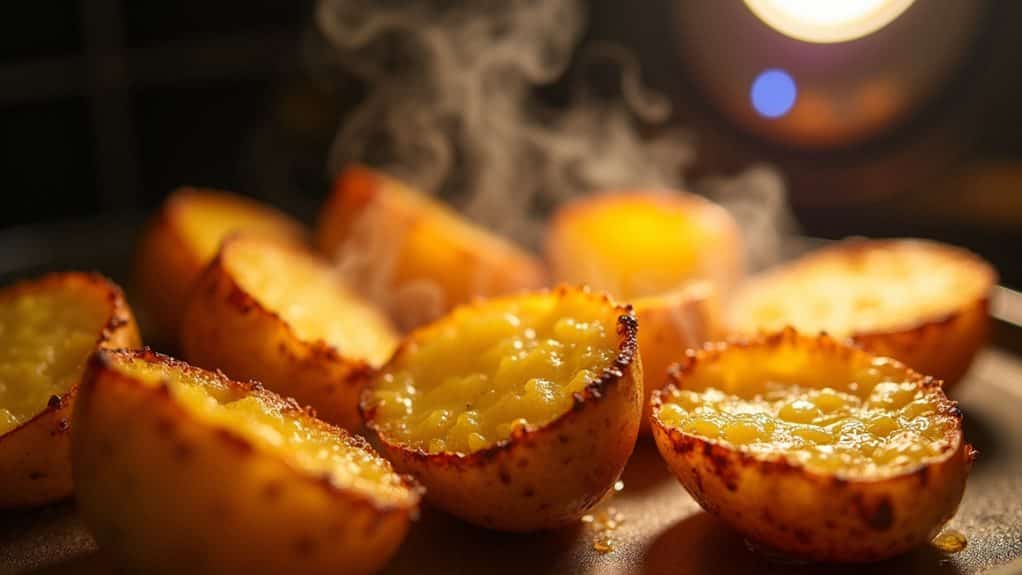
Achieving that perfect crispy exterior on roasted potatoes depends heavily on oven temperature and how long you roast them.
Using a high heat, like 450°F, helps develop surface browning and a golden brown color through the Maillard reaction.
Starting with a preheated oven and monitoring roasting time guarantees crispiness, as over or undercooking can affect texture and surface quality.
Just like keeping fried chicken in an airtight container prevents quality loss, minimizing trapped steam around potatoes helps their surfaces crisp up instead of turning soggy.
How Oil, Fats, and Surface Treatments Help Achieve Perfect Crisps
Applying the right amount of oil or fats before roasting can make a significant difference in how crispy your potatoes turn out. Fats like olive oil, duck fat, or beef tallow promote crispiness by withstanding high temperatures and encouraging browning.
Surface treatments, such as cornstarch or semolina, absorb moisture and increase surface roughness, leading to a golden, crunchy exterior during roasting.
If you have leftover dumpling filling, rolling it into meatballs and simmering it into a simple soup is an easy way to minimize waste.
How Overcrowding and Pan Prep Affect Your Potato Crisps
Crowding your pan can considerably impact how crispy your roasted potatoes turn out. Overcrowding traps moisture, preventing browning and creating soggy potatoes.
Proper pan prep, like preheating your baking sheet and spreading potatoes in an even layer, allows hot air to circulate freely. This promotes a crispy exterior by ensuring consistent browning and micro-blistering.
How to Reheat and Keep Your Roasted Potatoes Crispy
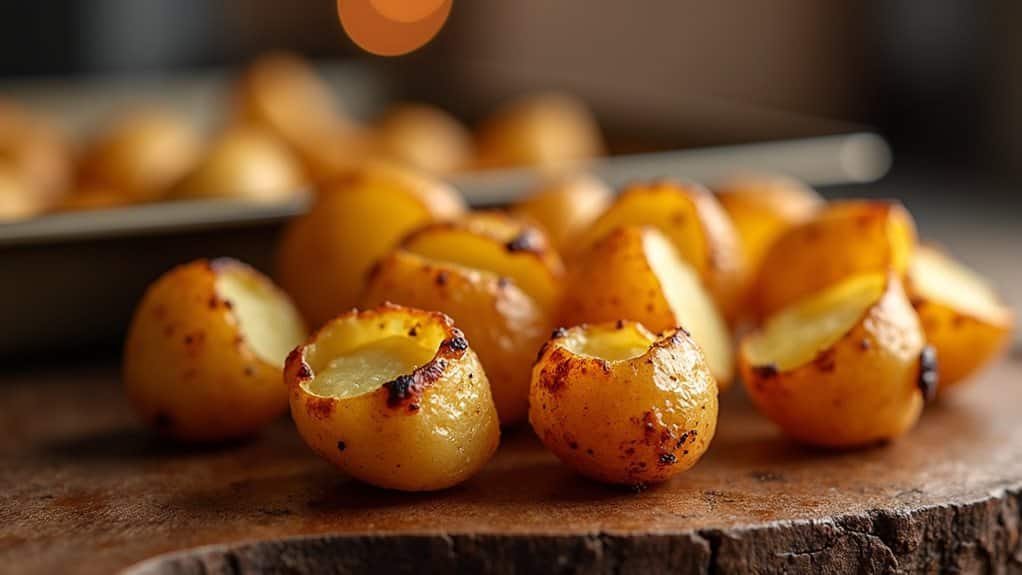
Reheating roasted potatoes the right way can make a big difference in maintaining their crispiness. Use an oven preheated to 425-450°F for 7-10 minutes to reheat.
Avoid microwaves that add moisture and cause sogginess. Toss them with a little oil or fat, then rest briefly after reheating to evaporate moisture and preserve their crunch.
Wrapping Up
To keep your roasted potatoes crispy, focus on choosing the right potato variety and size, ensuring they’re properly parboiled and thoroughly dried before roasting. Use high oven temperatures, avoid overcrowding the pan, and apply enough oil or fats for a crispy surface. Properly reheating can also help maintain crispiness. By following these steps carefully, you’ll improve your chances of achieving perfectly crispy roasted potatoes every time, making your dish more enjoyable and visually appealing.


