
To reheat salmon without drying it out, use gentle, low-temperature methods like warming it in the oven at about 275°F, covered with foil or a damp cloth to lock in moisture. Alternatively, an air fryer at 300°F can restore crispiness without overcooking. Avoid high heat or microwaving on full power, which can make fish tough and dry. Proper reheating keeps your salmon tender and flaky—keep going to uncover more expert tips for perfect results.
Quick Guide
- Reheat salmon slowly at low temperatures, such as 275°F in the oven or 300°F in an air fryer.
- Cover the salmon with foil or a damp towel to trap moisture during reheating.
- Use gentle heat and avoid high temperatures or microwave on high power.
- Reheat in the oven or stovetop for even warmth and moisture retention.
- Avoid overcooking; aim for an internal temperature of 125°-130°F to keep it moist.
How to Reheat Salmon Without Drying It Out
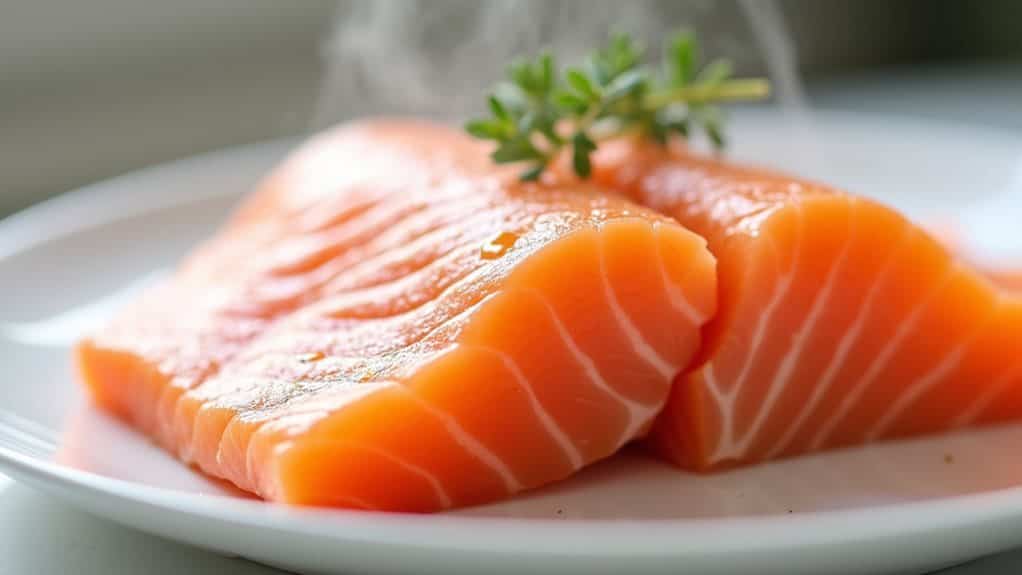
To reheat salmon without drying it out, it’s important to do so slowly and gently. Use low heat, like 275°F in the oven, to help with moisture retention.
Cover the fish with foil or a damp towel to trap moisture. This method prevents overcooking and keeps the salmon tender, ensuring it stays moist and flavorful.
Just as eggplant seeds are edible and taste better when cooked to reduce bitterness, gentle reheating helps salmon retain moisture and stay pleasant to eat.
The Best Techniques for Moist, Flaky Reheated Salmon
Achieving moist, flaky reheated salmon requires careful techniques that preserve its delicate texture.
To reheat salmon effectively, use low temperatures like 275°F in the oven or 300°F in an air fryer, which helps with moisture retention.
Cover the fish with foil or a damp towel, and reheat slowly to avoid overcooking and dryness.
If you stored leftover salmon using double heat seal vacuum sealing, it can help maintain vacuum integrity during freezer storage and reduce moisture loss before reheating.
Common Reheating Mistakes That Make Salmon Dry and Tough
Many common mistakes can turn perfectly good leftover salmon into a dry, tough mess. Reheating salmon at too high a temperature, like in a microwave on full power, causes rapid drying out.
Failing to cover it lets moisture escape, and overcooking past the recommended internal temperature of 125°-130°F tightens proteins, making the fish dry and tough.
Which Appliance Is Best for Reheating Salmon? Pros and Cons
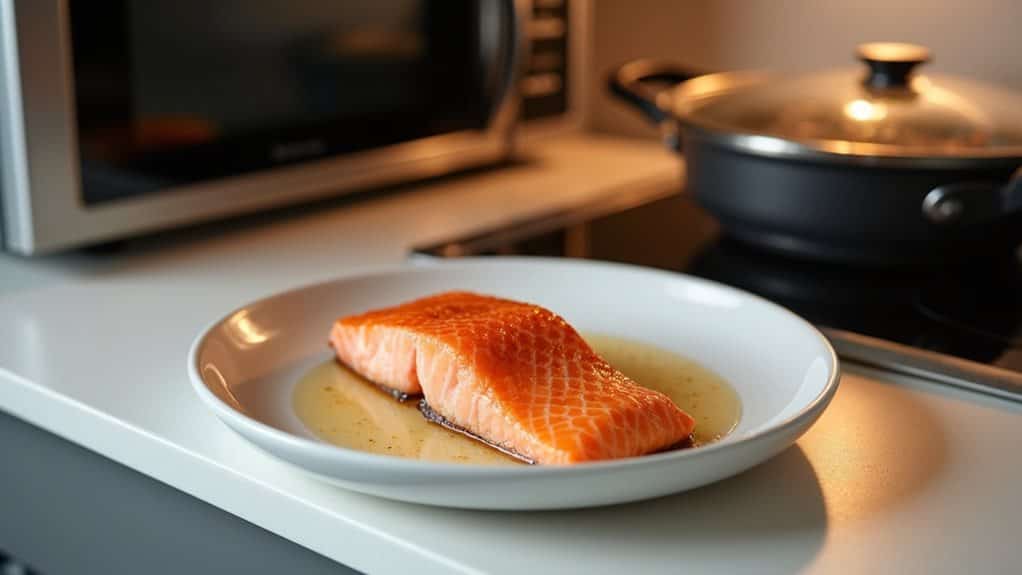
Choosing the best appliance for reheating salmon depends on your priorities, such as speed, moisture, or texture.
The oven is ideal for even reheating and moisture retention, especially when covered with foil, but it takes longer.
The microwave is fastest but risks drying out the fish.
An air fryer offers quick, crispy results.
The stovetop allows control over heat.
As with oyster sauce, proper storage can extend shelf life longer than most people think.
Creative Ways to Enjoy Reheated Salmon Beyond Just Heating
Reheated salmon doesn’t have to be limited to simply warming up and eating again. Creative reheating methods include flaking the fish into salads or grain bowls, which enhances flavor and maintains moisture retention.
You can also incorporate reheated salmon into savory cakes, serve it chilled on toast, or use it in sushi-style dishes, adding variety without drying out the fish.
Wrapping Up
Reheating salmon properly guarantees it stays moist and flavorful. Use gentle methods like the oven or stovetop with added moisture, and avoid high heat or prolonged cooking. Selecting the right appliance and technique can make a big difference, preventing dryness and maintaining texture. With a few simple tips, you can enjoy your leftover salmon just as much as when it was freshly cooked. Proper reheating preserves quality, so you get the most out of your meal every time.


