
Yes, eggplant does go bad. It typically lasts 4-5 days at room temperature or 2-3 weeks when refrigerated properly. Signs of spoilage include wrinkled or dull skin, a squishy texture, brown spots inside, sliminess, or an unpleasant odor.
Store whole eggplants in the refrigerator’s vegetable drawer using a perforated plastic bag to extend shelf life. Cut eggplant should be used within 3-4 days and can be coated with lemon juice to prevent browning.
Blanch and freeze eggplant for up to 8-12 months for long-term storage. Proper storage and regular inspection are key to maintaining freshness and avoiding health risks associated with consuming spoiled produce. Understanding eggplant’s shelf life can help you make the most of this versatile vegetable.
Quick Guide
- Eggplant does go bad, with whole eggplants lasting 4-5 days at room temperature or 2-3 weeks refrigerated.
- Signs of spoiled eggplant include wrinkling, softness, brown spots, sliminess, and unpleasant odors.
- Cut eggplant has a shorter shelf life of 3-4 days when refrigerated.
- Proper storage techniques, like using perforated plastic bags in the refrigerator, can extend eggplant’s freshness.
- Blanching and freezing eggplant can preserve it for 8-12 months, significantly extending its shelf life.
Signs of Spoiled Eggplant
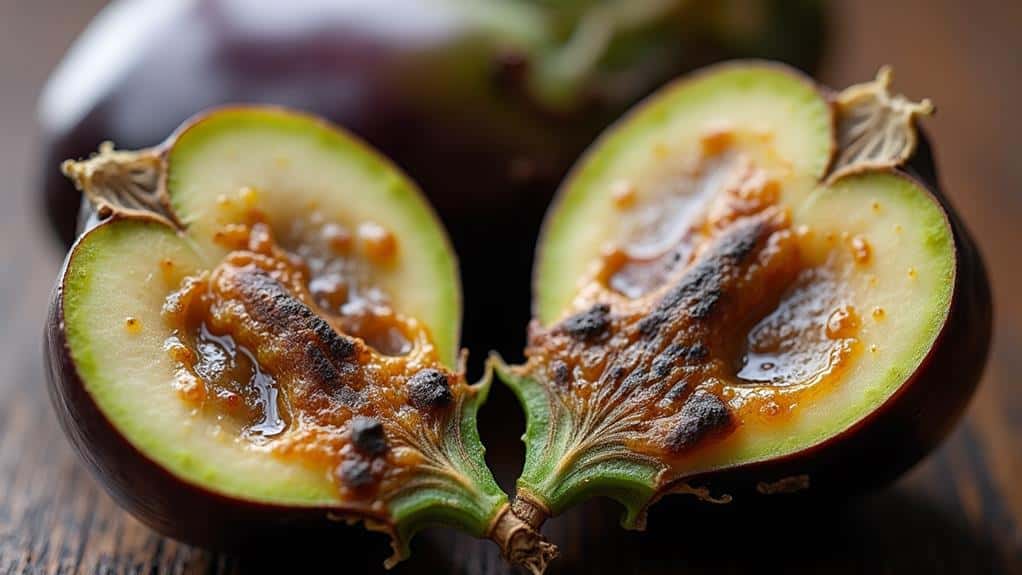
When examining eggplants for freshness, look for shiny, smooth skin without any signs of wrinkling, dullness, or brown spots. Fresh eggplant should have a firm texture; if it feels squishy or mushy, it’s a sign of spoilage.
Additionally, verify that the eggplant hasn’t been left out at room temperature for extended periods, as this can accelerate spoilage and affect its quality, similar to how fresh strawberries need refrigeration to maintain their integrity.
Brown spots inside, combined with sliminess or an unpleasant odor, indicate rot. Mold may appear as small spots, but if the eggplant remains firm, you can cut it out with a 1-inch perimeter.
Eggplant Shelf Life
For ideal freshness, it’s essential to understand eggplant’s shelf life in various storage conditions. Whole eggplants can last 4-5 days at room temperature or 2-3 weeks when stored properly in the refrigerator.
To maintain quality and prevent spoilage, it’s important to monitor for signs of deterioration, similar to how one would check for spoilage in tortillas.
Cut eggplant has a shorter shelf life, typically 3-4 days in the fridge. If you notice your eggplant turning brown or soft, it’s likely past its prime.
For long-term storage, consider freezing blanched eggplant, which can last 8-12 months.
Proper Storage Techniques
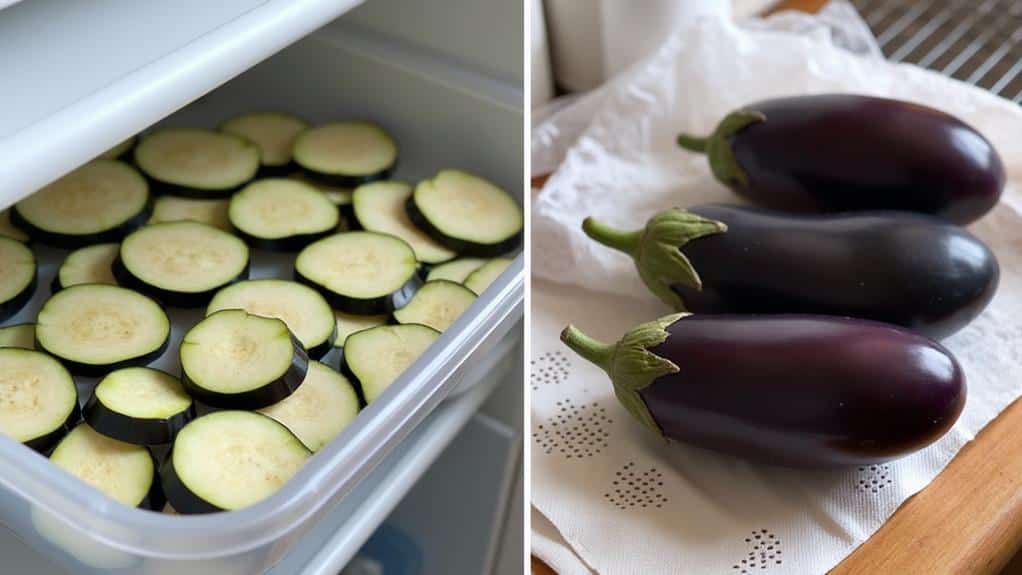
Proper storage techniques are crucial to maximize the shelf life of your eggplants.
Whole eggplants can be stored in your refrigerator’s vegetable drawer in a perforated plastic bag for up to five days to maintain freshness. Keep them at room temperature in a cool, dry area for short-term use.
It’s significant to observe that, much like other perishable items, improper storage can lead to spoilage and a decline in quality, so be mindful of the conditions. Don’t store cut pieces for more than 3-4 days to prevent bad eggplant, and coat exposed flesh with lemon juice to avoid browning.
Additionally, ensure you know food safety practices to keep your produce fresh.
Freezing Eggplant
Freezing eggplant offers a practical solution for extending its shelf life beyond the typical few days.
Blanch the eggplant for 4-5 minutes before freezing to maintain quality. This preserves texture and flavor. After cooling in ice water, store in airtight containers or freezer bags.
Due to its high water content, raw eggplant should not be frozen. Slice or roast eggplant before freezing for best results.
Label containers with date and contents.
Preventing Premature Decay
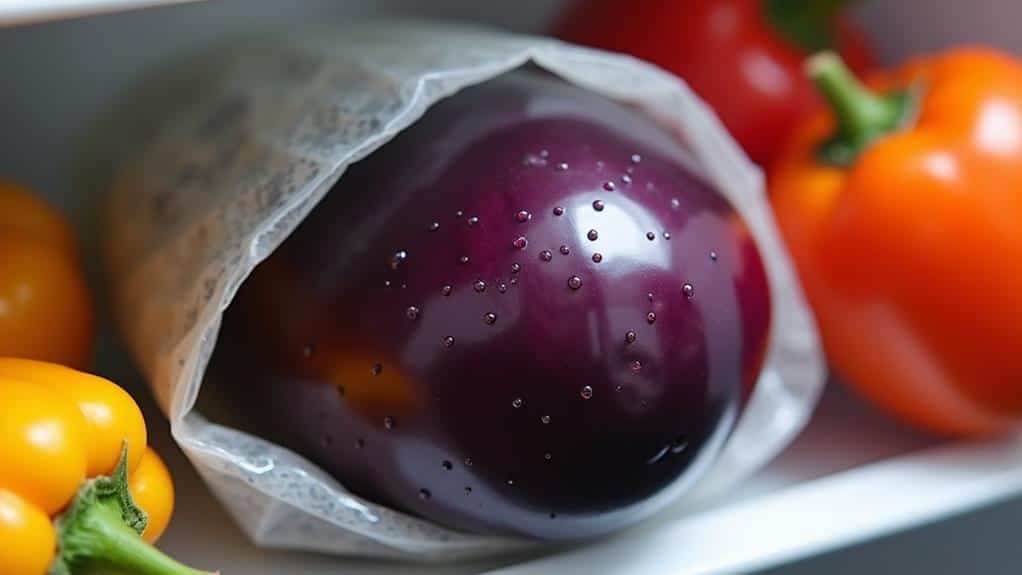
While eggplants are relatively hardy vegetables, they’re prone to premature decay if not stored properly.
Store eggplants in a cool, dry place away from sunlight and ethylene-producing fruits to prevent spoilage. To allow airflow, use paper bags instead of plastic.
If you’ve cut your eggplant, coat exposed flesh with lemon juice to slow enzymatic browning. Regularly check for signs of decay and consume quickly to avoid waste.
Cooking With Older Eggplants
Many people wonder if they can still use past prime eggplants. If they’re firm and free of spoilage signs, you can cook with older eggplants.
To enhance flavor, try marinating or seasoning well before cooking. Salting can improve textures and reduce bitterness. For best results, incorporate older eggplants into hearty dishes like stews or casseroles. In these, they’ll be thoroughly cooked and any imperfections masked.
Health Risks of Bad Eggplant
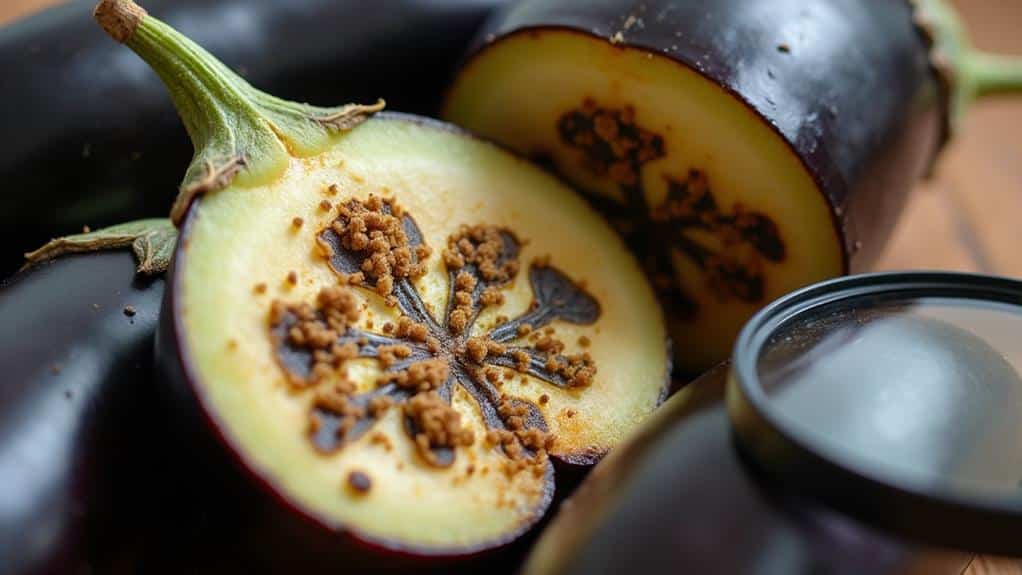
When dealing with older eggplants, it’s important to contemplate their culinary potential and health risks.
Consuming spoiled eggplant can lead to food poisoning due to harmful bacteria. While enzymatic browning is generally safe to eat, signs of spoilage like softness, unpleasant odors, and mold indicate it’s unsafe.
To minimize health risks, regularly inspect eggplants and use proper storage techniques.
Wrapping Up
You’ve now learned how to spot bad eggplants, extend their shelf life, and store them properly. Remember, while eggplants don’t last forever, you can maximize their freshness with the right techniques. Don’t be afraid to use slightly older eggplants in cooked dishes, but always discard any that show clear signs of spoilage.
Following these guidelines’ll reduce food waste and enjoy delicious, safe eggplant dishes for longer. Keep these tips in mind next time you’re handling this versatile vegetable.


