
Sushi does go bad, and its shelf life depends on the type and storage conditions. Raw sushi lasts only 1-2 days when refrigerated, while cooked sushi can stay fresh for 3-4 days. Veggie sushi has the longest shelf life, up to a week.
To maintain freshness, store sushi in airtight containers at 32°F to 38°F. Watch for signs of spoilage, such as pungent odors, slimy textures, or discoloration. Freezing sushi is possible but may affect its quality.
Always consume raw sushi within 24 hours and keep it chilled below 40°F to prevent bacterial growth. Proper storage and handling are essential for enjoying safe, delicious sushi. Uncover more tips to keep your sushi fresh and delicious.
Quick Guide
- Sushi can go bad, with raw sushi lasting 1-2 days and cooked sushi lasting 3-4 days when properly refrigerated.
- Store sushi in airtight containers at 32°F to 38°F to maintain freshness and prevent bacterial growth.
- Signs of spoiled sushi include pungent odors, slimy texture, and discoloration.
- Freezing sushi is possible but may affect texture; consume within one month for best quality.
- Proper storage, handling, and prompt consumption are crucial for sushi safety and freshness.
Types of Sushi and Shelf Life

When it comes to sushi storage, understanding the shelf life of different types is vital. Raw sushi, like sashimi, lasts 1-2 days refrigerated, and due to the potential risks associated with consuming raw fish, it’s imperative to adhere to these timeframes for safety.
Proper handling and cooking of seafood, including sushi, can help prevent harmful bacteria contamination, such as the risks of consuming raw tilapia.
Cooked sushi can stay fresh for 3-4 days. For sushi lovers, veggie options offer the longest shelf life, remaining fresh for up to a week. The freshness of high-quality sushi depends on its ingredients, with raw fish prone to rapid spoilage.
Freezing sushi is possible but may affect texture.
Proper Storage Techniques
Proper storage techniques are vital for maintaining sushi’s freshness and safety. To keep sushi fresh, store it in airtight containers and refrigerate at 32°F to 38°F.
It’s crucial to recognize that like tuna salad, sushi can spoil rapidly if left at room temperature; bacteria multiply rapidly above 40°F.
Consume raw sushi within 24 hours, while cooked sushi lasts 3-4 days—separate raw and cooked sushi to prevent cross-contamination.
Watch for signs of spoilage, and always use proper storage techniques to guarantee the best quality and taste.
Identifying Spoiled Sushi

Three key indicators can help you identify spoiled sushi.
- First, fresh sushi should have a mild aroma; pungent odors or a sour smell indicate spoilage. Proper handling and storage techniques can also help guarantee your sushi remains fresh for longer, as sushi is highly perishable, much like hummus shelf life.
- Second, check the texture of sushi rice; it shouldn’t be hard, mushy, or slimy.
- Third, visual inspections are essential; look for discoloration or mold.
Freezing Sushi: Dos and Don’ts
Can you freeze sushi? While it’s not ideal, you can freeze sushi if necessary.
Freezing impacts the texture and quality, especially for fresh sushi. If you must freeze, do it immediately after preparation and use within a month.
Veggie sushi lasts longer, up to two months. When ready to eat, thaw in the refrigerator to minimize bacterial growth. Always inspect for spoilage before consuming.
Safety Precautions When Consuming Sushi
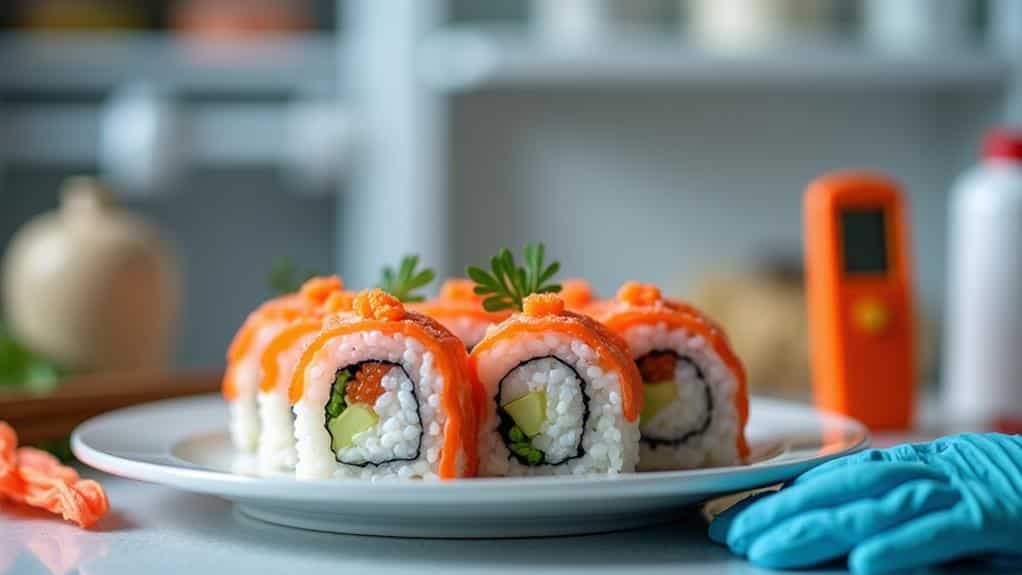
While freezing sushi is an option, maintaining safety is paramount. When you consume raw sushi, be aware that bacteria can cause food-borne illnesses. To stay safe, eat raw sushi within 1-2 days when stored in the refrigerator.
Watch for signs of spoilage, such as odd smells or sliminess. Keep sushi chilled below 40°F to avoid rapid bacterial growth and minimize health risks.
Wrapping Up
You have the knowledge to handle sushi safely and maximize its freshness. Remember, different types of sushi have varying shelf lives, so store them properly and always check for signs of spoilage before eating.
While freezing can extend sushi’s lifespan, it’s best enjoyed fresh. By following these guidelines, you’ll reduce your risk of foodborne illness and guarantee you’re getting the most out of your sushi experience. Enjoy your sushi responsibly and savor every bite!


