
Yes, ketchup can go bad, though it lasts a long time thanks to its acidity, sugar, and salt. Unopened, it stays good for up to 2 years in the pantry. Once opened, refrigerate it to maintain quality for up to 6 months. Watch for mold, odd smells, darkening color, or a bloated bottle—these mean it’s time to toss it. Even if it looks fine, flavor fades over time, so check the date and trust your senses to know when it’s past its prime. There’s more to keeping it fresh than you might think.
Quick Guide
- Ketchup doesn’t spoil quickly due to its high acidity, sugar, and salt, which inhibit bacterial growth.
- Unopened ketchup stays safe for up to 2 years when stored in a cool, dry pantry.
- Once opened, refrigeration is recommended to maintain quality for up to 6 months.
- Signs of spoilage include mold, dark discoloration, sour smell, slimy texture, or a bloated bottle.
- Separation is normal; however, if it won’t re-mix or smells off, discard the ketchup.
Does Unopened Ketchup Go Bad?
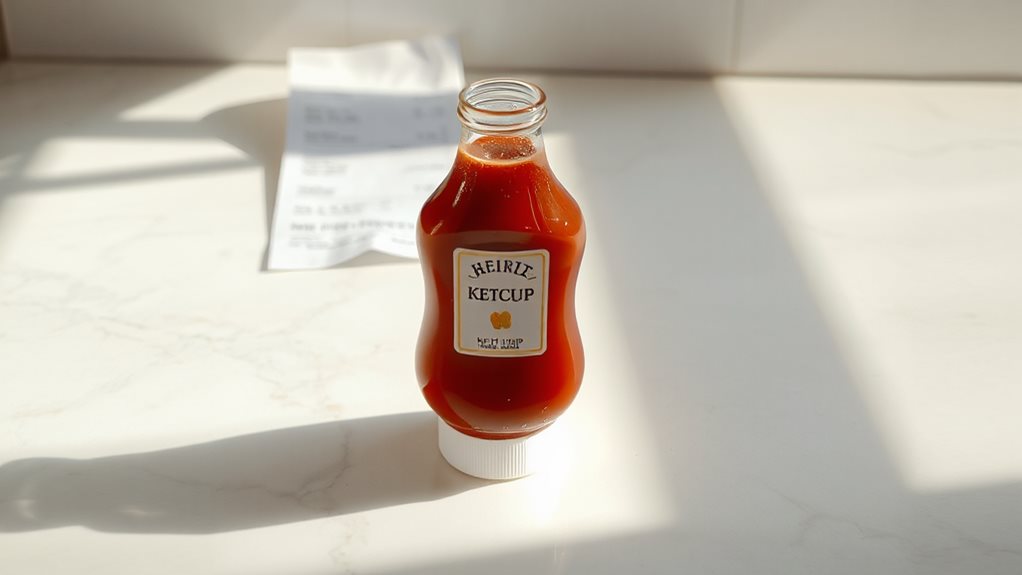
Unopened ketchup won’t go bad quickly, thanks to its built-in defenses against spoilage. Its high acidity from vinegar and tomatoes, along with sugar and salt, naturally prevents bacteria and mold. Store it in a cool, dry place away from sunlight, and keep the bottle sealed. It stays best for about a year, though it can last up to two. Best by dates typically indicate quality, not safety. Unopened bottles can stay fresh for 1 to 2 years with proper pantry storage.
How Long Does Opened Ketchup Last in the Fridge?
Once you crack open a bottle of ketchup, the clock starts ticking a little faster on its freshness, but don’t worry—your fridge is its best defense.
Refrigeration slows spoilage, keeping ketchup safe and flavorful for up to six months. The cold reduces air’s impact and preserves quality. Always store it with a tight-fitting lid to limit air exposure and keep flavors fresh.
Acidity from vinegar helps inhibit microbial growth, further extending shelf life when refrigerated.
Just seal it tightly and shake well before using, since separation is normal.
Can You Store Ketchup at Room Temperature?
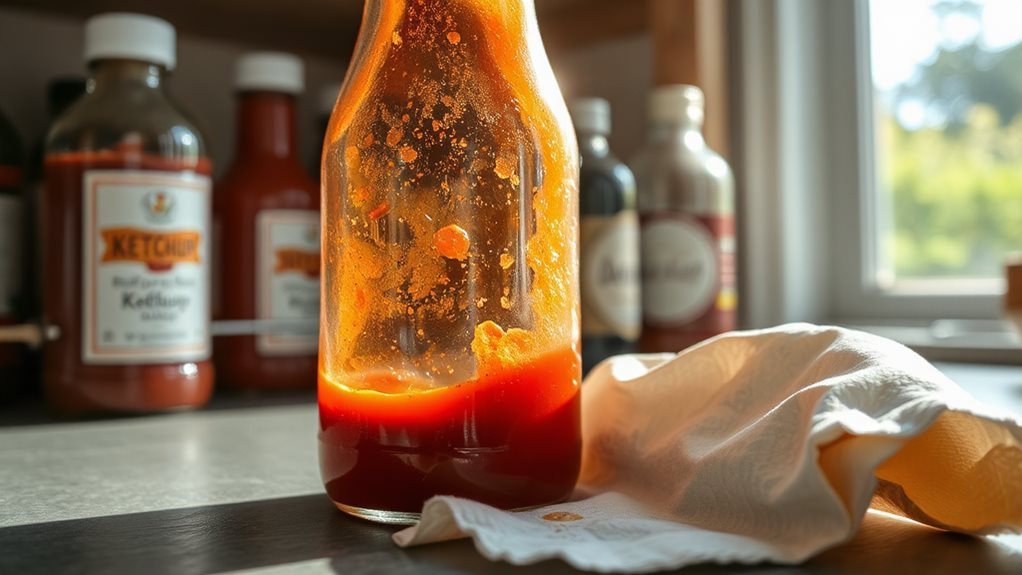
You can keep ketchup on the shelf without worry—thanks to its high acidity from vinegar and a good dose of sugar, it resists spoilage even at room temperature.
Store it in a cool, dark place like your pantry, away from heat and sunlight.
Always seal the bottle tightly after use.
Both opened and unopened bottles stay safe this way, though refrigeration helps preserve flavor longer.
Just like other vinegar-based condiments, keeping it in a spot with steady temperatures helps preserve its quality longer.
What Makes Ketchup Naturally Shelf-Stable?
You keep ketchup stable because its high acidity from vinegar stops bacteria from growing.
The sugar and salt don’t just enhance flavor—they also work together to help preserve it.
Plus, spices and natural compounds like lycopene add extra protection while enhancing color and nutrition.
Like soy sauce, keeping it in a cool, dark place and watching for signs of spoilage helps maintain quality over time.
Acidity Inhibits Bacterial Growth
Because ketchup is naturally acidic, it resists spoilage better than most condiments.
You’ll find its low pH—around 3.9—comes from tomatoes and vinegar, creating a hostile environment for bacteria.
Fermentation deepens this effect, dropping pH further and enhancing organic acids.
These acids, combined with reduced water activity, effectively block pathogens like *Salmonella* and *Listeria*, keeping your ketchup safe and stable over time.
Sugar Acts As Preservative
The acidity in ketchup sets the stage for its long shelf life, but it’s the sugar that plays an equally important role in keeping spoilage at bay.
You’ll find up to 20% sugar in some brands, which binds water and limits microbial growth. Sugar works with vinegar and pectin to reduce available moisture, thicken texture, and create an environment where bacteria, mold, and yeast struggle to survive.
Salt And Spices Enhance Stability
Lock in that tangy flavor and keep spoilage in check—salt and spices do far more than season your ketchup.
You’re using salt to reduce moisture availability, while spices like cloves, cinnamon, and garlic actively fight microbes.
Together with vinegar and sugar, they create a hostile environment for bacteria and mold, making your ketchup naturally stable without artificial preservatives.
How to Tell If Ketchup Has Gone Bad?
You can spot bad ketchup just by looking—watch for color shifts from bright red to dark maroon or any fuzzy mold spots.
If it smells sour or rancid, or if the texture won’t mix after shaking, it’s time to toss it.
Persistent separation that won’t re-emulsify or cloudy sediment can also signal spoilage.
And if you’re unsure, a quick taste will confirm freshness or warn you something’s off.
Visual Changes To Watch
While ketchup is pretty stable, it’s not immune to spoilage—so keeping an eye on visual changes can save you from an unpleasant surprise.
Check for mold around the cap or inside, especially if it’s white, blue, black, or green.
Darkening, separation, or bubbling can happen, but if you see mold or heavy bubbling, toss the bottle.
Smell And Texture Clues
Ever wonder how to catch spoiled ketchup before it ruins your meal? Trust your nose—sour or rancid smells mean it’s gone bad. If it smells off, toss it immediately.
Watch for texture changes too: watery separation, gloppiness, or bubbles signal spoilage. A bloated bottle? That’s fermentation.
These clues, like metallic tastes or fizz, mean the ketchup’s unsafe—don’t risk it.
Taste Test For Freshness
A sour smell or strange texture might raise red flags, but the true test of ketchup’s freshness often comes down to taste.
Trust your palate: fresh ketchup has a bright, tangy tomato flavor without off-notes. If it tastes stale, overly sharp, or chemical, it’s likely spoiled. Brands like Kissan and Heinz maintain flavor longer thanks to antioxidants and quality control.
Do Ketchup Packets Expire?
Most ketchup packets won’t go bad right away, but they don’t last forever. They typically stay good for about 9 months, or up to 6 months past the printed date if stored properly.
While they won’t spoil quickly thanks to vinegar and sugar, flavor fades over time. Always check for swelling, odd smells, or discoloration—when in doubt, throw them out.
Where Should You Store Ketchup After Opening?
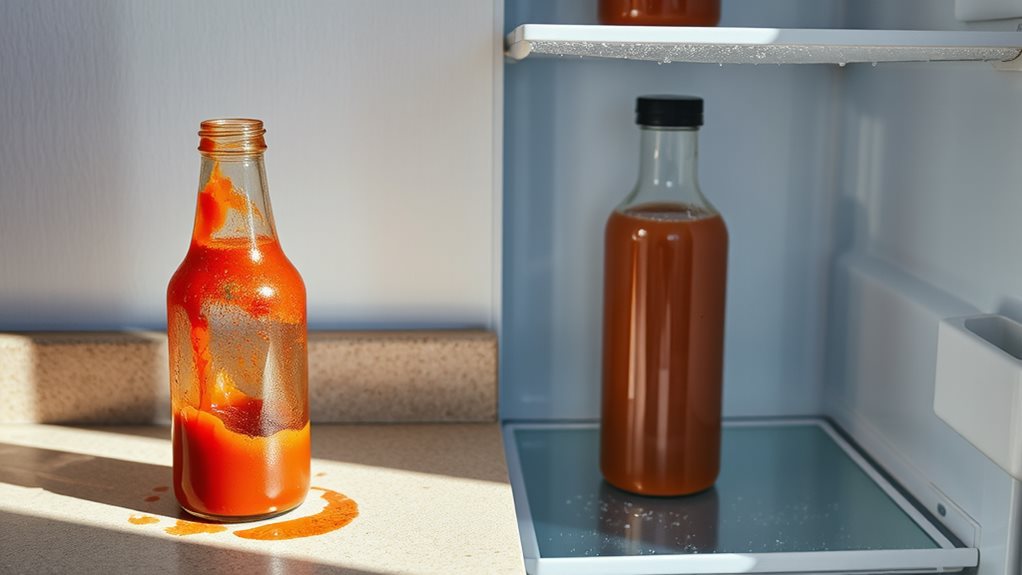
Now that you’ve checked your ketchup packets for freshness, it’s time to think about where that bottle in your fridge or pantry should live after opening.
You can keep it in the pantry if you prefer room-temperature ketchup—its acidity and airtight seal prevent spoilage. But for longer freshness and to avoid separation, refrigerate it.
Heinz recommends the fridge, and experts agree it’s best for quality, even if not required for safety.
Always seal tightly after each use.
When Should You Throw Out Ketchup?
Sometimes, even a shelf-stable condiment like ketchup won’t last forever—so you’ll want to know when it’s time to toss it.
If you see mold, fuzz, or dark discoloration, throw it out. A foul smell, sour taste, or slimy texture means it’s spoiled. Bloating, spurting, or separation also signal it’s done. Don’t risk food poisoning—when in doubt, toss it out.
How Long Does Ketchup Last After the Best By Date?
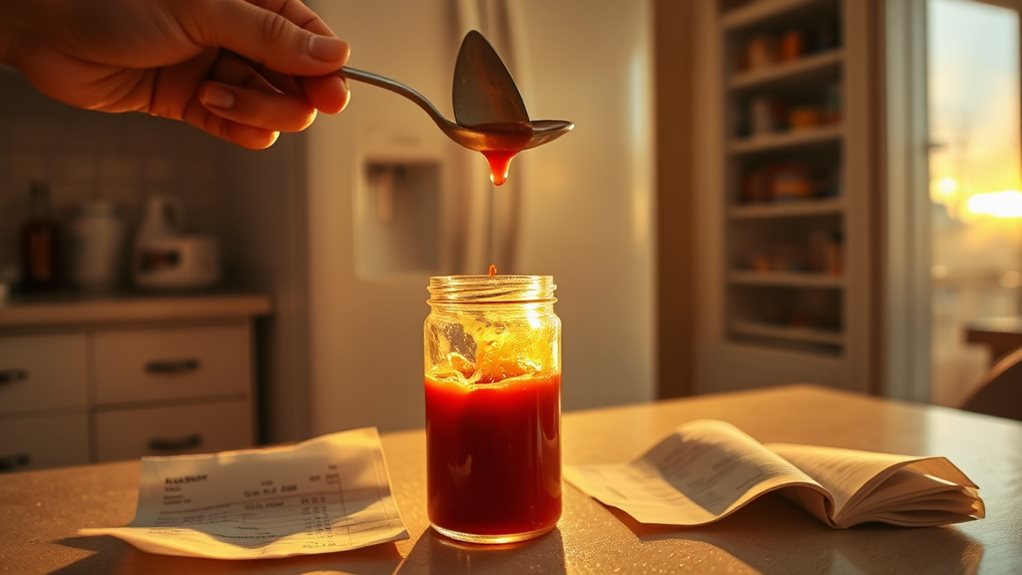
While the “best by” date on your ketchup bottle isn’t a hard deadline, it does mark the point when the flavor and texture are at their peak.
You can safely use unopened ketchup for up to a year past this date if stored properly.
Once opened, it stays fresh for about 6 months in the fridge, though quality gradually declines over time.
Wrapping Up
You can keep unopened ketchup in the pantry for months, thanks to its high acidity and preservatives. Once opened, store it in the fridge to maintain flavor and quality. It usually stays good for about a year, even past the “best by” date. Check for mold, odd smells, or color changes—those mean it’s time to toss it. Ketchup packets last a long time too, but don’t ignore expiration dates. When in doubt, throw it out.


