
Use two or three room‑temperature eggs, a splash of milk or water, and a tablespoon of butter (or a teaspoon of oil for a non‑stick pan). Whisk the eggs vigorously with a balloon whisk until they’re frothy, then melt the butter on low heat until it’s just liquid. Pour the eggs into the pan off‑heat, let the bottom set for about 30 seconds, and immediately whisk the top to trap air. Pull and fold the curds gently, adjusting speed for creamier or fluffier texture, season near the end, and remove from heat while still slightly runny; the residual heat finishes cooking. Continue for, and you’ll discover more tips.
Quick Guide
- Use 2‑3 large room‑temperature eggs, whisk vigorously with a balloon whisk, adding a splash of milk or water for extra air.
- Melt a tablespoon of butter (or oil) slowly on low heat, coating the pre‑heated nonstick pan evenly before adding eggs.
- Pour the whisked eggs into the off‑heat pan, let the bottom set ~30 seconds, then gently stir and pull‑fold to create airy layers.
- Control texture by stirring speed: slow for creamy, faster for fluffier; keep heat low to avoid browning.
- Season near the end and remove from heat while the surface is still slightly runny; residual heat finishes cooking to fluffy perfection.
Gather Eggs, Butter, and a Ready‑to‑Use Non‑Stick Pan
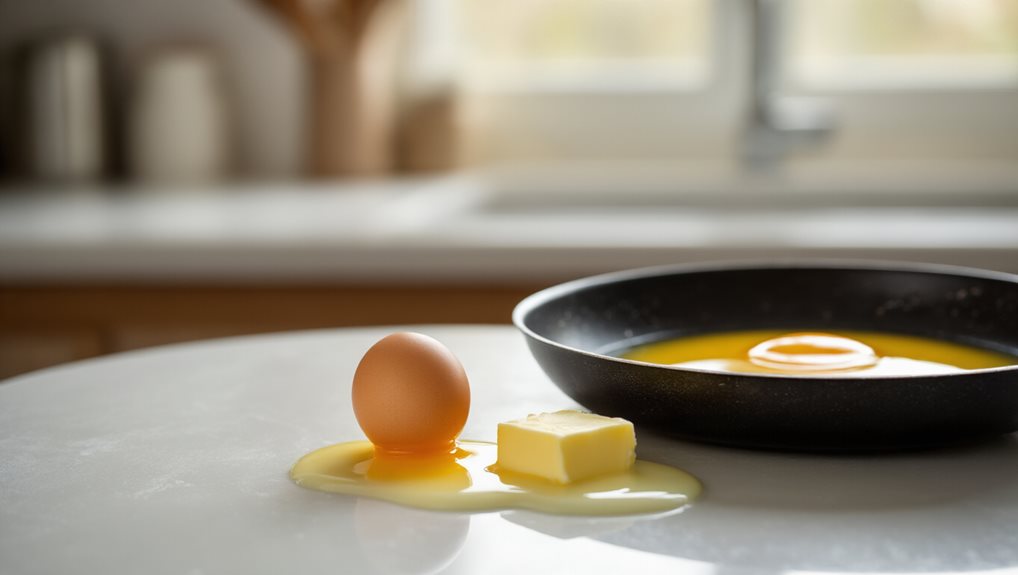
Gathering the right ingredients and tools is the first step to fluffy scrambled eggs. Choose two to three large, fresh, room‑temperature eggs; avoid cracked shells. Use one tablespoon unsalted butter per three eggs, or a teaspoon for a nonstick pan. Pick a ceramic or hybrid nonstick pan, preheat it on medium‑low for about a minute, then melt the butter evenly before adding the eggs. A clear, BPA-free bin can keep your eggs and butter easy to spot and reduce rummaging in a crowded fridge. Preheat the pan until a drop of water hops across its surface.
Whisk Eggs for Maximum Air to Make Fluffy Scrambled Eggs
After butter’s melted and the pan is ready, whisk the eggs thoroughly before they hit the heat. Use a balloon (piano) whisk; its wide, rounded wires trap the most air and emulsify whites and yolks. Move the whisk side‑to‑side, matching its size to the bowl, and add a splash of milk or water for tenderness. Eggplant seeds are edible and nutritious, and cooking them with the flesh can help reduce bitterness, making eggplant seeds an easy add-in to many savory dishes. Stop before the mixture looks frothy; over‑whisking dries the eggs. The balloon whisk is considered the gold standard for maximum fluff due to its large surface area.
Choose the Right Butter (or Oil) and Melt It on Low Heat
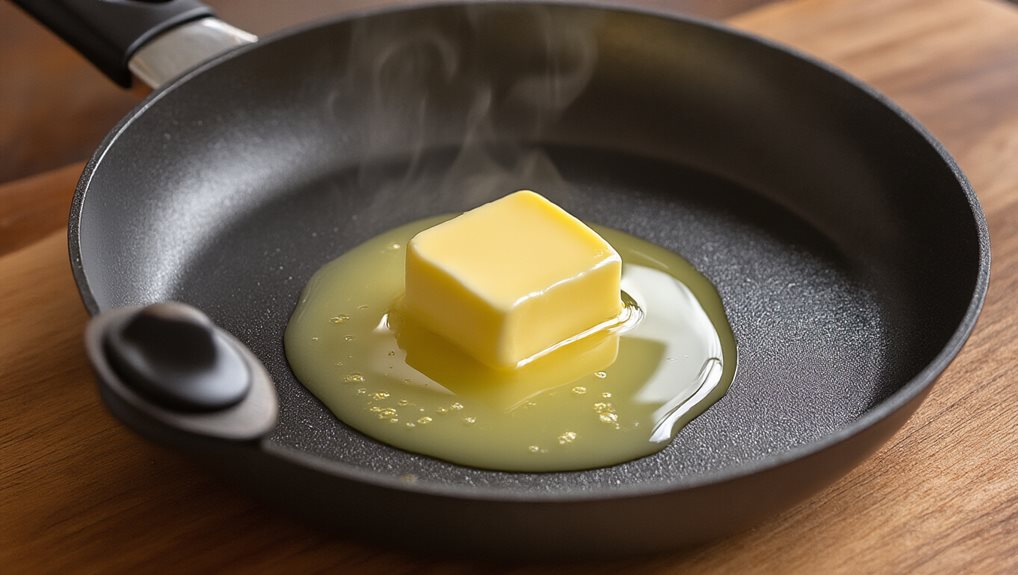
You’ll want to melt the butter slowly over low heat so it stays liquid without browning.
If you prefer a milder flavor, you can add a splash of oil, but keep the temperature low to prevent the fats from smoking.
This gentle melt creates an even coating that helps the eggs stay tender and fluffy.
For extra freshness, portion and freeze leftover butter in a bag with a double-zipper seal to help keep out air and prevent off flavors.
Melt Butter Slowly
When you melt butter slowly on low heat, you give it time to coat the skillet evenly without scorching, which creates a non‑stick surface and preserves the butter’s rich flavor.
Use a tablespoon for a small pan or two for a 12‑inch skillet, swirling until it just begins to foam.
This gentle melt lets the butter’s emulsion coat the pan, keeping eggs moist and tender before you pour them in.
Use Low Heat
Why does low heat matter when you melt butter for scrambled eggs? It keeps butter from browning, preserving its flavor, and prevents a metallic taste from over‑cooked egg whites. Preheat a large sauté pan on medium‑low for a minute, then set the burner to medium, drop the butter, and let it melt gently. This gentle heat creates tender, moist curds and avoids hot spots that could dry the eggs.
Add Oil If Desired
Ever wondered which fat will give your scrambled eggs the best texture and flavor? Choose extra‑virgin olive oil for a rich taste, using one tablespoon per two eggs, or avocado oil for a high smoke point. Melt the oil (or two tablespoons butter for a 12‑inch pan) on low heat until it shimmers, then pour in the whisked eggs and cook gently.
Add Eggs Off‑Heat and Whisk the Top Immediately
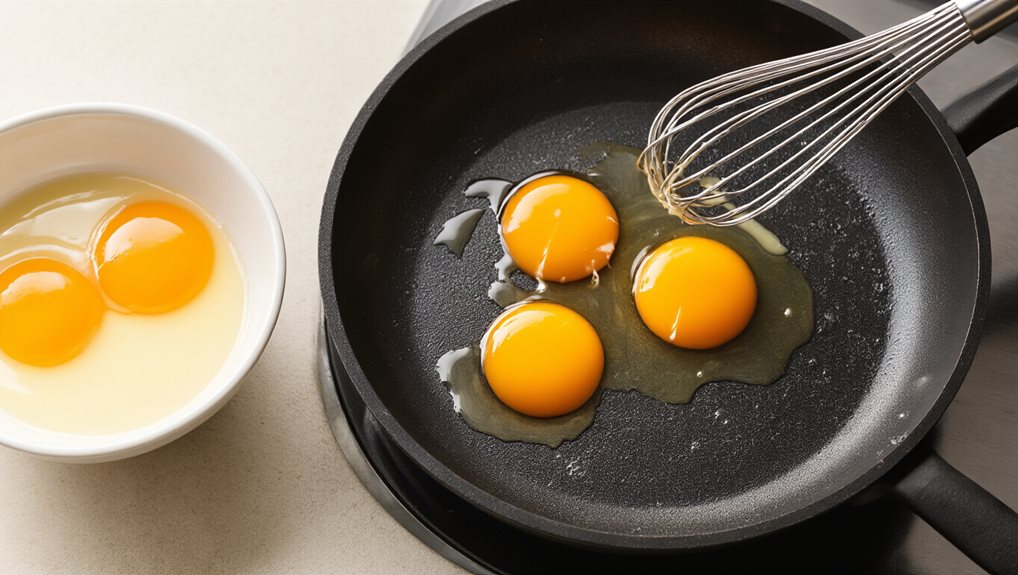
If you pour the eggs into a hot, pre‑heated skillet and whisk the surface right away, you lock in the gentle heat that prevents the whites from overcooking on contact. The pan’s retained heat sets the bottom layer softly, while immediate whisking traps air bubbles for lightness. Stir gently afterward to let the bottom solidify, then let the mixture cook evenly without browning. For extra insurance against sticking at this stage, coat the skillet with a little high smoke point oil like canola or a vegetable oil blend.
Let the Bottom Set, Then Pull‑and‑Fold for Fluffiness
You’ll let the bottom layer of the eggs set just long enough to firm up, then start pulling the edges toward the center with a spatula.
While the pan stays on low heat, you fold the set edges gently, creating airy layers that trap steam and keep the texture creamy.
This quick pull‑and‑fold method gives you fluffy, velvety scrambled eggs without overcooking. Just like pistachios stay fresher in an airtight container, keep your eggs covered off heat for a moment so trapped steam helps maintain that soft, fluffy texture.
Set Bottom Briefly
When the egg mixture hits the hot skillet, let it sit undisturbed for about 30 seconds so the bottom can coagulate and form a thin, firm layer. This brief setting lets proteins denature gently, creating a sturdy base for large curds.
After the seconds, use a rubber spatula to lift and slide the set bottom, forming soft, fluffy pockets while keeping the rest of the eggs loosely cooked. This control prevents over‑cooking and ensures airy texture.
Fold While Cooking
After the bottom has set for a few seconds, start pulling and folding the eggs instead of stirring them aggressively. Use a silicone spatula to hug the pan, gently swipe edges, and push the liquid into soft curds. Watch the edges barely set, then fold quickly for two to three minutes, pausing as needed.
Remove from heat when big folds form, keeping the texture velvety.
Set Stirring Speed for Desired Egg Firmness
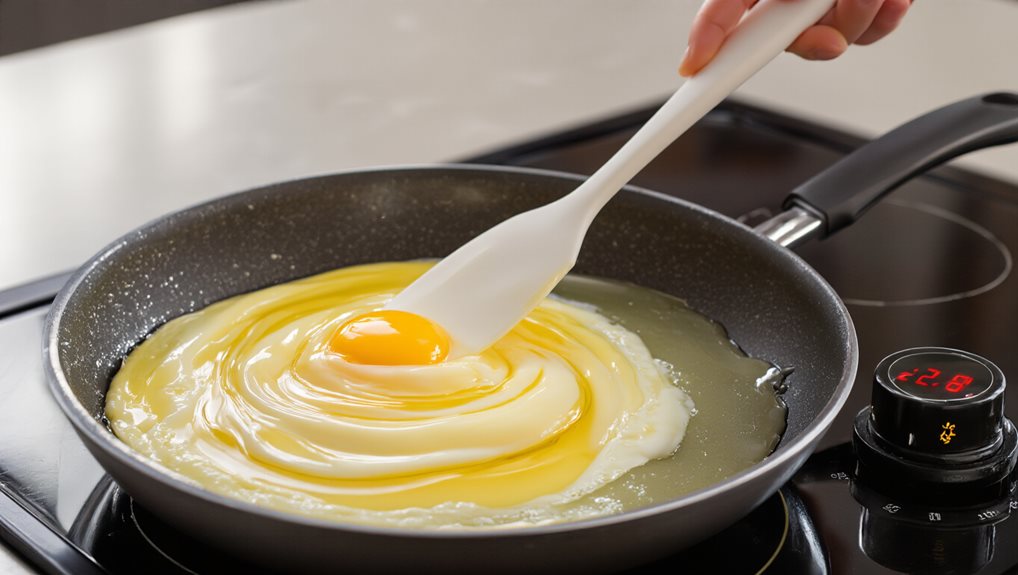
Ever wondered how the speed at which you stir your eggs determines their final texture? Slow stirring lets proteins set gradually, yielding creamy, custardy eggs that stay moist. Fast stirring keeps pockets of liquid, incorporating air for a lighter, fluffier result.
Match your pan’s heat: low temperature with gentle stirring preserves tenderness, while high heat and quick motion maximize fluffiness. Adjust speed to achieve your preferred firmness.
Season Near the End: Add Salt, Cheese, and Parsley
Seasoning at the end of the scramble lets you lock in flavor without compromising the eggs’ airy texture. Sprinkle salt now to keep the curds tender and avoid watery eggs.
Fold in cheese while the eggs are still soft so its fats melt without turning rubbery.
Finally, scatter fresh parsley for a bright finish; add it after plating to preserve its crispness and aroma.
Know When the Eggs Are Done and Remove From Heat
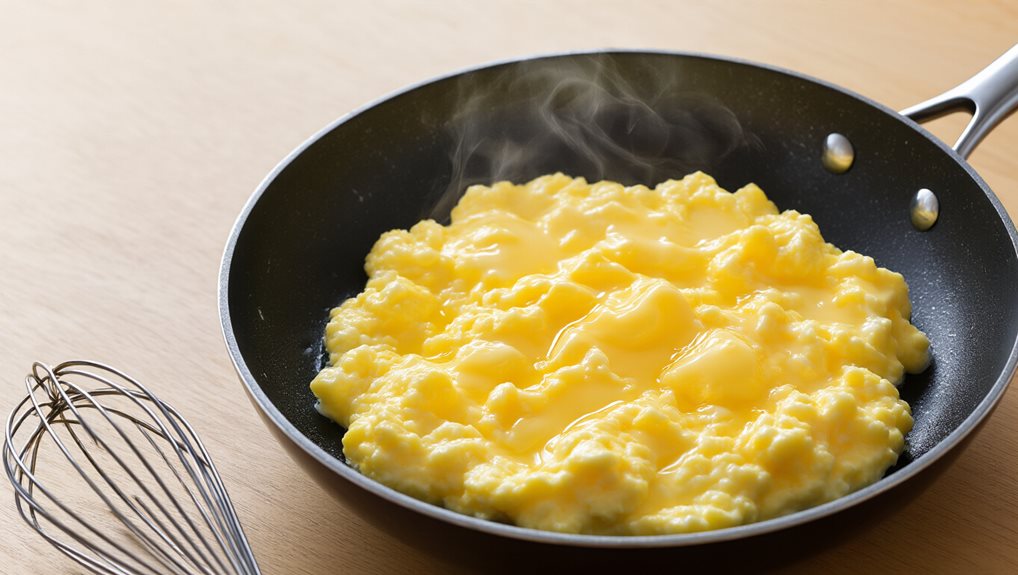
Knowing when to pull the pan off the heat is the key to fluffy scrambled eggs. Watch for a slightly runny surface and a creamy texture just below your ideal doneness. The residual heat will finish cooking the interior, preventing a firm, bouncy bite. Stir constantly, and remove the pan as soon as the visual and texture cues change, not after a set timer.
Troubleshoot Common Issues: Over‑Cooking, Dryness, Uneven Fluff
How can you keep scrambled eggs from turning into a dry, rubbery mess or developing uneven fluff? Cook over medium heat, stirring constantly, and add a spoonful of crème fraîche or heavy cream just before they finish to halt residual cooking.
This keeps moisture, prevents rubberiness, and balances heat, ensuring even, fluffy curds without over‑cooking.
Wrapping Up
By mastering the steps—gathering fresh eggs, whisking for air, using low‑heat butter, and gently folding—you’ll consistently produce fluffy scrambled eggs. Timing the addition of heat, controlling stirring speed, and seasoning at the end keep texture and flavor balanced. If the eggs turn dry or overcooked, adjust heat and folding technique. Follow this method each time, and you’ll enjoy light, airy eggs without hassle.


