
Yes, pistachios go bad if exposed to heat, light, or moisture, turning rancid within months. You can keep them fresh longer by storing them in an airtight container away from sunlight. For best results, refrigerate or freeze them to slow spoilage. Cold, dry storage preserves their flavor and crunch. Signs of spoilage include off smells, dark spots, or a chewy texture. You’ll also want to know the ideal humidity and packaging methods to maintain quality over time.
Quick Guide
- Yes, pistachios can go bad due to moisture, air exposure, and heat, leading to rancidity or mold.
- Store unopened pistachios in a cool, dark place for up to six months or refrigerate to extend freshness.
- Transfer opened pistachios to an airtight container to prevent oxidation and moisture absorption.
- For long-term storage, freeze pistachios at 0°F (-18°C) in sealed or vacuum-packed containers.
- Discard pistachios if they smell rancid, taste bitter, or show mold, discoloration, or a chewy texture.
Do Pistachios Go Bad? Yes: Here’s Why
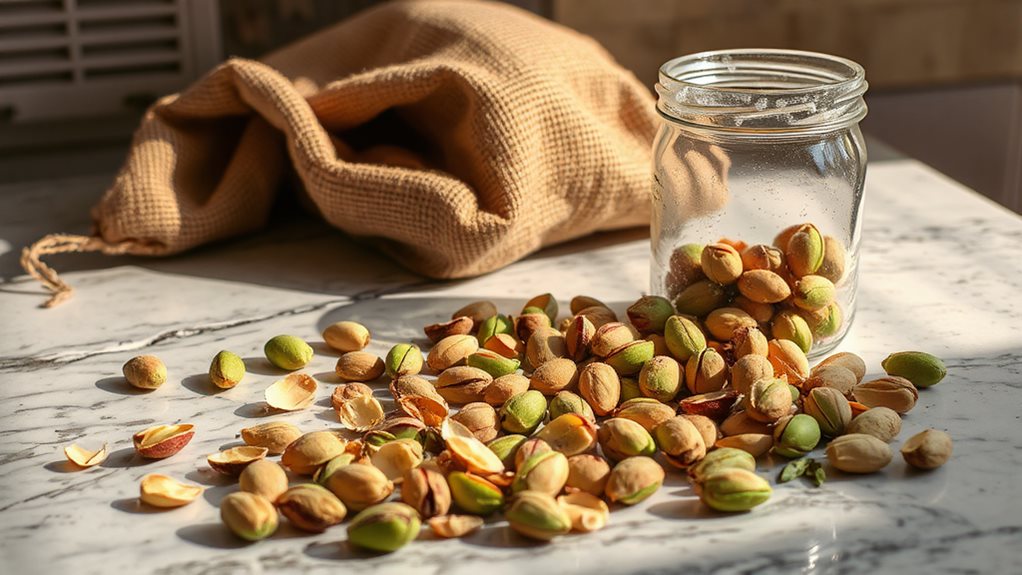
While they might seem like a shelf-stable snack, pistachios can definitely go bad—and it’s usually due to moisture, oxidation, or contamination.
High moisture invites mold and bacteria, especially if hulling is delayed. Exposure to air causes oils to turn rancid, while warm, humid storage speeds spoilage. Using an airtight container helps reduce oxygen exposure and slow rancidity. Fungal toxins, off-flavors, or chewy texture mean they’re no longer safe or fresh. Delayed hulling increases the risk of Aspergillus flavus contamination, which can lead to aflatoxin formation and spoilage.
How Long Do Unopened Pistachios Last?
You can count on unopened pistachios to stay fresh for a solid six months if you keep them in a cool, dark pantry.
In the fridge, they last up to a year, and in the freezer, up to two years.
Storing pistachios in an airtight container helps prevent moisture and odors from affecting their flavor and texture. Always check the “use by” date, and store them in a sealed container to block heat, light, and moisture.
For optimal quality and safety, choose pistachios with quality certifications to reduce the risk of contamination and ensure freshness.
How to Store Opened Pistachios
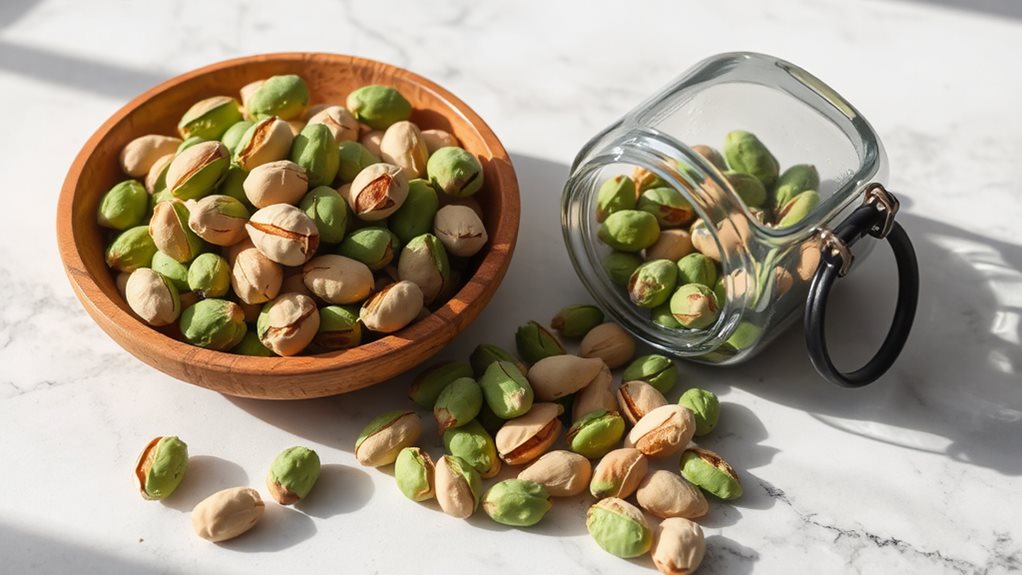
To keep your opened pistachios tasting fresh and crisp, store them right away in an airtight container like a Ziplock bag, Tupperware, or a jar with a tight lid.
Keep them in a cool, dry place away from sunlight and strong odors. For longer freshness, freeze them in a sealed bag—perfect for up to a year.
For even better long-term storage, keep your freezer at 0°F or below to help preserve nuts at peak quality.
Should You Refrigerate Pistachios?
You can keep your pistachios fresh longer by refrigerating them, especially if you plan to store them for more than a few weeks.
Just make sure to use an airtight container so they don’t absorb moisture or odors from other foods.
Cool temps slow down rancidity, helping preserve their flavor and crunch.
For best results, keep them in a spot below about 65°F (18°C) to slow oxidation and extend freshness.
Refrigeration Extends Freshness
When stored properly, pistachios can stay fresh far longer than most people expect—especially in the fridge.
Keep them at 0–10°C to slow rancidity, since higher temperatures speed up spoilage.
Use sealed, low-oxygen packaging to lock in quality.
At cool temps, humidity should stay around 65–70%.
This combo keeps pistachios crisp, flavorful, and safe for months.
Airtight Storage Is Essential
Keeping your pistachios fresh starts with locking them up tight—literally. Use airtight containers like glass jars or sealed plastic to block air and moisture. Vacuum-sealed bags or metal cans work even better by removing excess air.
Transfer opened pistachios immediately to prevent staleness. Store them in a cool, dry spot away from light and strong odors to maintain crispness and flavor.
Cool Temperatures Prevent Rancidity
Often, the key to preserving pistachios lies in keeping them cool—because heat speeds up the chemical reactions that lead to rancidity.
Store them below 10°C with 65–70% humidity for best results.
If you’re keeping them longer than a month, refrigerate in an airtight container.
In warm climates, chilling is even more essential to slow oxidation and maintain freshness.
Can You Freeze Pistachios for Long-Term Storage?
You can definitely freeze pistachios to keep them fresh longer—just stash them in an airtight container or freezer bag to lock in flavor and block moisture.
For best results, choose a container with an airtight seal to help prevent odor transfer and freezer burn.
At 0°F (-18°C) or colder, they’ll stay tasty for up to 6 months, and maybe even a year if stored right.
When you’re ready to eat them, simply thaw the nuts at room temperature with no loss in quality.
Freezing Pistachios: What You Need To Know
While you mightn’t think twice about tossing a handful of pistachios into your freezer, doing it right makes all the difference when it comes to preserving their flavor and crunch.
Freeze them in an airtight, vacuum-sealed container to lock in freshness, prevent odors, and stop pests. Opt for in-shell nuts when possible, and freeze them promptly after buying.
This simple step keeps them tasty and crisp for up to 6 months—or even years for kernels—while protecting their texture, taste, and nutrients.
Thawing Frozen Pistachios Properly
Freezing pistachios keeps them fresh for months, but how you bring them back to room temperature affects their texture and taste just as much as the freeze.
Remove them from the freezer container, spread in a flat layer, and let them thaw fully. This prevents sogginess and restores crunch.
Dry any condensation, and use in recipes or eat raw once at room temperature.
Best Containers for Keeping Pistachios Fresh
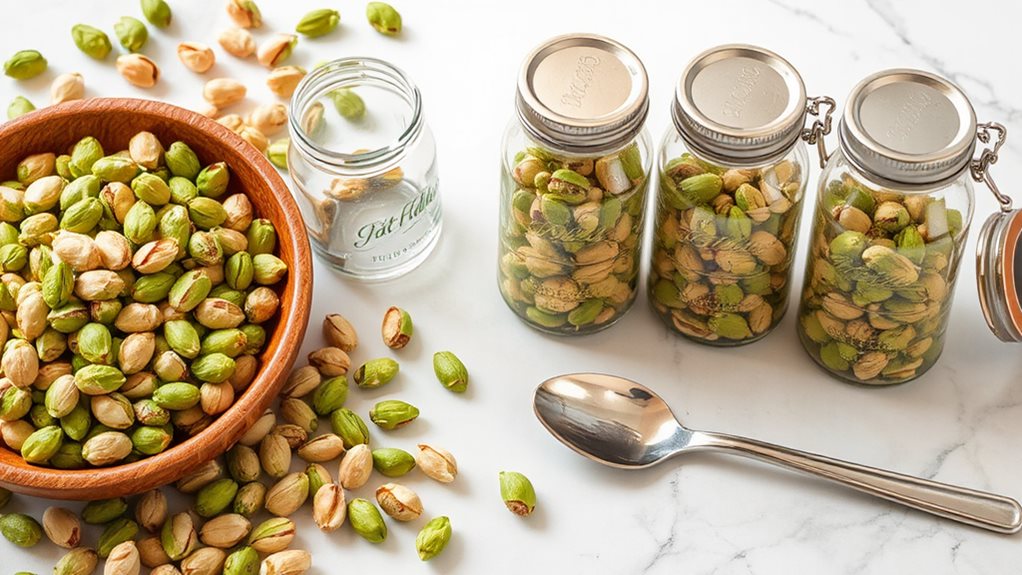
A wide range of containers can keep your pistachios fresh, but choosing the right one depends on where and how long you plan to store them.
Use airtight options like Tupperware or OXO POP containers to lock in freshness. For pantries, pick stackable, medium-sized jars with tight lids. In fridges or freezers, go for BPA-free, sealable containers to preserve crunch and prevent moisture.
How to Tell If Pistachios Are Rancid or Spoiled
How can you tell when your pistachios have gone bad? Look for yellow, dark, or oily kernels, which often feel soft or leathery.
Mold on the shell or nut means spoilage.
Trust your nose—a rancid or off smell, caused by free fatty acids, is a red flag.
If they taste bitter or stale, they’re likely rancid.
When in doubt, taste one—rancidity has a distinct, unpleasant flavor.
Ideal Temperature and Humidity for Storage
Now that you know how to spot spoiled pistachios, it’s just as important to store them properly to keep them fresh.
Keep them at 0–10°C (32–50°F) with humidity between 55–70%, or below 32% if warmer. Avoid heat and sunlight, and use airtight containers to block moisture and oxygen. This slows rancidity, mold, and texture changes, keeping your nuts tasting their best.
Wrapping Up
Yes, pistachios can go bad, but you can keep them fresh with the right storage. Store unopened bags in a cool, dark place, and transfer opened ones to an airtight container. For longer freshness, refrigerate or freeze them—especially in warm climates. Keep them away from heat and moisture, and check for rancid smells or off flavors. With these simple steps, your pistachios stay tasty and safe to eat for months.


