
No, salt doesn’t go bad—it lasts indefinitely if stored properly. Pure salt is chemically stable and won’t support microbial growth. While iodized salt loses its potency after three to five years, it’s still safe to use. Moisture causes clumping, but that doesn’t mean it’s spoiled. Keep salt in an airtight container away from humidity, and it’ll stay good for years. Even discolored or clumped salt is perfectly usable. There’s more to learn about keeping your salt in top condition over time.
Quick Guide
- Pure salt does not go bad and lasts indefinitely due to its chemical stability and lack of moisture.
- Iodized salt loses iodine potency over time but remains safe to consume for up to five years.
- Moisture causes salt to clump, but this doesn’t indicate spoilage—just reduced flow.
- Specialty salts may lose flavor or color over time but don’t spoil if stored properly.
- Proper storage in airtight containers keeps salt safe and usable indefinitely, regardless of best-before dates.
Does Salt Expire?
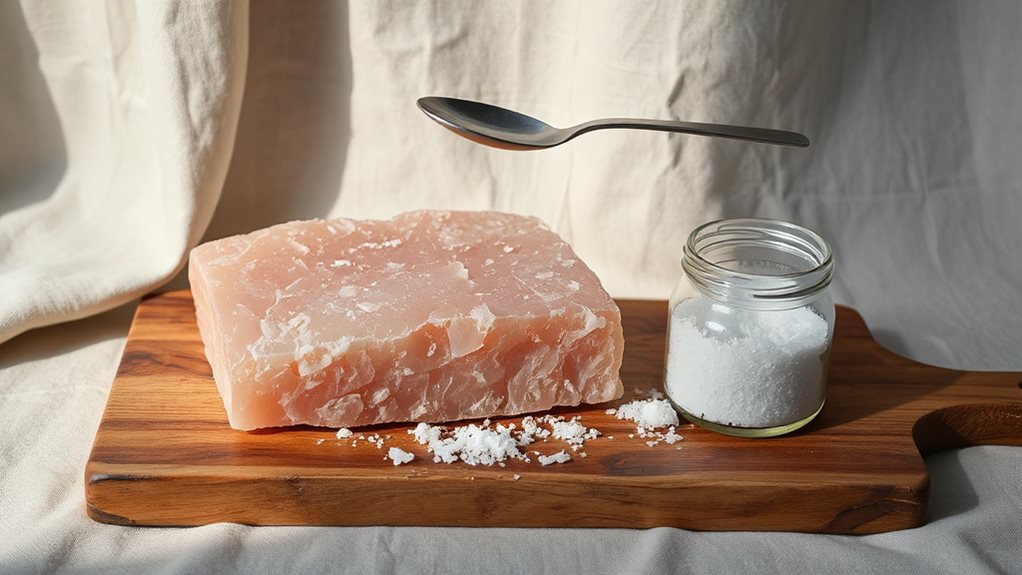
While salt itself doesn’t spoil, you might still wonder if it ever goes bad—especially when you find an old box in the back of your pantry.
Pure salt lasts indefinitely because it lacks moisture, stopping microbial growth.
But table salt with additives like iodine degrades in about five years. Still, it’s safe to use—just less potent. Store it in an airtight container in a cool, dark place to protect it from moisture and preserve optimal freshness.
Salt remains safe for flavoring and nutritional needs after best-before dates, though table and sea salt may lose some quality over time.
Why Pure Salt Lasts Forever
You can keep pure salt on your shelf forever because it’s chemically stable and won’t break down over time.
It doesn’t support bacteria or mold, so there’s no risk of spoilage as long as it stays dry. Like vinegar, salt stays best when kept in cool, dark storage away from heat and light.
Store it in a sealed container away from moisture and strong smells, and it’ll stay just as good as the day you bought it.
Salt remains safe and usable indefinitely when stored in a cool and dry environment cool & dry.
Chemical Stability Of Salt
Because it’s made of tightly bonded ions, pure salt doesn’t break down over time, and that’s why it lasts practically forever.
You’ll find it stays chemically stable in dry, cool storage, resisting oxidation and light damage.
Its ionic structure prevents decomposition, so your salt keeps its flavor and potency.
No molecular changes happen, meaning it won’t spoil, degrade, or lose quality under normal conditions.
No Microbial Growth Risk
Salt doesn’t just sit on your shelf without changing—it actively resists spoilage by creating an environment where microbes can’t survive. You’ll never have to worry about bacteria or mold growing in pure salt.
It reduces water activity, pulls moisture from microbial cells, and disrupts their enzymes. Even pathogens like *C. botulinum* can’t thrive. Only rare halophiles tolerate such conditions, and they won’t grow in your kitchen salt.
Indefinite Dry Storage Potential
Pure salt, when stored properly, truly lasts forever—its chemical makeup won’t degrade over time. Keep it in a cool, dry, dark place in an airtight container to prevent clumping and odor absorption.
Avoid moisture and heat, which affect texture but not safety. Even if clumped, salt remains usable. With no additives, it stays stable indefinitely—no expiration, no waste, just reliable flavor whenever you need it.
Iodized Salt Shelf Life: How Long Before It Loses Potency?
While the salt itself won’t spoil, the iodine in iodized salt doesn’t last forever—its potency starts to decline after about three to five years.
You’ll lose health benefits over time, especially if exposed to air, light, or moisture.
Store it in a cool, dry, airtight container away from heat.
After five years, it’s still safe, but less effective as an iodine source.
Like vinegar, iodized salt doesn’t “expire” in the traditional sense, and any Best By date is mainly about quality, not safety.
Shelf Life of Specialty Salts (And What Changes Over Time)
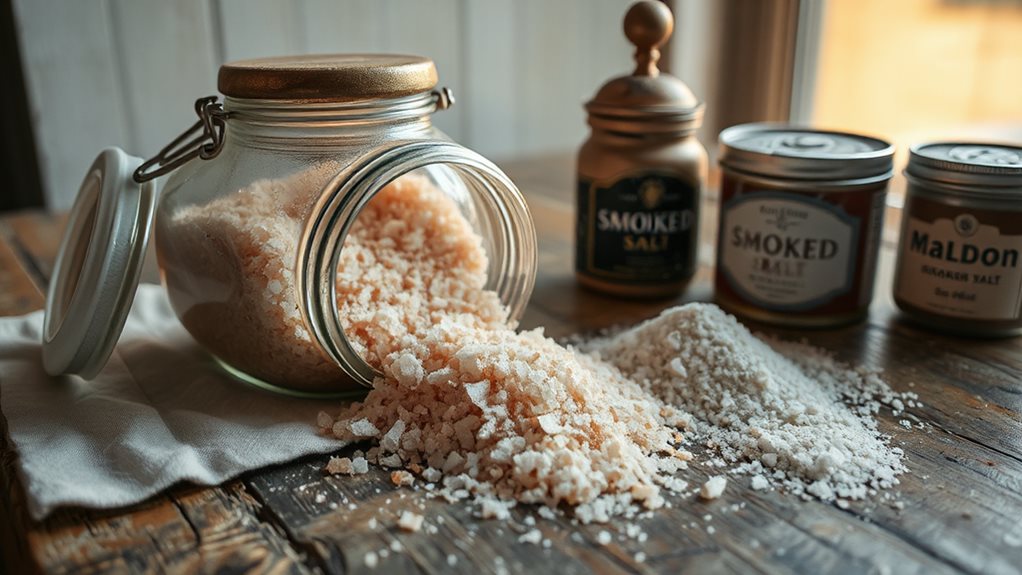
Keep your specialty salts in check, because their shelf life depends on more than just time—it’s how you store them. Seal kosher, flake, and Himalayan salts in airtight containers to block moisture.
Fleur de sel and flavored salts fade faster, so use them within a year or two. Over time, color, texture, and flavor may change, but they won’t spoil. For comparison, opened soy sauce keeps its best flavor longer with refrigeration and a tightly sealed bottle to slow oxidation.
Why Salt Clumps: And How to Prevent It
You’ve probably noticed salt clumping in the shaker, and it’s all thanks to moisture in the air—salt pulls in water because it’s naturally hygroscopic.
Keep it dry by storing in an airtight glass or ceramic container away from humidity, and toss in a pinch of uncooked rice to absorb excess dampness. These simple steps prevent caking and keep your salt flowing smoothly. For even better moisture protection in humid kitchens, choose containers with BPA-free silicone gaskets to create a stronger airtight seal.
Moisture Absorption Explained
Salt pulls moisture right out of the air, thanks to its natural tendency to attract water molecules—a trait known as hygroscopy.
You’ll notice this when table salt clumps in humid weather. Water molecules latch onto salt ions, forming hydration shells that dissolve surface ions. Over time, absorbed moisture enables ionic movement, leading to caking. This process, driven by polarity and charge, explains why keeping salt dry preserves its free-flowing texture.
Prevent Clumping Easily
Tackle clumping before it turns your salt shaker into a solid block by using simple, everyday items that pull moisture from the air. Add a few grains of rice, dried beans, or a silica gel packet to absorb humidity.
Try a clay disk or cracker for longer-lasting control. Replace periodically, and always keep moisture absorbers dry to keep your salt flowing freely.
Store Salt Properly
Keeping your salt flowing freely starts with understanding where and how you store it.
Keep it in a cool, dry place away from steam, heat, and moisture. Use airtight glass or food-grade containers, never metal.
Raise bags on pallets and avoid basements or outdoor piles.
Seal tightly after use and check for leaks—simple steps that prevent clumping and keep your salt in perfect condition.
How to Store Salt Long-Term
For long-term storage, choosing the right container is your first step toward keeping salt in top condition. Use airtight options like Mylar bags or food-grade buckets to block moisture and odors.
Add silica gel packets if needed, but skip oxygen absorbers—they can cause clumping. Store in a cool, dark place, label with type and date, and your salt will stay fresh and usable for years.
When Salt Looks Bad But Is Still Safe
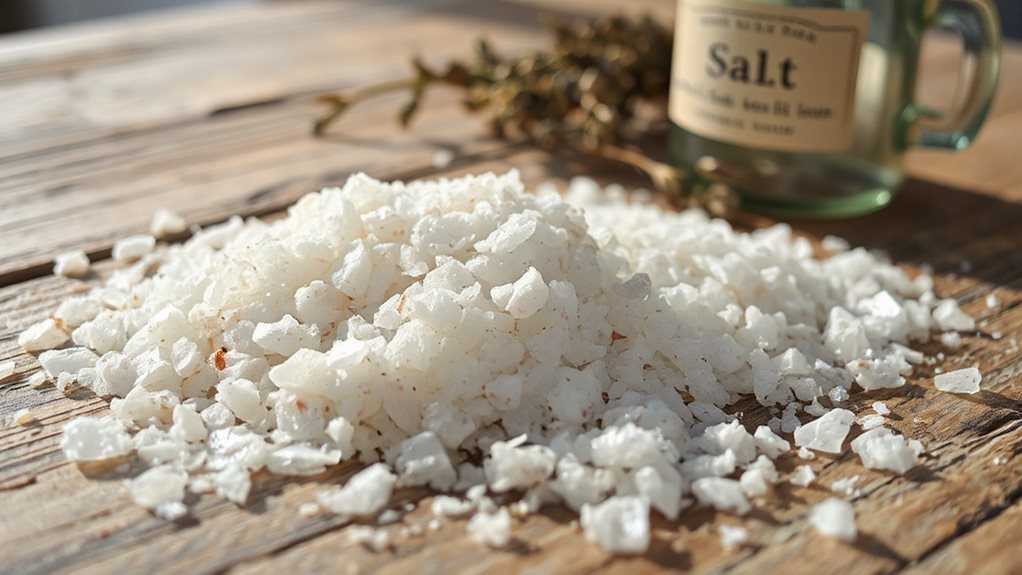
You’ve stored your salt properly in an airtight container, kept it in a cool, dark spot, and labeled it for the long haul—great.
Even if it clumps, changes color, or looks dull, it’s still safe. Moisture, light, or minor impurities alter appearance and texture, not safety.
Break up clumps, trust the taste, and keep using it—your salt won’t spoil, no matter how it looks.
Choosing the Best Salt for Long-Term Storage
While all salt lasts indefinitely when stored properly, not every type performs equally well over the long haul. Choose kosher, sea, or Himalayan pink salt—they’re pure, additive-free, and resist clumping.
Store them in airtight containers in a cool, dry place. Avoid iodized table salt for long-term use since its iodine fades and it may yellow.
Pickling salt also works well, especially for preserving.
Wrapping Up
You now know salt doesn’t truly expire—pure salt lasts forever if kept dry. While iodized salt may lose potency over time, it’s still safe. Specialty salts might change in texture or color but remain usable. Clumping? Just break it up or add rice. Store your salt in a cool, dry place, and it’ll stay good for years. Choose simple packaging and minimal additives for long-term storage. You’ve got this.


