
Start with a white roux by whisking equal parts butter and flour over medium heat, cooking until it’s bubbly and nutty but still white. Warm the milk separately, then whisk it into the roux slowly to avoid temperature shocks. Dissolve 2‑4 % sodium citrate in the hot liquid before adding cheese; this binds calcium and keeps proteins from clumping. Use full‑fat, high‑melt cheeses, add them off the heat, and keep the sauce simmering below boiling (165‑170 °F). Finish with a splash of cream or butter for extra silkiness, and you’ll have a smooth, creamy sauce that stays that.
Quick Guide
- Build a white roux with equal butter and flour, cooking it 30 seconds–2 minutes until bubbly and nutty.
- Warm milk before adding to the roux, whisk continuously over low heat to prevent temperature shocks and clumps.
- Dissolve 2–4 % sodium citrate (by cheese weight) in the warm liquid base before incorporating cheese to bind calcium and stabilize the emulsion.
- Use full‑fat, high‑melt cheeses (e.g., gouda, Gruyère, sharp cheddar) and add them off the heat, allowing residual warmth to melt them gently.
- Keep the sauce at 165–170 °F, never boiling; optional emulsifiers like mustard or vinegar can further enhance silkiness.
Build the Perfect Roux for Cheese Sauce

Ever wondered how a smooth, creamy cheese sauce starts? You begin with equal parts unsalted butter and all‑purpose flour—three tablespoons each for a typical batch. Melt the butter over medium heat, then stir in the flour, creating a thick, glossy paste. Cook it 30 seconds to two minutes, using a figure‑8 motion, until it’s bubbly and nutty, but still white. This white roux will absorb the milk evenly, preventing lumps and ensuring the sauce stays silky. If you’re making it ahead, store it in borosilicate glass containers to resist odors and handle freezer-to-oven temperature swings (with lids removed). Adding a small amount of coconut milk can further lighten the roux while maintaining its rich consistency.
Warm the Milk for a Silky Cheese Sauce Base
You’ll want to warm the milk just enough to be fluid but not boiling, then add it slowly to the roux while whisking. This gradual pour keeps the fat from solidifying and prevents the dreaded milk clumps that can make the sauce grainy. Keep the mixture at a gentle simmer, and you’ll end up with a silky, evenly incorporated base ready for the cheese. Just as oils degrade with heat and light exposure, keeping the base at a gentle temperature helps protect the sauce’s texture and stability. Adding cheeselow heat helps maintain the emulsion and prevents the proteins from seizing.
Warm Milk Gradually
Why warm the milk before adding it to your roux? Warm milk meets the roux at a similar temperature, preventing sudden cooling that creates lumps. Heat the milk gently for about a minute, then whisk it in slowly, a little at a time. Keep the stove low, stirring constantly, until the sauce thickens and coats the back of a spoon. This method yields a silky, creamy base.
Prevent Milk Clumps
When you warm the milk before adding it to the roux, the temperature difference shrinks, so the sauce stays smooth instead of forming lumps. Warm milk gently over low heat, stirring constantly, to keep proteins from seizing.
Avoid sudden temperature spikes; they cause fat‑protein separation. A gradual increase lets the cheese melt evenly, preserving a silky texture without clumps.
Add Sodium Citrate to Prevent Grainy Cheese Sauce
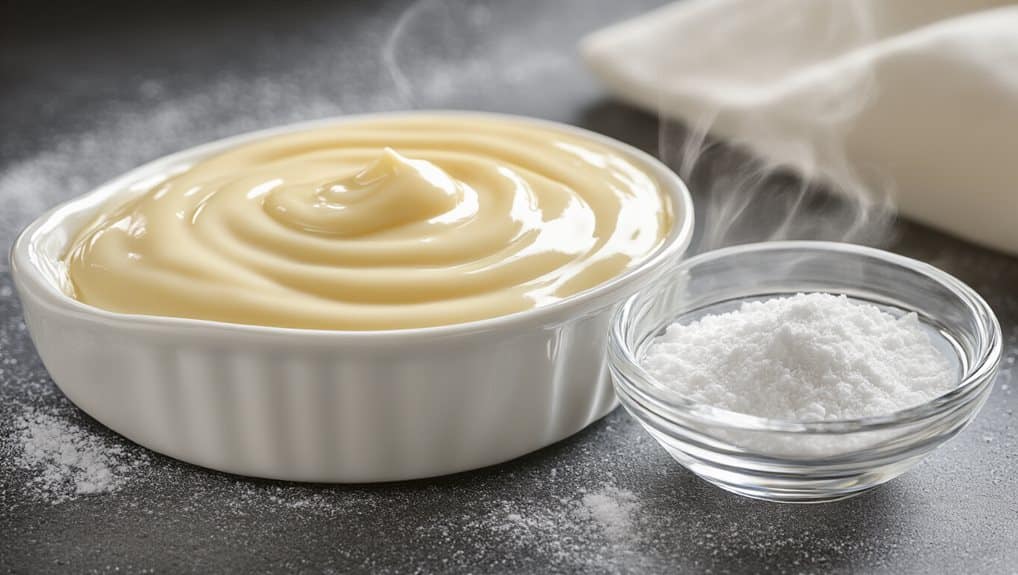
You’ll notice that sodium citrate binds calcium in the cheese, keeping the proteins from clumping and giving you a smooth, melt‑ready sauce.
Dissolve the powder in the warmed liquid base before you add the cheese, whisking until it’s completely incorporated.
Add the cheese gradually once the citrate is fully dissolved, and you’ll avoid the grainy texture that usually shows up when the emulsifier is missing.
For the best texture, use cream stored at 40°F (4°C) or below so it stays fresh and stable in your sauce.
Olve Citrate Benefits
Ever wondered why a cheese sauce sometimes turns grainy instead of staying silky? Sodium citrate binds calcium, turning it soluble and letting fat blend evenly. This keeps the emulsion stable under heat, so the sauce stays smooth and velvety. Use about 2‑4 % of the cheese weight—like 2 g per 100 g cheese—to prevent clumping and guarantee consistent texture.
Optimal Dissolution Technique
Sodium citrate’s ability to bind calcium explains why your sauce stays silky, but the magic happens only when the salt fully dissolves before the cheese hits the pan. Warm your liquid base in a heavy‑bottomed saucepan, whisk in the citrate slowly, and bring it to a gentle simmer. Keep whisking until the crystals vanish; this guarantees a uniform emulsion, preventing grainy texture when you later add the cheese.
Timing for Incorporation
When you add sodium citrate at the start of the sauce‑making process, it dissolves completely in the heated liquid before any cheese touches the pan, ensuring a uniform emulsion that keeps the final product smooth. Dissolve it in a gentle simmer, whisk until clear, then wait until the liquid is fully emulsified before adding cheese.
This timing stops protein clumping, prevents grainy texture, and lets the cheese melt evenly, resulting in a creamy, consistent sauce.
Choose the Right Cheese and Add It at the Right Time
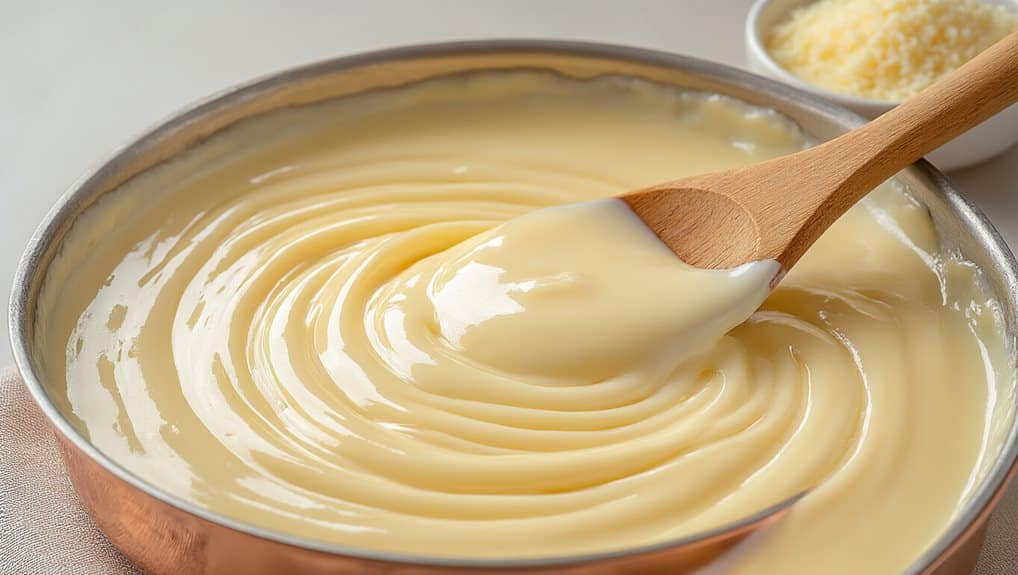
Choosing the right cheese and adding it at the proper moment are the two biggest factors that keep a cheese sauce smooth and creamy. Pick full‑fat, high‑melt cheeses like gouda, Gruyère, or sharp cheddar for flavor and texture, and blend in a little American or cream cheese for emulsification. Grate cheese fresh, then remove the sauce from heat before stirring it in, letting the residual warmth melt it gently for a velvety finish. Just like cool completely before wrapping and storing a custard pie, letting your sauce come off the heat briefly helps prevent texture issues.
Control Sauce Temperature: Keep It Below Boiling
After picking the right cheese and adding it at the proper moment, the next step is to watch the heat. Keep the sauce around 165‑170°F, never letting it boil. Stir constantly as you whisk, stopping before it hits 170°F. Low heat prevents proteins from firming and moisture from escaping, ensuring a smooth, creamy texture while staying safe. Just like using an airtight container helps maintain freshness during storage, keeping your sauce sealed from harsh heat preserves its best texture.
Boost Velvet With Cream, Butter, or Evaporated Milk
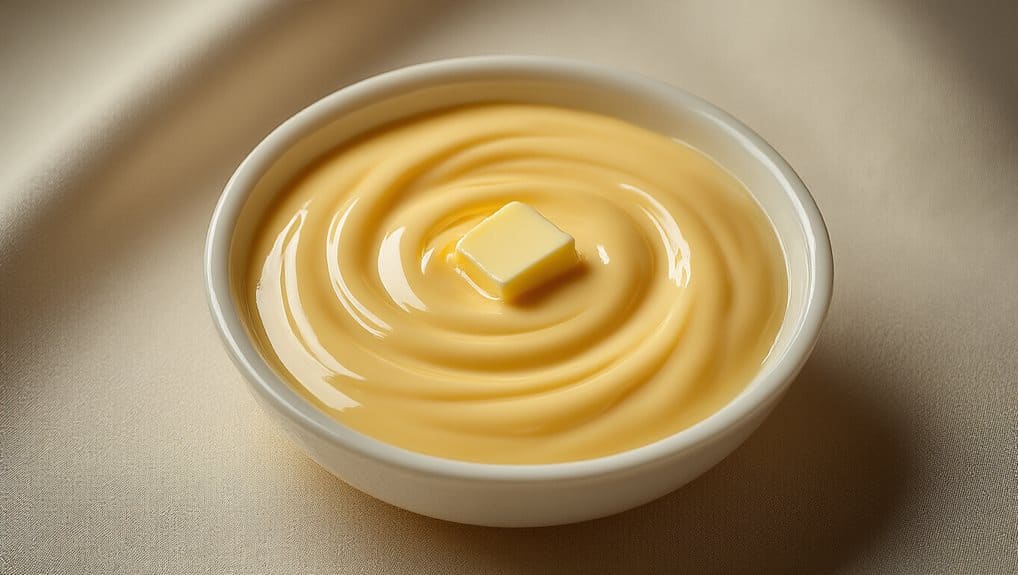
A couple of tablespoons of cream, butter, or evaporated milk can instantly convert a runny cheese mixture into a velvety, glossy sauce. Add cream gradually while whisking over medium heat; it enhances texture without curdling.
Melt butter into the milk base before cheese, then create a stable emulsion.
Use evaporated milk for a light, rich finish, stirring in cornstarch‑coated cheese for instant thickening. This elevates richness while keeping the sauce smooth.
Stabilize Your Cheese Sauce With Mustard, Vinegar, and Other Emulsifiers
If you want a cheese sauce that stays silky instead of separating, add a little mustard and a splash of vinegar early in the process. Mustard’s lecithin and mucilage bind water and fat, while vinegar’s acidity helps the emulsion form. Whisk them together, then drizzle oil or melted cheese slowly, keeping the mixture moving. Egg yolk, garlic paste, or soy lecithin work similarly for extra stability.
Adjust Consistency: Thin or Thicken Your Cheese Sauce on the Fly

How can you keep your cheese sauce just right when it starts to drift toward too thick or too runny?
If it’s too thick, whisk in warm milk or water a tablespoon at a time, stirring continuously over low heat.
If it’s too thin, blend a cornstarch‑water slurry, add it to a simmering sauce, and stir until glossy.
Adjust gradually, monitoring texture after each addition.
Quick Fixes for Common Cheese Sauce Problems (Clumps, Separation, Over‑heat)
When your cheese sauce starts to misbehave, a quick fix can save the dish before it turns into a culinary disaster.
Add a splash of water or evaporated milk and whisk vigorously on low heat to dissolve clumps.
For separation, stir in a cornstarch slurry, bring to a gentle boil, and repeat until smooth.
If overheated, cool slightly, add slurry, and simmer, stirring constantly.
Wrapping Up
By mastering the roux, warming your dairy, and using sodium citrate, you’ll keep cheese sauce smooth and creamy every time. Choose cheeses that melt well, add them off‑heat, and keep the sauce below a boil to avoid graininess. A splash of cream, butter, or evaporated milk adds velvet, while mustard or a touch of vinegar stabilizes the emulsion. Adjust thickness on the fly, and use quick fixes for clumps or separation. Follow these steps for consistently perfect, silky cheese sauce.


