
If your buttercream has curdled, start by gently warming it with a warm water bath or a hairdryer to bring it to a stable temperature, ideally around 72-75°F. Then, gradually re-mix on low speed until it becomes smooth and glossy. You can also try adding a small amount of warm, not hot, liquid or re-beating it carefully to re-emulsify the ingredients. Learn more tricks to perfect your buttercream consistency as you continue.
Quick Guide
- Gently reheat the buttercream over a warm water bath or with a hairdryer to gradually restore smoothness.
- Transfer to a stand mixer and beat on low, then high until glossy and emulsified.
- Use a thermometer to ensure ingredients stay between 72-75°F during re-emulsification.
- Re-incorporate small amounts of fresh, room-temperature ingredients gradually to fix separation.
- If the buttercream remains lumpy or grainy, start over to prevent spoilage.
Why Does Buttercream Curdle and How Can I Prevent It?
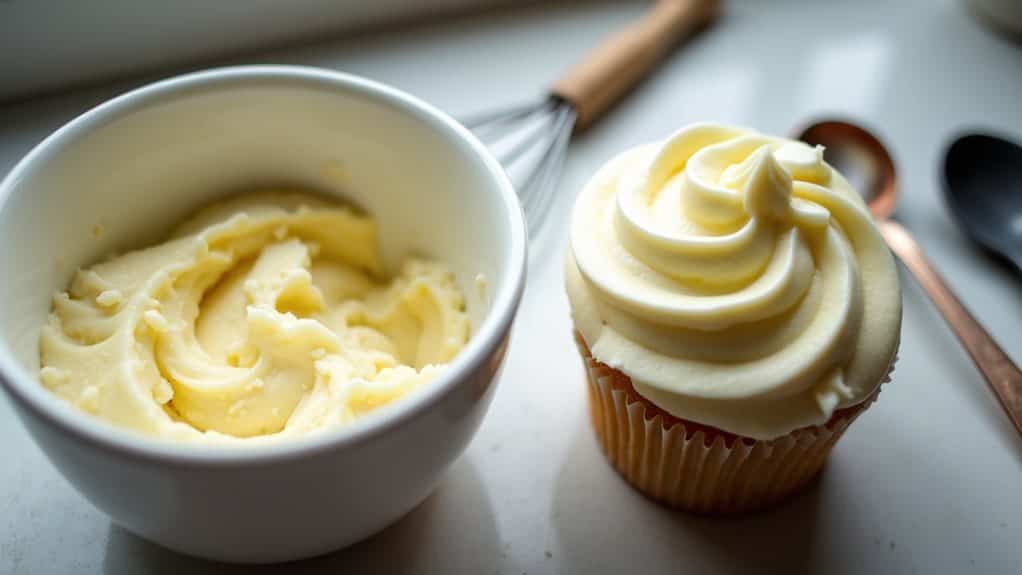
Buttercream curdles when the ingredients aren’t at the right temperatures or when the mixing process causes sudden temperature changes. This leads to a break in the emulsion, resulting in curdled buttercream.
To prevent this, control the temperature by warming ingredients gradually and using proper mixing techniques. Consistent ingredient warming and stable temperature control keep your buttercream smooth and stable. Like cooking eggplant seeds to reduce bitterness, gently adjusting temperature can help maintain a smoother result.
Quick Fixes for Curdled Buttercream: Step-by-Step Rescue
When your buttercream curdles, don’t worry—there’s a simple process to rescue it.
Gently warming the curdled buttercream by placing the bowl over a water bath helps re-emulsify it.
Transfer the bowl to a stand mixer and beat on low, then high, until it becomes glossy and smooth, repeating as needed until fully re-emulsified.
Just like batch-cooked marinara freezes beautifully and can be thawed without becoming watery by using the right method, working in gentle temperature changes helps protect your fresh flavor.
How to Reheat and Re-Emulsify Buttercream Safely
Reheating and re-emulsifying buttercream safely is vital to restoring its smooth texture without causing further curdling.
Gently heat the buttercream by placing it over hot, not boiling, water or using a hairdryer to raise the temperature gradually.
Use a thermometer to verify it reaches around 72-75°F, then re-mix on low speed until smooth and glossy.
For a stable alternative in frostings, you can whisk coconut cream with refined coconut oil using a 3:1 ratio to create a light emulsion that firms when chilled but stays pipeable.
Tools and Tips for Restoring Buttercream Texture
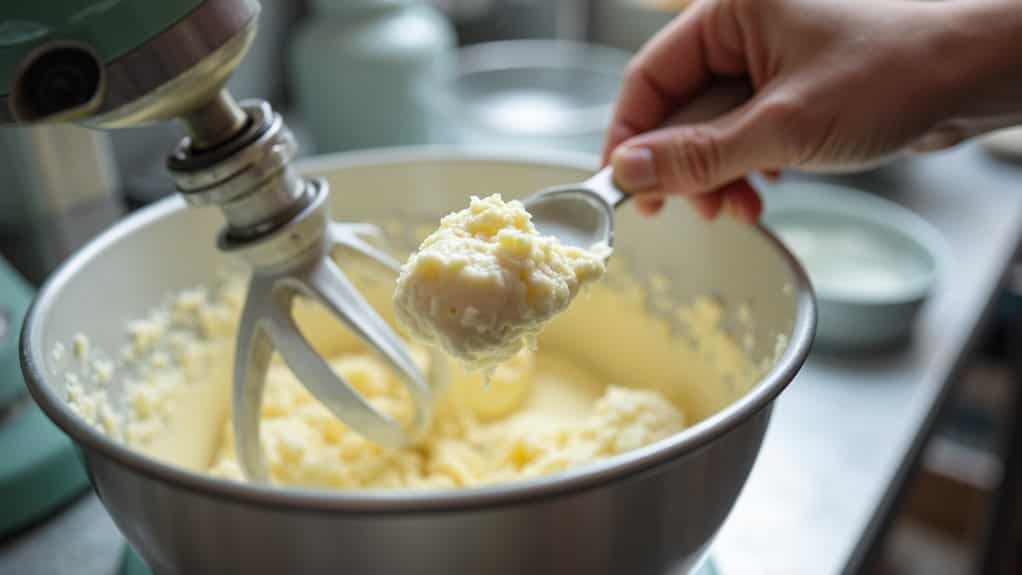
Using the right tools can make all the difference when restoring the smooth texture of curdled buttercream.
A warm bowl or a gentle heat source like a hairdryer helps reheat the broken mixture.
Placing the bowl over a steam bath or carefully microwaving small portions can re-incorporate ingredients.
Re-beating at low speed guarantees proper re-emulsification, preventing further curdling.
Just as cast iron benefits from a thin layer of neutral oil to protect and maintain its surface, using gentle, gradual heat helps bring your buttercream back to a smooth, stable emulsion.
Common Mistakes That Cause Buttercream Breakage and How to Avoid Them
Many common mistakes during buttercream-making can lead to breakage or curdling, often making it look unappealing.
Adding ingredients at incorrect temperatures, like cold butter or warm egg whites, can cause the emulsion to break.
Rapid temperature changes or using ingredients with incompatible temperatures increase the risk of a curdled buttercream, disrupting its smooth, stable texture.
To help keep the mixture stable, focus on maintaining a strong stable emulsion by mixing thoroughly and avoiding sudden temperature shifts.
When Is It Better to Start Over Than to Repair?
Sometimes, despite your best efforts, attempting to fix curdled buttercream just isn’t worth the trouble. If the texture is severely lumpy or grainy, repair efforts may be futile, especially with large quantities.
When heating or re-beating doesn’t restore a smooth appearance, or if spoilage is evident, starting over saves time and guarantees a better result.
Troubleshooting Different Buttercream Types and Variations
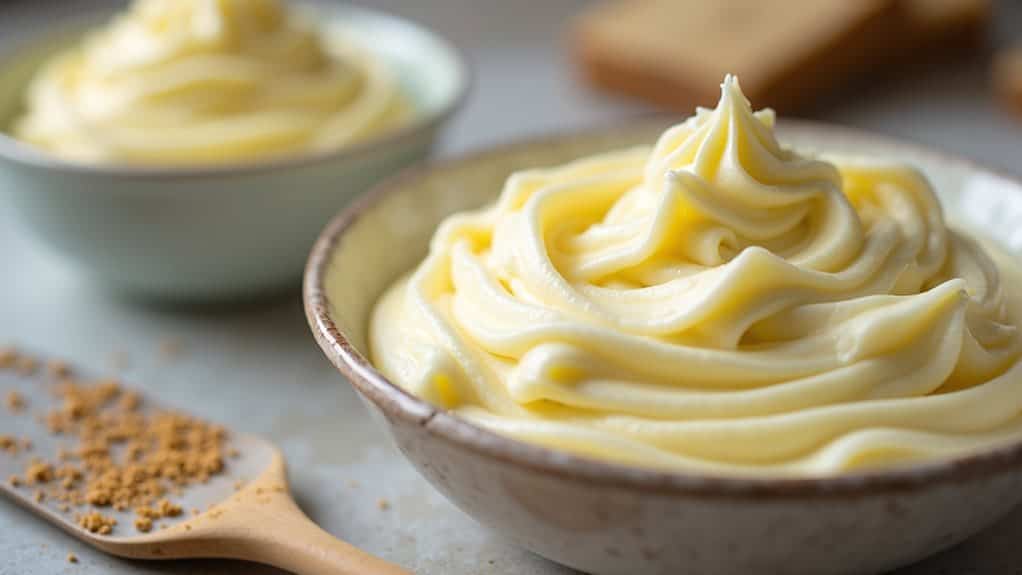
Different types of buttercream each have their own quirks when it comes to troubleshooting, and understanding these differences can help you fix issues more effectively.
For curdled buttercream, like Swiss meringue, temperature management is key. Gently re-beat or warm the mixture slightly to fix the separation.
Consistent temperatures help prevent curdling and make fixing buttercream easier across all types.
Wrapping Up
Fixing curdled buttercream is achievable with patience and the right techniques. Whether you need a quick fix or decide to start fresh, understanding the cause of the breakage helps prevent future issues. Use tools like a warm whisk or add small amounts of liquid to re-emulsify. Remember, not all problems can be repaired, so knowing when to restart saves time. With practice, you’ll excel at smooth, perfect buttercream every time.


