
Baking powder doesn't spoil in the traditional sense, but it does lose its effectiveness over time. You'll know it's past its prime when your baked goods don't rise properly, resulting in dense, flat outcomes. While unopened baking powder stays potent for up to 18 months, opened containers typically last 3-6 months when stored properly in a cool, dry place. To test if yours is still good, mix 1/2 teaspoon with 1/4 cup hot water – if it fizzes vigorously, it's still fresh and ready to use. If there's little to no reaction, it's time for a replacement. Understanding proper storage techniques and regular testing can help you maintain ideal baking results.
Quick Guide
- Baking powder does go bad over time, with opened containers remaining effective for 3-6 months and unopened ones lasting up to 18 months.
- Test baking powder freshness by mixing 1/2 teaspoon with hot water – vigorous bubbling indicates it's still good.
- Moisture exposure significantly reduces potency, so store in airtight containers away from humidity and heat sources.
- Dense or flat baked goods can indicate expired baking powder, as its leavening power diminishes over time.
- Replace baking powder if it shows signs of clumping, fails the water test, or has been open longer than 6 months.
Signs Your Baking Powder Expired

The most reliable way to determine if your baking powder has expired is through performance testing, since visual signs can be misleading.
While you won't see mold or notice odd smells, your baking powder will lose its effectiveness over time. Proper storage techniques can help maintain its potency for longer periods. Watch for signs like dense, tough baked goods that don't rise properly, or baking powder that won't dissolve completely in water. You can easily test freshness by mixing 1/2 teaspoon baking powder in hot water – vigorous fizzing indicates it's still good to use.
Testing Baking Powder at Home
With concerns about expired baking powder in mind, you can easily test its effectiveness at home using a simple method.
Mix 1/2 teaspoon of baking powder with 1/4 cup of boiling water and watch for an immediate, vigorous bubbling reaction. If you see lots of bubbles, your baking powder is still good. For best results, you can compare it to fresh baking powder's reaction. Proper storage in airtight containers will help maintain your baking powder's effectiveness between tests. Additionally, understanding how proper storage techniques can prolong the shelf life of baking ingredients is essential for optimal baking results.
Storage Tips and Best Practices
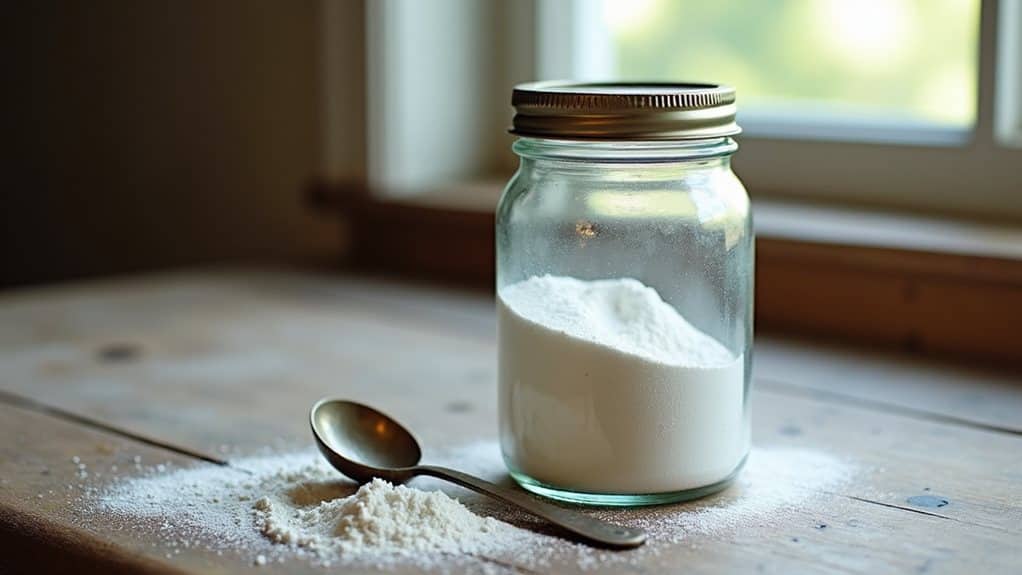
To protect your baking powder's effectiveness, you'll want to store it in an airtight container that shields it from moisture and unwanted odors. You can maintain proper humidity control by keeping your baking powder in a cool, dry pantry or cabinet, away from heat sources and areas prone to dampness. The ideal storage location should maintain a consistent room temperature, with your container placed on a higher shelf where it's less likely to encounter spills or moisture from everyday kitchen activities. Regular checks for clumping and moisture will help ensure your baking powder stays fresh and effective. Additionally, proper storage can significantly extend the shelf life of your baking powder, preventing it from going bad prematurely.
Airtight Container Protection Methods
Properly storing baking powder in airtight containers plays an essential role in maintaining its effectiveness and extending its shelf life.
You'll want to select glass or plastic containers with tight-fitting lids, ensuring they're clean and haven't stored strong-smelling foods before.
Keep your containers sealed when not in use, and use a dry spoon for scooping to prevent moisture contamination. Since baking powder is sensitive to humidity, storing it in a cool, dry place away from any water sources will help preserve its quality.
Humidity Control Solutions
Controlling humidity levels is essential for maintaining your baking powder's effectiveness.
Store your baking powder in a cool, dry pantry away from moisture-prone areas like sinks and stoves. Keep it in an airtight container, and don't open it unnecessarily. Potency decreases the longer baking powder is exposed to air and moisture.
You'll want to check regularly for signs of clumping or dampness, and remember to use opened containers within six months for best results.
Temperature and Location Factors
Beyond humidity control, the right temperature and storage location play key roles in extending your baking powder's shelf life.
You'll want to store it at room temperature in a cool, dry cabinet away from your stove and direct sunlight.
While refrigeration is optional for unopened containers, don't freeze your baking powder, as this can compromise its texture and effectiveness.
How Long Does It Last
The shelf life of baking powder varies considerably between opened and unopened containers.
You'll find that unopened baking powder stays fresh for up to 18 months when stored properly, while opened containers remain effective for 3 to 6 months.
While it's technically safe to use indefinitely, its potency decreases over time, so you'll want to test it regularly once opened. To maintain its effectiveness, store it in a cool, dry place to prevent moisture exposure.
Proper Usage in Recipes
Successful baking with baking powder requires understanding its unique chemical properties and proper measurement techniques.
You'll need to mix it with your dry ingredients before adding liquids to prevent early activation.
Always use the exact amount specified in your recipe, as incorrect measurements can lead to flat baked goods.
If you're using older baking powder, you might need to double the amount. Additionally, be mindful that high heat can affect the effectiveness of baking powder, resulting in inconsistent rise in baked goods.
Alternatives When Baking Powder Fails
When your baking powder has lost its potency or you've run out mid-recipe, several reliable alternatives can save your baking project.
You can mix baking soda with acidic ingredients like buttermilk or vinegar, or create your own baking powder by combining cream of tartar, baking soda, and cornstarch.
Natural yeast is another option, though it'll require more time for proper fermentation.
Wrapping Up
You'll get the best results from your baking powder when you store it properly and replace it before it loses potency. Keep it in a cool, dry place, test it periodically using the simple water test, and replace it within 6-12 months of opening. If you're ever in doubt, it's worth spending a few dollars on fresh baking powder rather than risking flat, dense baked goods.


