Yes, kombucha can go bad, but it lasts 3–6 months unopened if refrigerated. Once opened, drink it within 5–7 days to enjoy the best flavor and fizz. At room temperature, it sours quickly—don’t leave it out more than 48 hours. Watch for mold, off smells, or strange colors, and always store it in airtight glass bottles in the fridge. Keep it cold and dark to preserve freshness, and you’ll get the most out of every bottle. There’s more to know about keeping it just right.
Quick Guide
- Kombucha can go bad, especially if exposed to air, heat, or contaminants beyond safe storage limits.
- Refrigerated, unopened store-bought kombucha lasts 3–6 months; homemade lasts 1–3 months.
- Once opened, drink within 5–7 days to maintain freshness and prevent spoilage.
- Mold appears as fuzzy, colored spots—discard if mold is present or smell is rotten.
- Store in airtight glass bottles in the fridge to preserve fizz, flavor, and probiotic content.
Understanding Kombucha Shelf Life
How long can your kombucha actually last before it goes bad? It depends on storage. Refrigeration slows fermentation, preserving flavor and fizz for 1–3 months.
Once opened, consume within 5–7 days. At room temperature, it sours quickly—limit to 48 hours. Like honey, kombucha benefits from airtight glass storage to help prevent contamination and quality loss.
Use airtight glass bottles, keep it cold, and avoid sunlight to maintain quality and prevent spoilage. Proper storage preserves probiotics, ensuring you get the full health benefits of this living drink.
How Long Unopened Store-Bought Kombucha Lasts
While unopened store-bought kombucha won’t spoil quickly thanks to its natural acidity and live cultures, its quality does change over time. You’ll get the best flavor within 1–2 months of purchase, though it can safely last 3–6 months refrigerated.
Store it in a cool, consistent spot with the cap tightly sealed to limit air exposure and preserve best storage practices.
Check the printed date, keep it cold, and avoid temperature swings to preserve freshness, fizz, and probiotics.
Its shelf life is supported by the ongoing fermentation process, which helps maintain stability over time fermentation process contributes to extended shelf life.
Signs Your Kombucha Has Gone Bad
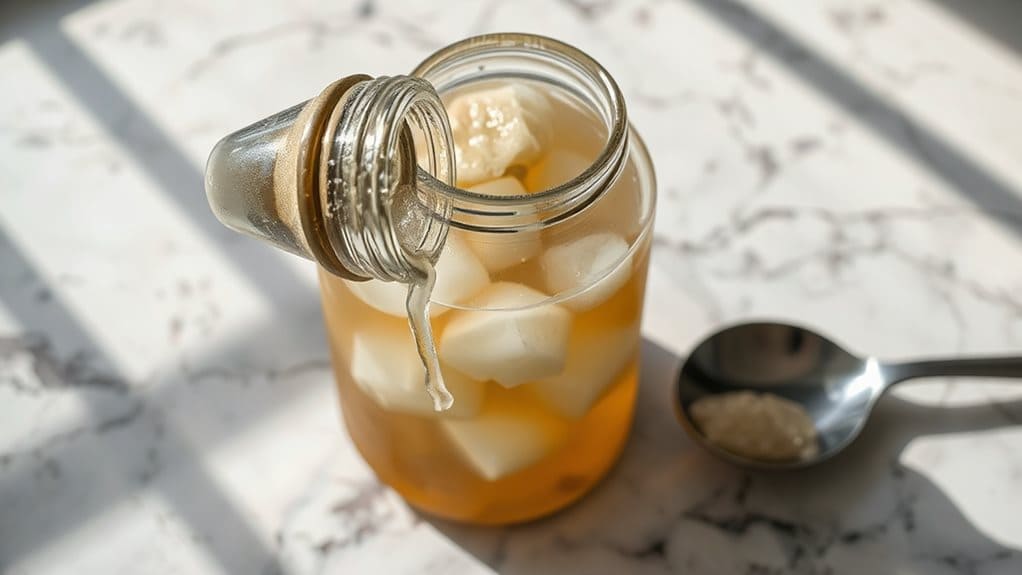
Ever wonder what to look for when something seems off with your kombucha? Check for fuzzy, colored spots—like black, blue, or green—on the surface, which signal mold.
Normal brews may have white bits or stringy yeast, but mold has a dusty, hairy texture.
If it smells rotten—not tangy or vinegary—discard it.
Never taste moldy kombucha.
When in doubt, throw it out and sanitize everything.
Eating spoiled ferments can cause foodborne illness, so it’s best to discard any questionable kombucha.
How Long Opened Kombucha Stays Fresh
Once you’ve confirmed your kombucha is free of mold and still safe to drink, it’s time to think about how long it can stay fresh after opening.
Keep it capped and refrigerated, and you’ve got 5–7 days for the best taste and fizz.
It’ll stay safe longer, but the flavor turns vinegary as slow fermentation continues.
For the best quality and safety, don’t leave it out at room temperature for more than 2 hours.
Refrigeration’s Role in Preserving Kombucha
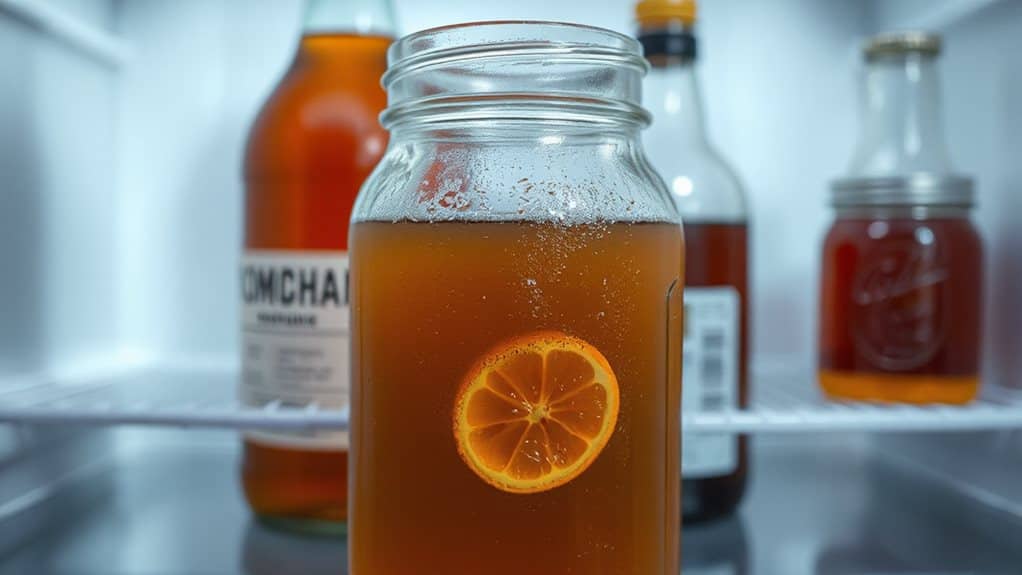
Because temperature plays a critical role in kombucha’s stability, keeping it cold isn’t just about taste—it’s essential for safety and quality.
You’ll slow fermentation, prevent excess alcohol and carbonation, and preserve live cultures.
Refrigeration keeps pH stable, maintains flavor, and blocks mold.
Just like sour cream, leaving fermented foods at room temperature for more than two hours can increase the risk of spoilage.
Always store it at 39°F or below, and never leave it out too long.
Homemade vs. Store-Bought: Shelf Life Differences
While both homemade and store-bought kombucha share the same tangy appeal, their shelf lives differ considerably due to how they’re made and preserved.
You’ll find homemade lasts 1–3 months refrigerated, fermenting continuously with live cultures.
Store-bought stays fresh 6–8 months unopened, thanks to pasteurization and preservatives.
Once opened, both lose fizz fast—so drink up within a week or two for the best taste.
The Impact of Room Temperature on Kombucha
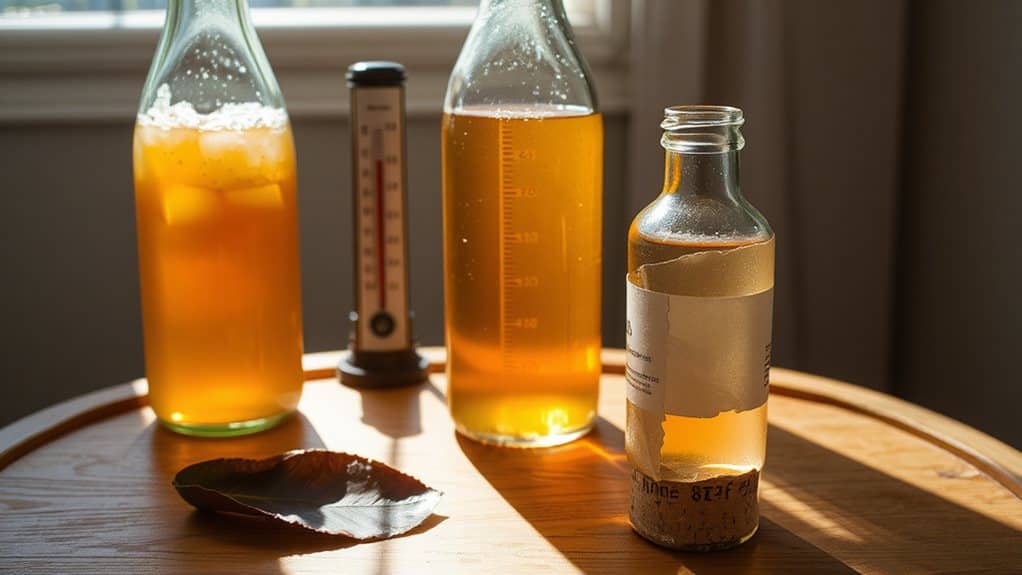
Ever wonder what happens when you leave your kombucha out on the counter? At room temperature, fermentation speeds up, reducing sugar and alcohol over time.
Ethanol drops by 98% in 21 days, and acetic acid declines too.
SCOBYs stay active, but antioxidants and polyphenols fade.
Extended storage turns kombucha less potent, altering flavor and health benefits while keeping cultures ready for brewing.
Best Containers for Storing Kombucha
When choosing how to store your kombucha, the container you pick plays a key role in preserving flavor, safety, and fermentation quality. Use food-grade glass—it resists acid, stays clean, and won’t leach chemicals.
Avoid plastic and metal, which can react or contaminate.
Pick wide-mouth jars for easy SCOBY access and oxygen flow.
Always leave 3–4 inches of headspace to prevent spoilage and guarantee safe, consistent results.
How Fermentation Affects Flavor Over Time
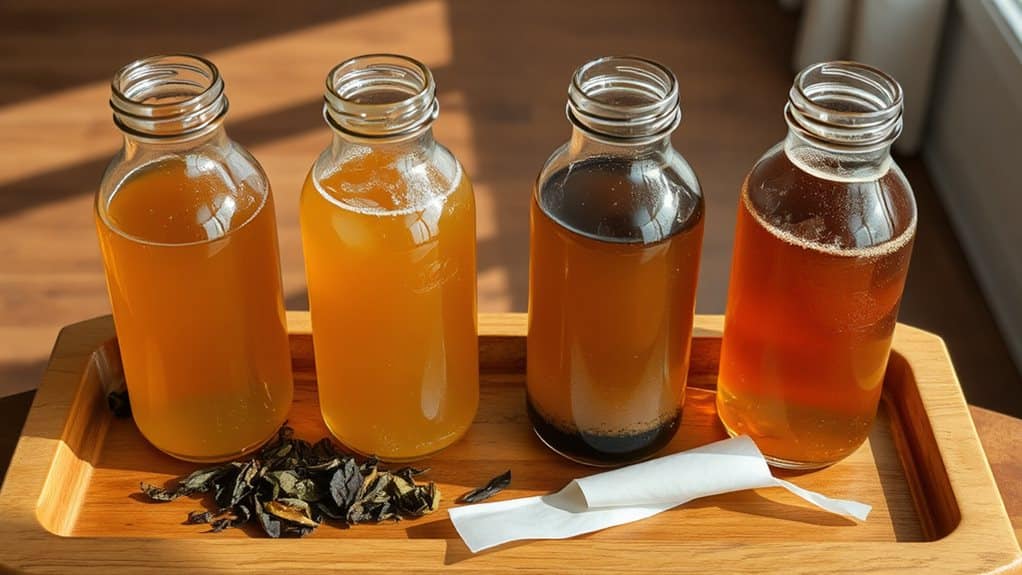
How does your kombucha change on a microbial level as it ferments? The bacteria and yeast shift over time, altering flavor.
Too long, and it turns vinegary; too short, it stays sweet.
Flavored teas or weak SCOBYs cause off-notes.
Extended brews lose fizz and balance.
Fruits in second fermentation soften and absorb tang.
Refrigeration stops changes, preserving taste.
Tips to Maximize Kombucha Freshness and Fizz
Keep your kombucha fresh and fizzy by chilling it right after buying or brewing, since cold slows fermentation and locks in carbonation.
Always seal the bottle tightly after pouring to limit air exposure and preserve flavor.
Store it in a dark glass container away from sunlight, which can weaken the probiotics and dull the taste.
Chill to Preserve Fizz
Though carbonation builds best in warmth, you’ll want to chill your kombucha as soon as it reaches the fizz level you like. Cold temperatures slow yeast activity and lock in carbonation.
Refrigerate bottles after 24–48 hours of second fermentation.
Use pressure-rated bottles with 1–2 inches of headspace.
Keep them cold to preserve bubbles and prevent over-pressurization.
Seal Tightly After Opening
Once you’ve poured a glass of kombucha, sealing the bottle tightly is your best move to keep it fresh and fizzy. Use the original cap or an airtight lid to block oxygen and prevent contamination.
A tight seal slows fermentation, maintains carbonation, and stops pressure buildup.
Always reseal immediately, then refrigerate—this combo keeps your kombucha safe and tasty for up to a week.
Store in Dark Glass
After sealing your kombucha tightly to lock in freshness, the next smart step is choosing the right container for storage—starting with dark glass.
Use brown glass bottles to block UV light, which can kill probiotics and alter fermentation.
Store in a dark cabinet to maintain carbonation and prevent overheating, even in glass.
This keeps your kombucha fizzy, safe, and full of beneficial cultures longer.
Wrapping Up
You now know kombucha won’t last forever, but it stays good longer than you might think. Keep it refrigerated, sealed tight, and you’ll preserve its flavor and fizz. Unopened bottles typically last months past the printed date, while opened ones stay fresh about a week. Watch for mold, odd smells, or excessive sourness—those mean it’s time to toss it. With proper storage, you’ll enjoy your kombucha at its best, safely and confidently.